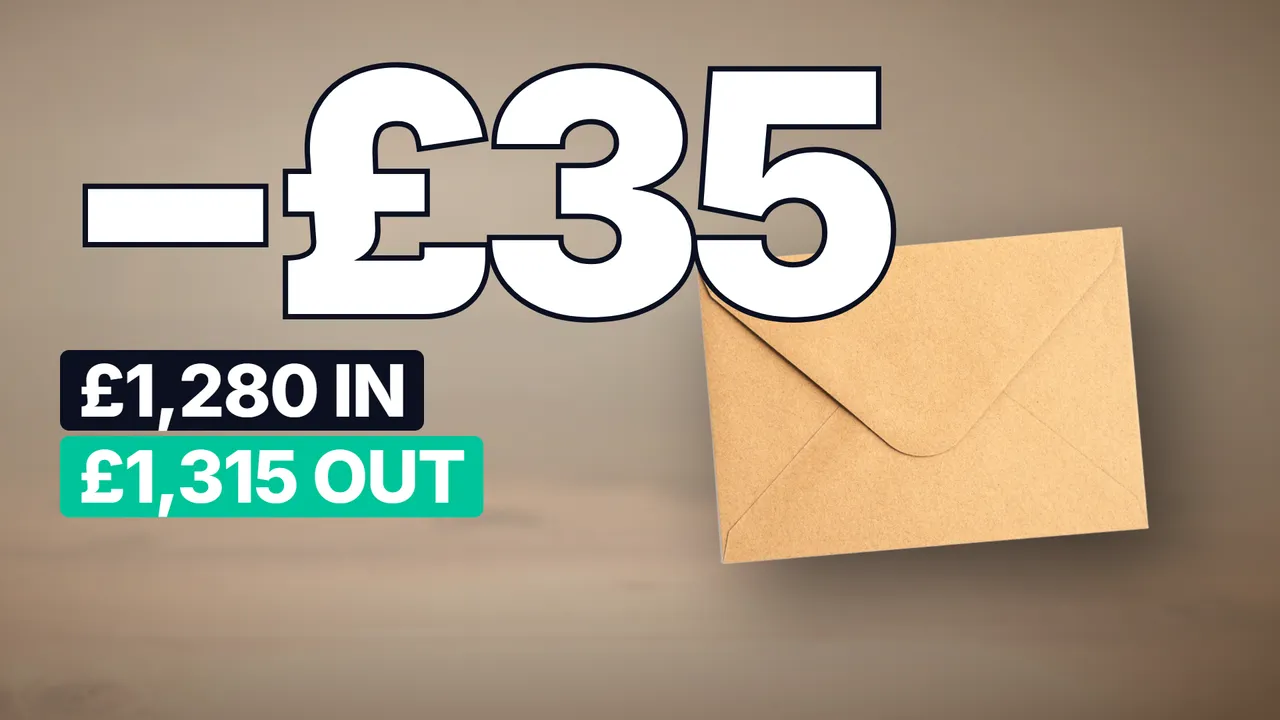
The short answer: to budget on a low income, fund the month in a fixed order and let the last envelope absorb the shortfall. When £1,280 lands and the month costs £1,315, the instinct is to shave £3.50 off ten envelopes. Don’t. Fund roof and power first, then food and getting to work, then anything with a date this month — and whatever sits at the bottom of that list takes the whole £35. One envelope is short by £35 and nine are correct, instead of ten envelopes being quietly wrong.
Why the usual advice doesn’t reach this month
Search this and you get the same article seven times: work out what comes in, list what goes out, separate essentials from non-essentials, cut the non-essentials, check you are claiming everything you are entitled to. All of it is correct. None of it survives contact with a month that is already short before it starts, because the non-essentials have been gone for a while.
The one genuinely useful answer in the field is the priority order the debt charities publish — National Debtline and MoneyHelper’s bill prioritiser both say cover food and essential travel first, then priority bills, then priority debts. That is the right order and this article does not improve on it.
What none of them says is what happens to the gap. The order tells you what to pay first; it never tells you which envelope ends up holding the shortfall. That is the decision you are actually stuck on, and leaving it undecided is how the £35 gets spread across everything and quietly breaks the whole plan.
The month, in full
One household, one month, every number.
| Take-home on the 1st | £1,280.00 | |
| Rent | Monthly bills | £620.00 |
| Council Tax | Monthly bills | £105.00 |
| Energy | Monthly bills | £95.00 |
| Water | Monthly bills | £32.00 |
| Phone | Monthly bills | £38.00 |
| Groceries | Everyday | £240.00 |
| Transport | Everyday | £85.00 |
| School lunches | This month | £30.00 |
| Car insurance | This month | £35.00 |
| Birthday | This month | £35.00 |
| The month costs | £1,315.00 | |
| Short by | £35.00 |
Seven of those come round every month. Three exist only in September: the school lunches, the car insurance renewal, and a birthday. And the arithmetic that makes this month work at all: the first nine envelopes come to exactly £1,280 — every penny that landed. The tenth, the birthday, has nothing behind it.
That is not a coincidence I engineered to be tidy. It is what a shortfall is. The gap is never spread evenly across a budget; it is always the last thing you funded, whichever thing that happens to be. The only question is whether you choose which one it is.
Why spreading it fails
Taking £3.50 off ten envelopes looks fair and feels responsible. It does three things instead.
It makes every envelope wrong. The grocery envelope now says £236.50, which is not what a week of food costs — it is what a week of food costs minus an accounting adjustment. By the second week you have stopped trusting the number, and an envelope you don’t trust is an envelope you don’t check.
It hides the size of the problem. £35 is a number you can act on: a birthday you can do differently, a shift you could pick up, a bill you could ring about. £3.50 ten times is a number nobody acts on, because each piece looks like rounding.
And it moves the failure to the end of the month. Spread evenly, nothing breaks in week one — it breaks on the 26th, in whichever envelope you happened to reach last, without you having chosen it.
The order that decides it
Fund top to bottom, and stop when the money runs out.
- Roof and power. Rent, council tax, energy, water, phone. These have consequences that are not financial — eviction, enforcement, disconnection — so they are never the envelope that goes short. £890.
- Food and getting to work. Groceries and transport. These protect next month’s income, which makes them an investment rather than a cost. £325. Running total: £1,215.
- Anything with a date this month. School lunches on the 12th, car insurance on the 21st. A date decides these, not you — miss the insurance renewal and the price goes up. £65. Running total: £1,280, and the money is gone.
- Everything else, last. The birthday. It is short by £35, and it is short on purpose.
Nine envelopes are correct. One is £35 down, and you know which one before the month starts — which means you have four weeks to do something about that one thing, rather than four weeks of everything being slightly wrong.
What “the envelope that gives” means in practice
The bottom of the list is not a punishment, it is the flexible thing. A birthday at £0 instead of £35 is a homemade card and a cake instead of a present, and it is survivable. Rent at £585 instead of £620 is not survivable, which is exactly why rent is at the top.
So the ordering question is really: which of these can absorb a shock without breaking something? Put the absorber at the bottom deliberately, every month, and the budget has a shock absorber built into it. It also makes the following month honest: you know the birthday envelope was short, so if there is £35 spare in October you know exactly where it goes.
Where this stops being a budgeting question
There is a line, and it matters more than anything above.
If the shortfall reaches food or rent — if there is nothing left after the essentials, month after month — then no ordering of envelopes fixes it. Charities call that a deficit budget, and it is a different problem with a different answer. Borrowing to fill the gap deepens it: you add interest and a new repayment to a budget that was already too tight.
The honest next step then is free, independent advice, not a better spreadsheet. Citizens Advice and StepChange are both free and both independent, and it is worth running a benefits check (Turn2Us or EntitledTo) because a lot of UK households are entitled to money they are not claiming. There is no shame in any of it and it is what they exist for.
Doing it on paper
You do not need software for this.
- Write down what actually arrived this month — not what you usually earn.
- List every envelope this month needs, including the ones that only exist in this month.
- Put them in order: roof and power, food and getting to work, anything with a date, everything else.
- Fund top to bottom until the money is gone.
- Whatever is left unfunded is your shortfall, and it now has a name.
- Spend the month working on that one name, not on ten small adjustments.
Ten envelopes and one ordering rule. It works on the back of an envelope, which is fitting.
Doing it in Zeroed
I built Zeroed to make that order visible: every pound gets a job on the day it lands, and the header shows what is still unassigned — or, in a month like this one, how far past the money you have gone. Watching it read −£35.00 in red is the point. It is not an error message; it is the number you are going to fix, and it stops being a vague feeling of being behind.
It is one payment rather than a subscription, it works offline, and it never asks for your bank login — which matters more than usual when money is tight and every other app wants £8 a month to tell you that you are short. Our zero-based budget calculator runs the same arithmetic in a browser, free, if you would rather not install anything.
The method above does not need any of it. On paper the numbers are identical.
Frequently asked questions
Which envelope should go at the bottom? The most flexible one — the thing you could do differently this month without breaking anything. Usually that is a one-off (a birthday, a day out, a non-urgent replacement), never a bill with a consequence attached.
What if the same envelope is at the bottom every month? Then it is not really an envelope, it is a wish, and the honest move is to fund it at a smaller amount that survives the order rather than a realistic amount that never gets funded.
Should I pay minimum debt payments before food? No. Food and essential travel come first, then priority bills, then debts — that is the order the debt charities publish and it is the right one. If the minimums are unaffordable after that, speak to StepChange or Citizens Advice; they can arrange payments the creditor accepts.
Does this work on Universal Credit or an irregular income? Yes, and the ordering matters more, not less. If the amount changes month to month, budget the money that has actually landed rather than an average — the same principle as budgeting on an irregular income.
This is education about a budgeting method, not financial advice.