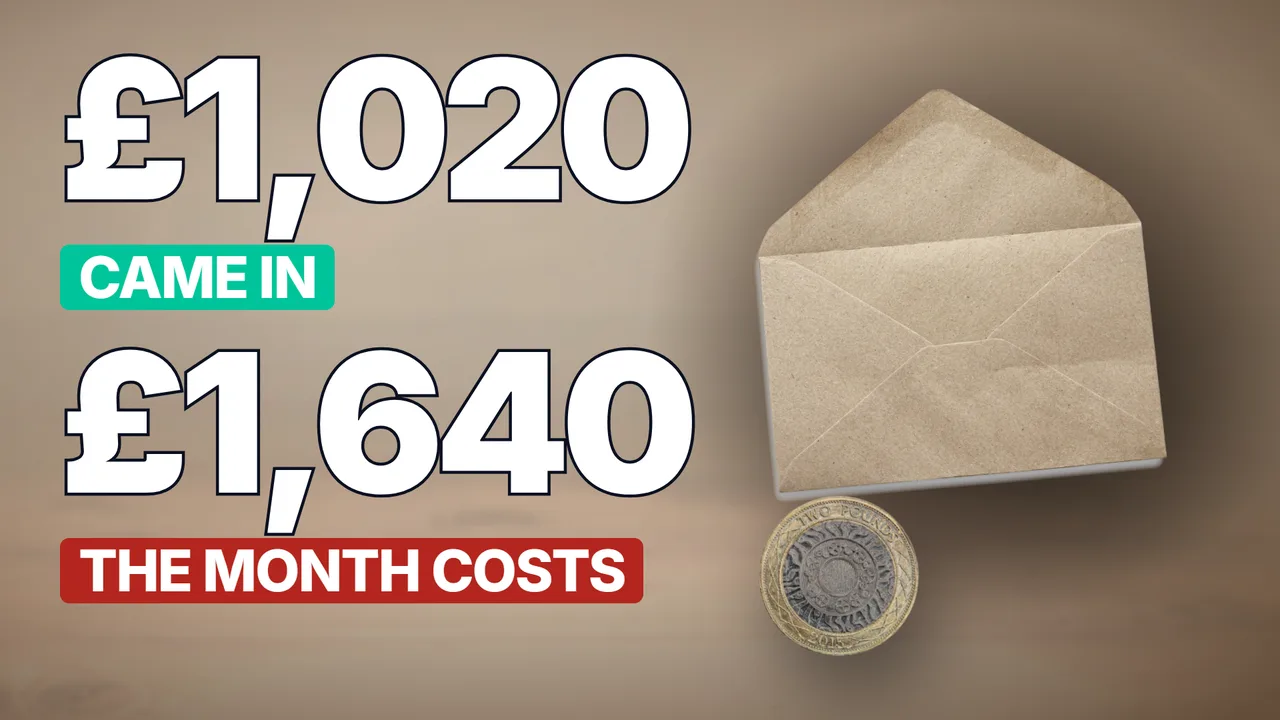
If your income is irregular, stop forecasting it. Budget the money you were actually paid last month: everything that landed in August funds September, so you are never spending money that has not arrived. It takes one evening to set up and ten minutes a month to keep, and it needs one thing first, which most guides never name: one month of your essential bills sitting in the account, untouched.
The video shows the whole thing inside a budget, month by month. This page is the reference: the arithmetic, the two methods everyone else recommends and where they break, the buffer number, and the UK-specific bits.
What irregular income actually looks like
It is not a smaller paycheque. It is money that moves in amount and in timing. The household in the video is self-employed with seasonal work; three months of invoices looked like this:
| Month | Paid | When |
|---|---|---|
| June | £3,180 | Two invoices, a fortnight apart |
| July | £2,460 | Two invoices |
| August | £1,020 | One invoice, on the 12th |
Their monthly plan costs £1,640: rent £950, bills £180, groceries £250, eating out £80, transport £120, fun money £60. Odd amounts on odd days, and not one of them is a payslip.
Why averaging fails
Almost every guide, and almost every video on this search, tells you to average it. Take the mean of the last few months, or last year divided by twelve, and budget that. So let us do it properly: £3,180 + £2,460 + £1,020 = £6,660. Divided by three, the budget is £2,220 a month.
Now put that number next to the month it came from. Your plan costs £1,640. August paid £1,020. That is £620 missing in the one month you could least afford it, and an average can never warn you, because an average has no bad months in it. An average is a promise about a month you have not had yet.
Why budgeting your lowest month is better, and still not enough
The second answer is the one MoneyHelper and most debt charities give, and it is genuinely good: budget your worst month, cover the four walls first (housing, food, power, transport), and treat anything above that as extra. If you have nothing saved, do exactly that. It works.
But look at what it leaves you. This household’s worst month is £1,020 and the rent alone is £950. Budgeting the worst month keeps the roof on and nothing else, and every good month becomes a decision about what to catch up on.
Budget last month’s money
The third answer is not mine. It is the highest-voted comment under those same videos, written by people living this: do not budget the money you are going to earn. Budget the money you have already been paid.
Do the other sum. £6,660 came in over three months. You paid yourself £1,640 three times over: £4,920. That leaves £1,740 you have earned and have not spent.
| Amount | |
|---|---|
| Received, June to August | £6,660 |
| Paid to the plan, three months at £1,640 | £4,920 |
| Earned and unspent | £1,740 |
That £1,740 is not savings, and you are not being frugal. It is next month, already paid for. On the first of September the budget opens with £1,740 to assign and no envelope filled yet, and the bank account holds £1,740 as well, because it is the same money counted once.
Then the ten minutes: fill every envelope from money that is already in the bank. Rent, bills, groceries, eating out, transport, fun money. The number at the top stops at £100 instead of zero, because £100 of next month is already here. The month is finished before it has started.
August was the quiet month. £1,020 came in against a plan that costs £1,640, rent left on time, every envelope was funded on the first exactly as in the good months, and the assigned column did not move a penny. August’s money was never August’s job.
The number nobody gives you: what to put in when there is no paycheque
This is the question the guides leave unanswered. You do not put a number in at all. Your first job is not a budget. It is one month of the four walls sitting in the account, untouched: rent, food, power, transport. For this household that is £1,500.
Until you are holding it, budget your worst month, exactly as the debt charities say. The buffer is what buys you the right to stop guessing. The emergency fund calculator will give you your own four-walls number in a minute.
What to do in a good month
This is where the whole thing is won or lost. Do not give yourself a raise. Pay yourself the same £1,640 and let the rest sit exactly where it is. A good month’s job is to make the buffer two months deep, so that the next quiet one is boring.
The rule underneath is worth saying once: average your spending, never your earnings. Three months of real spending, averaged, is an honest number for next month’s envelopes, because it averages what already happened. Nothing can average what is coming in.
The UK-specific parts
Tax. If you are self-employed, a share of every invoice is not yours. Treat the tax set-aside as an envelope funded on the day the money lands (the usual rule of thumb is 25 to 30 per cent of profit, adjusted once you have a year’s figures), and never count it in the buffer.
Universal Credit. Payments arrive a month in arrears and change with what you reported in the assessment period, which makes them irregular income too. The same rule applies: last month’s payment funds this month.
Annual bills. Car insurance, an MOT, Christmas. Each gets an envelope that fills a twelfth every month, out of last month’s money like everything else.
Doing it on paper, or in an app
None of this needs an app. A savings account you refuse to touch and one sheet of paper will do the same job. The rule is the thing that matters.
I built Zeroed for it, and it is the app in the video: one payment, works offline, never asks for your bank login. It fills a new month from last month’s numbers in one tap and reads a bank statement export so the monthly ten minutes stays ten minutes. If you use it, leave the “smart assign” button alone for this method: it spreads everything you hold across the envelopes and stops at zero, which is right when the money in front of you is one month’s money and wrong once £100 of it belongs to next month. See Zeroed or read how the envelope method works from zero.
Frequently asked questions
How do I start if I have no buffer at all? Budget your worst month and put the four walls first. Everything above the worst month goes into the buffer until it holds one month of essentials. Then switch to spending last month’s money.
Is this the same as living on last month’s income in YNAB? Yes, in spirit. YNAB calls it “age your money”. The method is older than any app; the video’s commenters describe doing it with two bank accounts.
What if last month was a bad month? That is exactly when the buffer works. You still fund the full plan from the buffer plus the bad month’s income, and the good months afterwards refill it. If two bad months in a row empty the buffer, you are back to worst-month budgeting until it is rebuilt.
Should I average my income at all? Only to sanity-check your plan against a year of earnings. Never as the number you spend.
How big should the buffer get? One month of the four walls first, then two full months of the plan. Beyond that, the extra is savings with a different job.
This is education about a budgeting method, not financial advice. If you missed the previous video, it was Cash Stuffing Stops Working at Week 6 (Here’s the Fix).