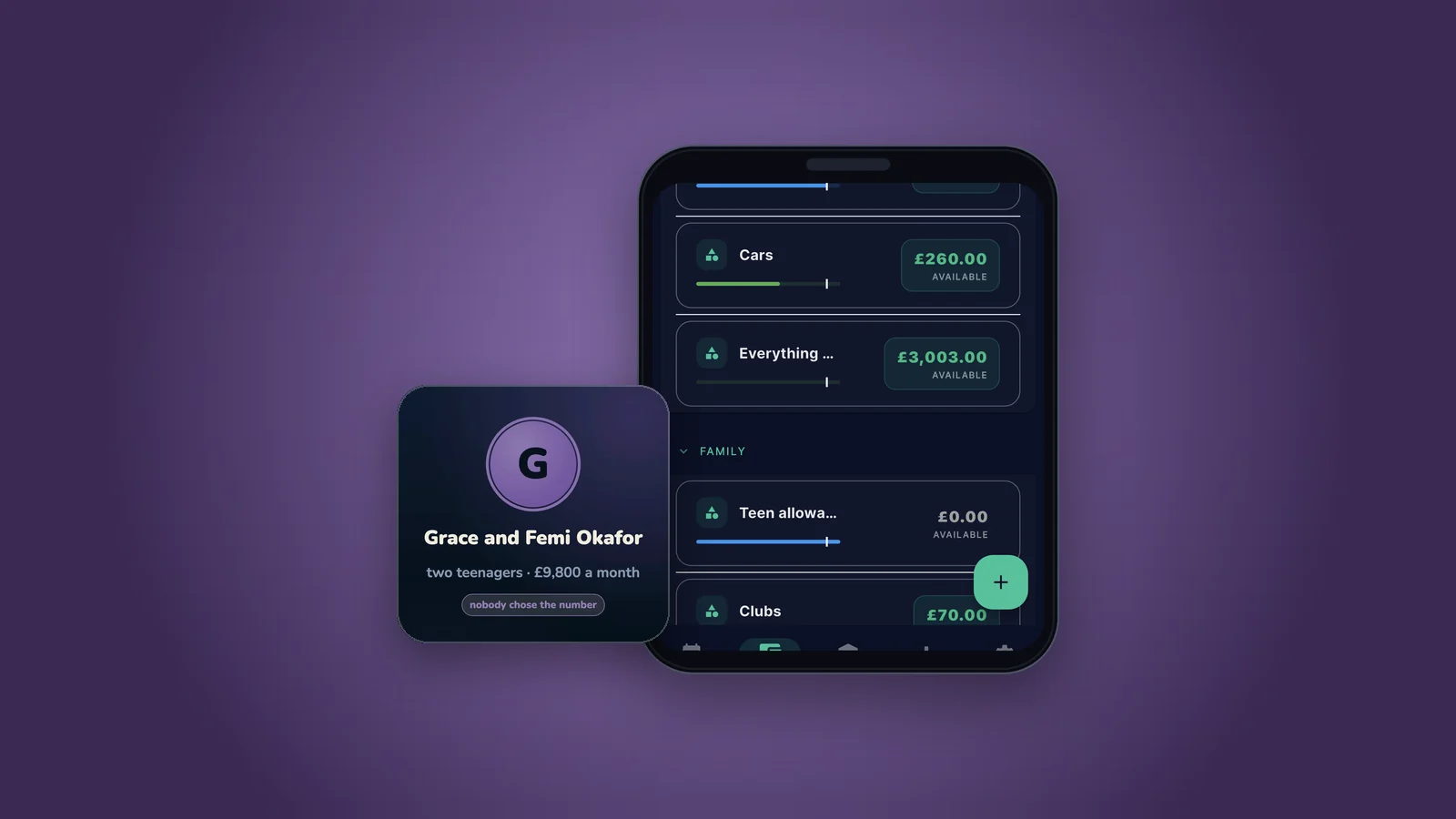
Two families, same income, two teenagers each. The Okafors’ teenagers cost £380 a month in fourteen reasonable asks. The Adeyemis’ cost £380 a month in two lines: an allowance each and the clubs as a bill. The asks stopped, because the question moved house.
Grace and Femi Okafor. The households in these Shorts are illustrations built from typical UK figures, not real people, and every number below is worked on the household’s sheet.
What happened
Picture two families on the same street with the same income and two teenagers each. In one house, the words “can I have” are heard fourteen times a month. In the other, they are hardly heard at all. The money is the same. The difference is how it is arranged.
Grace and Femi Okafor take home £9,800 a month. Their teenagers cost £380 a month, though nobody ever chose that number. It is simply what the requests came to. Phone top-ups, a school trip, new trainers, a birthday present for a friend, bus fares, football. Fourteen asks a month, and each one, taken on its own, was perfectly reasonable. That was part of the problem: there was never a single request worth refusing, and so there was never a moment when the total got looked at.
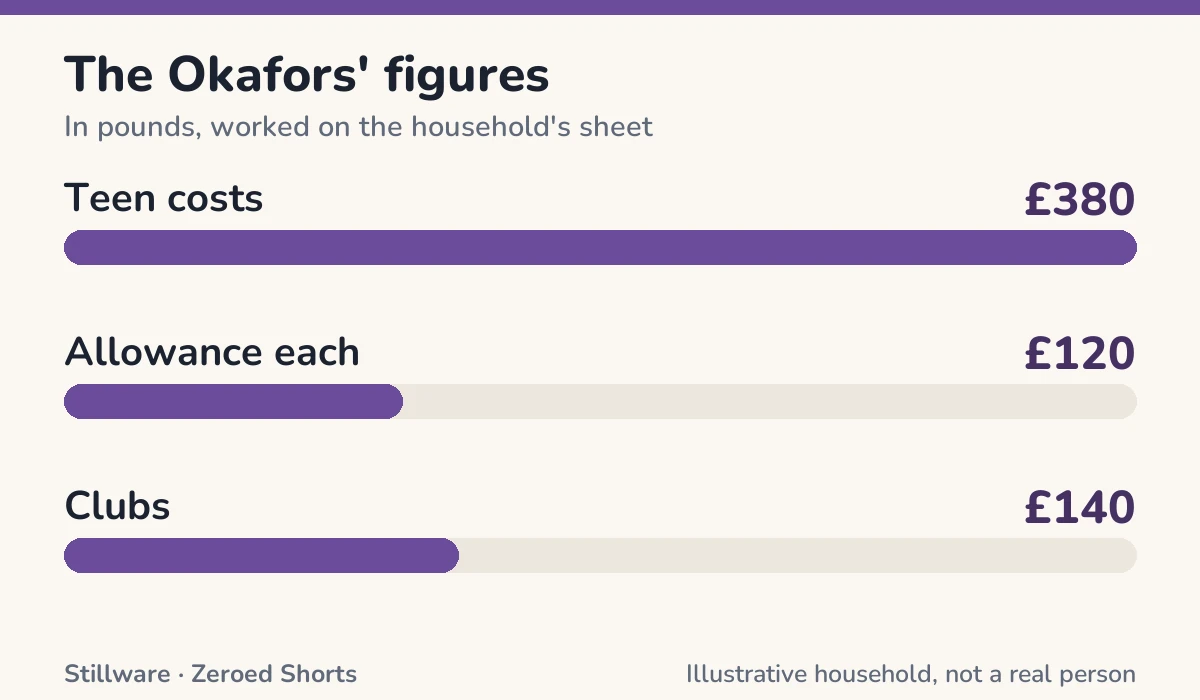
The family a few doors down, the Adeyemis, have the same jobs and children of the same ages. Their teenagers also cost £380 a month. But in their house that figure is two lines rather than fourteen conversations. Each teenager gets an allowance of £120 on the first of the month, which is £240 between them. The clubs, at £140, are treated as a bill and paid like one.
That is the turn. “Can I have” is a budget question, asked of people who have no budget for it. Parents end up making dozens of small spending decisions on someone else’s behalf, with no limit in view and no way for anyone to learn from the result. Give the teenager the number instead, and the question moves house. It stops being asked of the parents and starts being asked of the allowance.
The allowance covers the trainers, the present and the bus. When it is gone, it is gone, and that is a lesson nobody else is likely to teach them. So the answer to where the teenager money goes looks very different in the two homes. In one, it goes in fourteen separate conversations. In the other, it goes in two lines, with a sixteen-year-old learning to run an envelope of their own.
Any family can work out its own version. Add up the last three months of requests and divide by three. Then split the total into what is really a bill and what belongs to the teenager, and say the number on the first. The Okafors’ teenagers now have an allowances envelope, with the clubs on their own row, so “can I have” is asked of the envelope rather than of Grace and Femi.
The working
Every figure the Short says, and where it comes from on the household’s sheet.
| The Short says | Figures | Derivation |
|---|---|---|
| fourteen times a month | asks_per_month = 14 | on the sheet |
| nine thousand eight hundred | takehome = 9,800 | on the sheet |
| three hundred and eighty a month | teen_costs = 380 | on the sheet |
| fourteen asks a month | asks_per_month = 14 | on the sheet |
| three hundred and eighty a month as well | allowance_total + clubs = teen_costs | on the sheet |
| one hundred and twenty each / one hundred and forty | allowance_each = 120; clubs = 140 | on the sheet |
The turn
Can I have” is a budget question asked of people with no budget for it; give the teenager the number and the question moves house.
The Short
Monday
- The last three months of “can I have”, added up, divided by three.
- Split it into a bill and an allowance.
- Say the number on the first.
In Zeroed
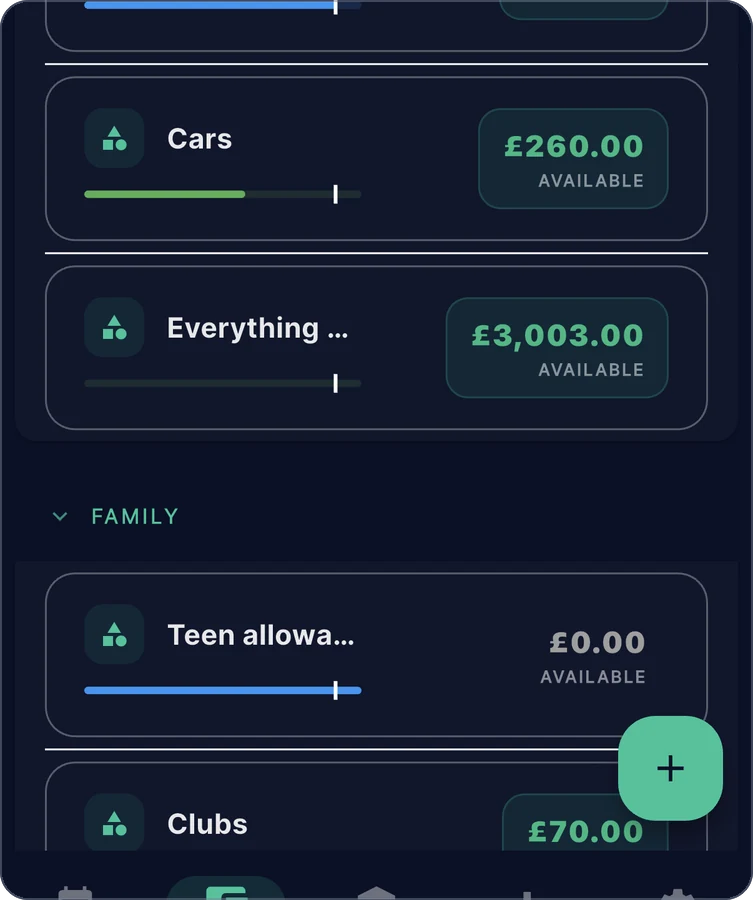
the Okafors’ teenagers get a Teen allowances envelope, and the clubs get their own row. So “can I have” is asked of the envelope, not of Grace and Femi.
Zeroed: Offline Budget Planner is the app in the Short — envelope budgeting you buy once. It works offline, with no bank login, no subscription and no data harvesting; the first thirty-four days are free, no card needed. Try Zeroed.