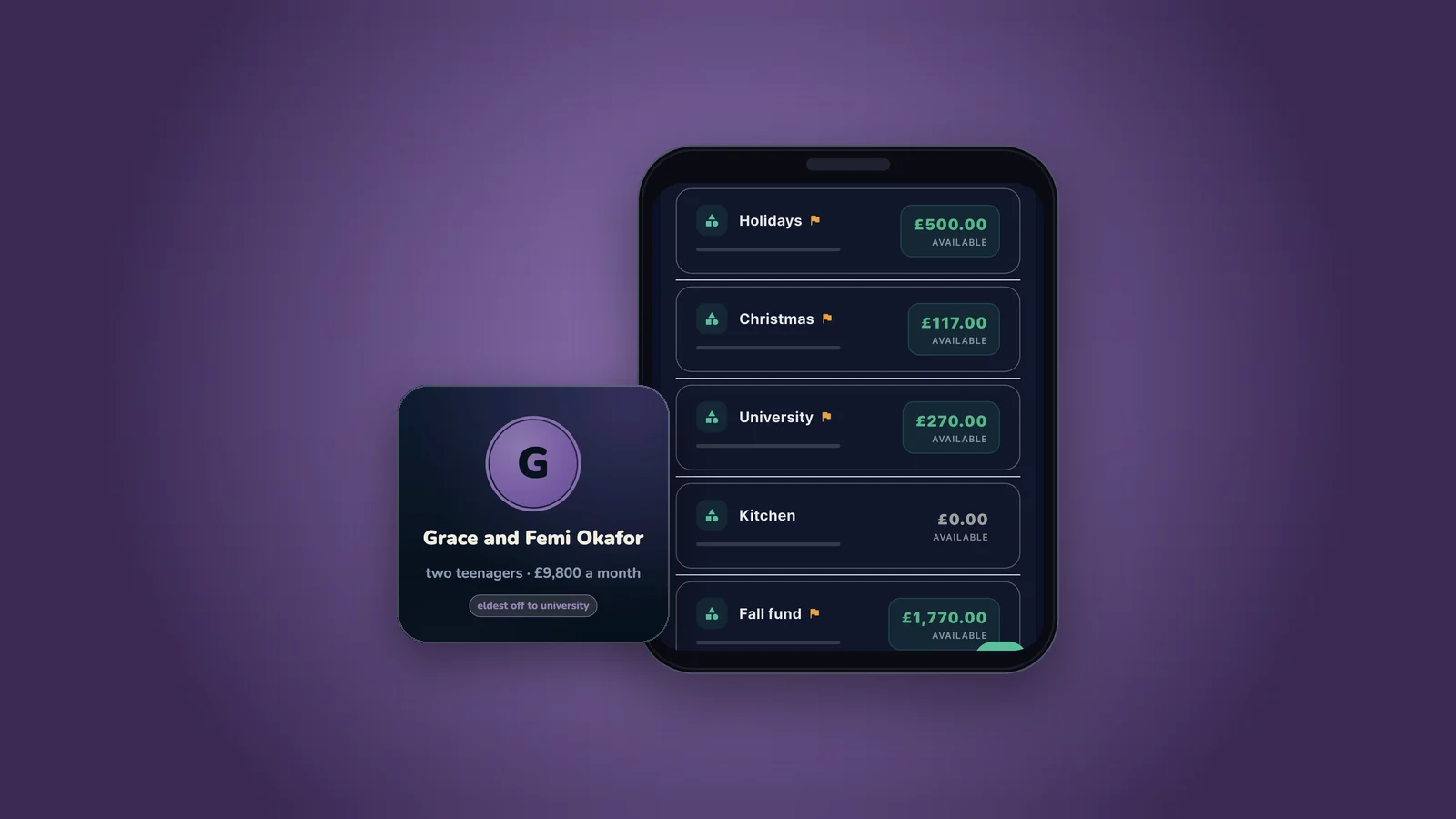
Everyone in the Okafor house knew the date their eldest starts university. Nobody put a number on it until the letter came: £3,200, due Friday, in a month with nothing spare. The bonus that could have paid it went in March.
Grace and Femi Okafor. The households in these Shorts are illustrations built from typical UK figures, not real people, and every number below is worked on the household’s sheet.
What happened
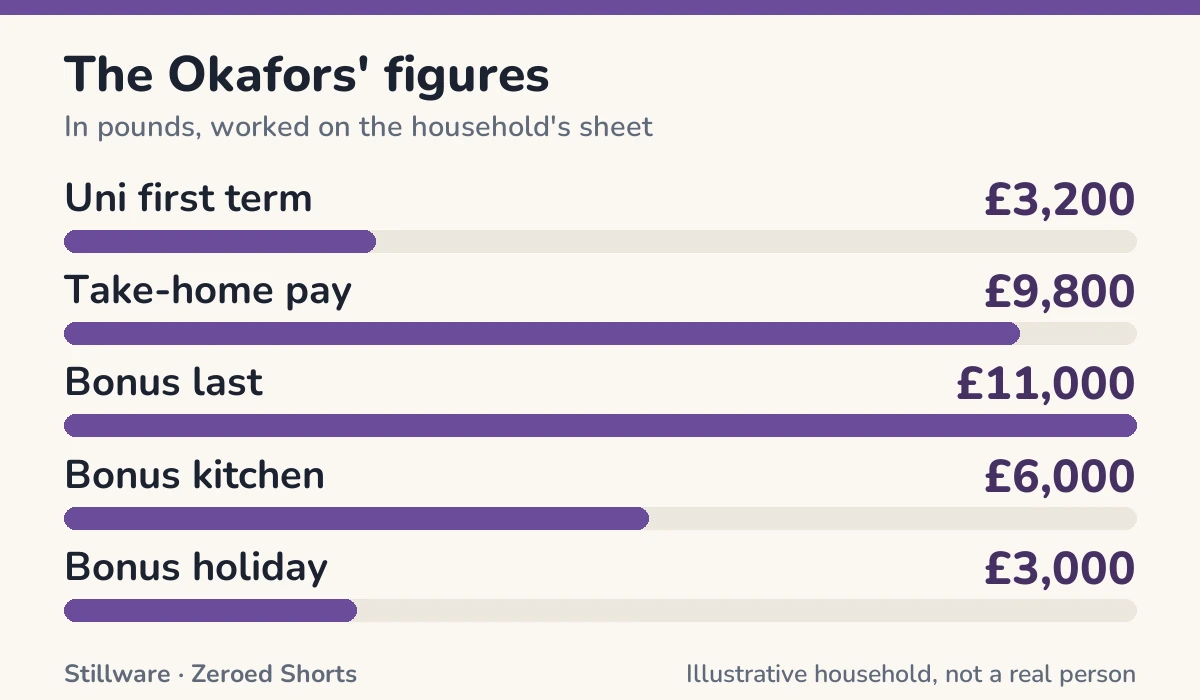
Nobody could call the university bill a surprise. For a whole year, Grace and Femi Okafor knew their eldest would be starting a degree this autumn, and they knew roughly when the first £3,200 would fall due. The household, parents of two teenagers, brings home £9,800 a month, which is more than enough to absorb a cost like that. Even so, when the bill arrived this month, it went straight on the credit card.
The reason goes back to March, when the annual bonus arrived: £11,000. Everyone in the family knew the university payment was coming, and everyone could have named the month. What nobody did was attach a figure to it and set that figure aside. Instead, £6,000 went on the new kitchen and £3,000 on the summer. The remaining £2,000 simply dissolved into ordinary life, spent on things neither of them could now list.
By September, every spare pound was already spoken for. When a large bill meets a budget with no slack, something has to give, and here it was the card, used on a Friday to cover the fees. That was not the end of it either. The balance will be cleared in March out of next year’s bonus, which leaves next year’s summer short by the same amount, and that shortfall is likely to end up on the card in July. One unplanned payment was quietly setting up the next.
The mistake, it turned out, lay in how they had filed the bill in their heads. They had treated it as a big event to be dealt with when it came, almost as a kind of emergency. But a cost that is visible a year in advance is nothing of the sort. It is a monthly cost that happens to have an awkward delivery date. Spread across the year leading up to it, the £3,200 becomes £270 a month, a sum so small against their income that it would barely register. Paid all at once, within a single week, the very same money becomes a crisis. Nothing about the amount changes; only its timing does.
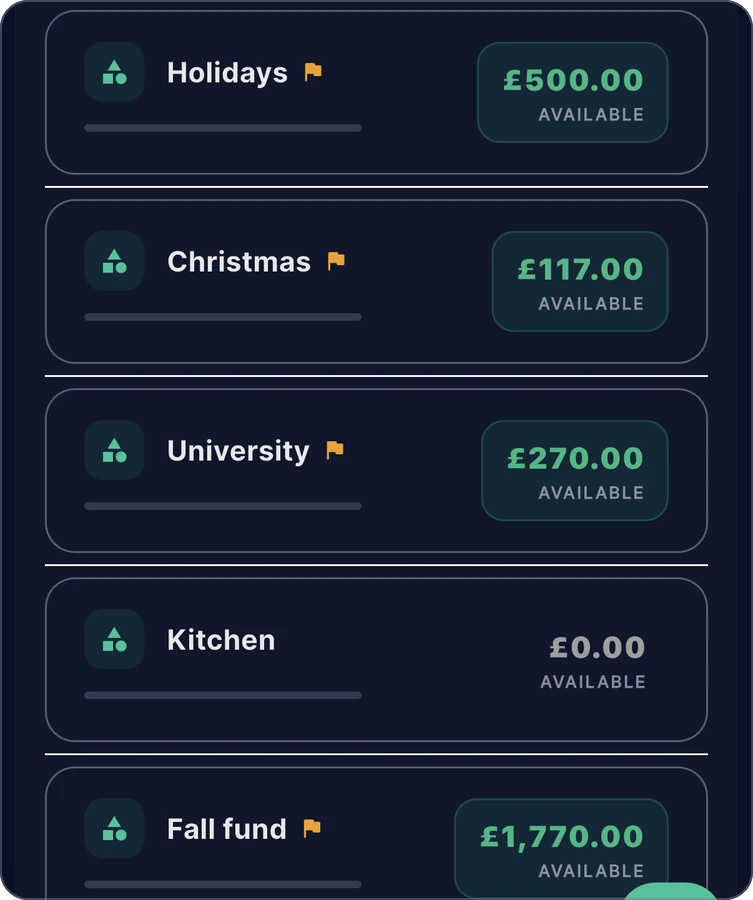
So the Okafors changed the timing. They opened an envelope for university costs, marked with January, the date the next payment is due, and began putting £270 into it every month. By the time January comes round, a third of the next bill will already be sitting there. The rule they took from it is short: take any bill already in view, divide it by the number of months until it arrives, and start its envelope this month rather than waiting for the letter.
The working
Every figure the Short says, and where it comes from on the household’s sheet.
| The Short says | Figures | Derivation |
|---|---|---|
| three thousand two hundred | uni_first_term = 3,200 | on the sheet |
| nine thousand eight hundred | takehome = 9,800 | on the sheet |
| eleven thousand in March / six thousand and three thousand | bonus_last = 11,000; bonus_kitchen = 6,000; bonus_holiday = 3,000 | on the sheet |
| nine thousand eight hundred coming in | takehome = 9,800 | on the sheet |
| three thousand two hundred goes on it | uni_first_term = 3,200 | on the sheet |
| two hundred and seventy a month | ceil(uni_first_term / 12; -1) | on the sheet |
| three thousand two hundred in one week | uni_first_term = 3,200 | on the sheet |
The turn
A bill you can see a year away is not an emergency; it is a monthly cost with a bad delivery date.
The Short
Monday
- Any bill you can already see, divided by the months until it lands.
- Its envelope starts this month.
In Zeroed
the Okafors’ University envelope has January on it and two hundred and seventy going in each month. By January a third of the next letter is already there.
Zeroed: Offline Budget Planner is the app in the Short — envelope budgeting you buy once. It works offline, with no bank login, no subscription and no data harvesting; the first thirty-four days are free, no card needed. Try Zeroed.