In the version where nothing changed, Tom and Aisha’s mortgage rises by £260 on the first of March and the account that pays it is £179 short by the tenth. In the other version, they had been practising the payment since October, and on the first of March nothing happened at all.
Tom and Aisha, two children. The households in these Shorts are illustrations built from typical UK figures, not real people, and every number below is worked on the household’s sheet.
What happened
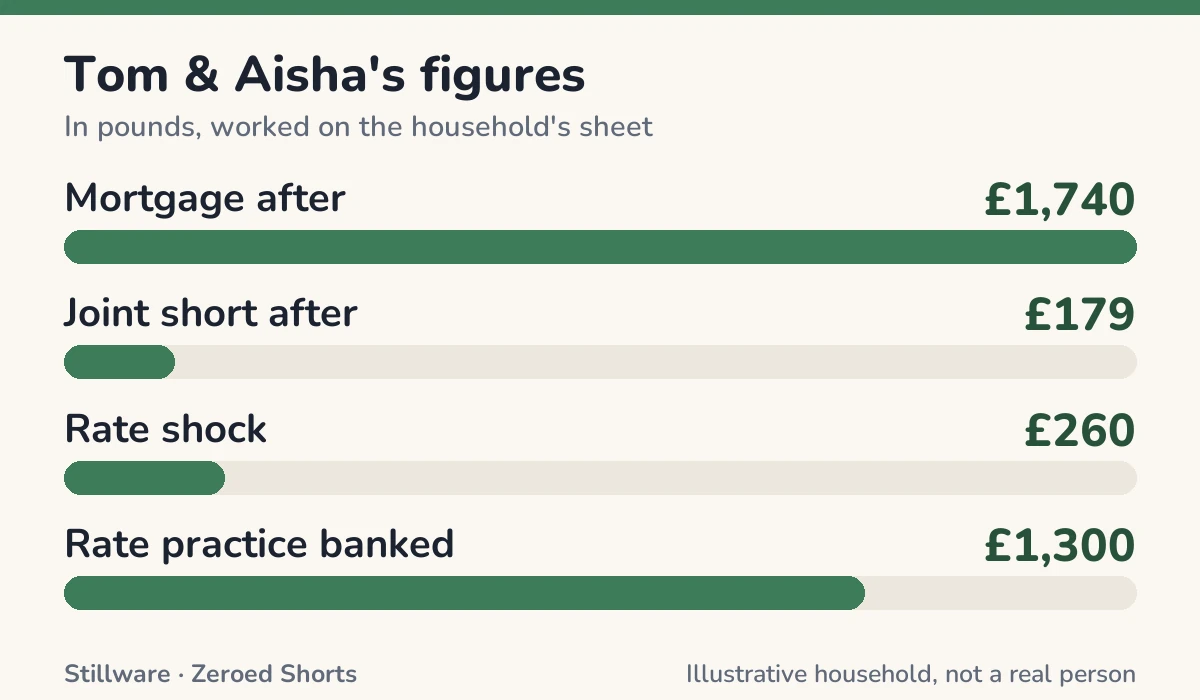
It is the first of March, in the version of events where nothing changed. The mortgage takes £1,740. By the tenth, the joint account is £179 short, and it has never been short before. Tom and Aisha have two children and take home £7,200 a month between them, and they had known this was coming since October.
The letter had told them the mortgage would rise by £260 a month, from £1,480. Everyone in the house knew. The transfers into the joint account did not. Each month £4,400 went in, against £4,319 of commitments, a margin that had worked for years. With the higher payment, the commitments became £4,579, and the account fell £179 short.
That is what breaks when a fixed bill rises. It is not the bill itself, which simply gets paid. It is the account that pays it, because that account is fed by a number that was set years ago and never revisited. The bill moved and the money feeding it stayed exactly where it was.
Now the other version. In October, as soon as the letter arrived, they started moving £260 a month into an envelope called Rate. In effect they were practising the new payment, living on the smaller amount before they had to. By March the envelope held £1,300, and the higher payment had already been felt for five months. Nothing about it was a surprise any more.
So on the first of March in this version, nothing happens. The £260 that had been going into Rate goes to the mortgage instead. It is the same money, with a new destination, and the joint account carries on as it always has.
That is the turn. The envelope was never the fix. It was the bridge. The fix was that the money feeding the bill changed on the day the bill did. And the £1,300 sitting in Rate still has a job: it covers the six months before the nursery bill stops.
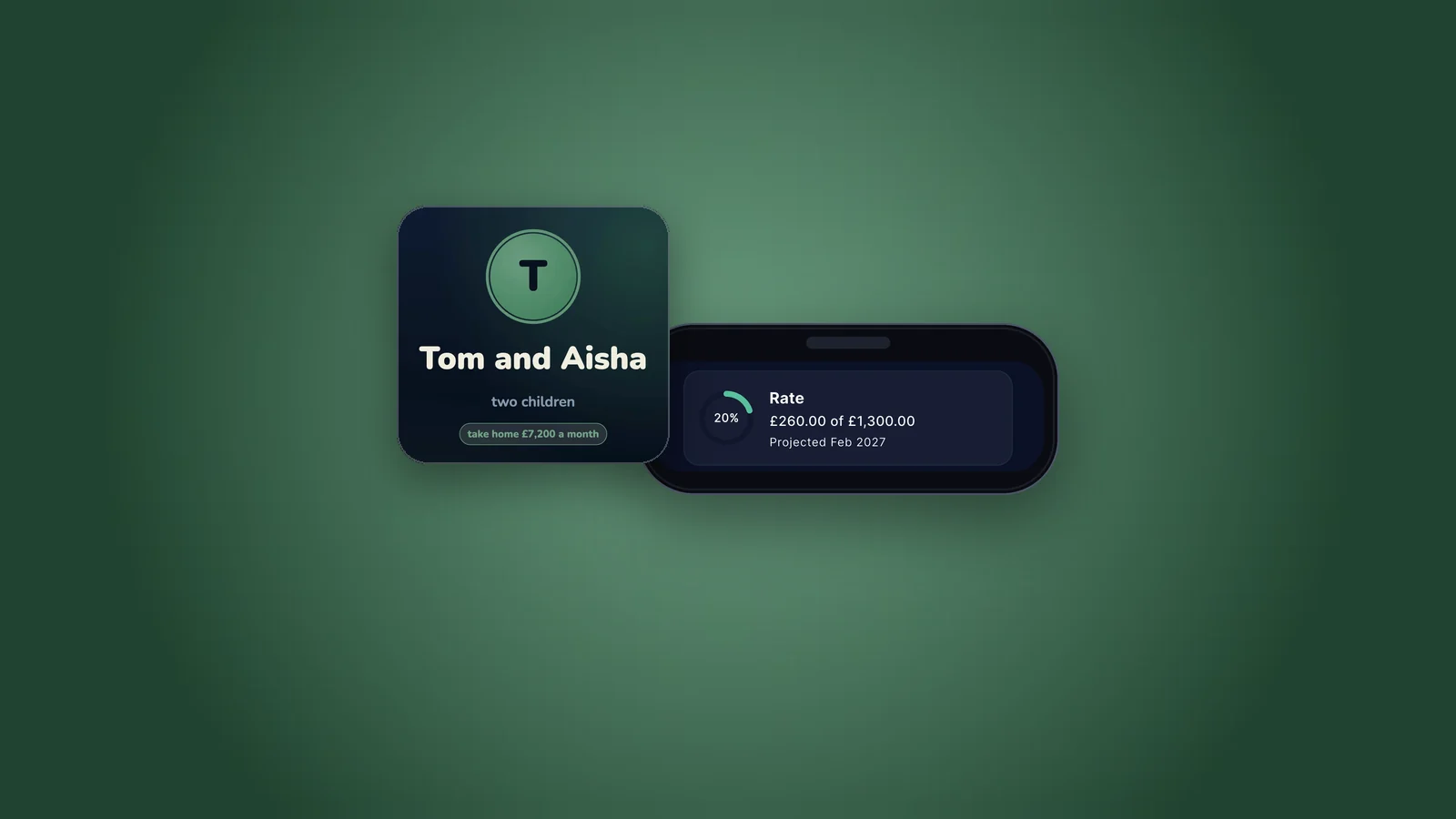
The lesson travels well. If a fixed bill is due to change on a known date, the money that feeds it should change on the same date, by the same amount, and it helps to practise it first if there is time. Tom and Aisha’s Rate goal is already a fifth full, with £260 in it, so the bigger payment is already leaving the joint account five months early.
The working
Every figure the Short says, and where it comes from on the household’s sheet.
| The Short says | Figures | Derivation |
|---|---|---|
| one thousand seven hundred and forty | mortgage + rate_shock | on the sheet |
| one hundred and seventy-nine pounds short | (joint_committed + rate_shock) - joint_in | on the sheet |
| seven thousand two hundred | takehome = 7,200 | takehome = tom + aisha |
| two hundred and sixty more a month | rate_shock = 260 | on the sheet |
| two hundred and sixty a month into an envelope | rate_shock = 260 | on the sheet |
| thirteen hundred / five months | rate_shock * practice_months; practice_months = 5 | on the sheet |
| the six months before the nursery bill stops | cliff_gap_months = 6 | cliff_gap_months = months between mortgage_change and nursery_end |
The turn
The envelope was never the fix; it was the bridge; the fix is that the money feeding the bill changed the day the bill did.
The Short
The story is told in 3 Shorts:
- March 1st: the Joint Account Is £179 Short (1/3)
- The Mortgage Rise They Practised Since October (2/3)
- The Envelope Was Never the Fix (3/3)
Monday
- If a fixed bill changes on a date, the money that feeds it changes on the same date, by the same amount.
- Practise it first if you can.
In Zeroed
Tom and Aisha’s Rate goal is a fifth full: two hundred and sixty, a month in. So the bigger payment already leaves the joint account, five months early.

Zeroed: Offline Budget Planner is the app in the Short — envelope budgeting you buy once. It works offline, with no bank login, no subscription and no data harvesting; the first thirty-four days are free, no card needed. Try Zeroed.