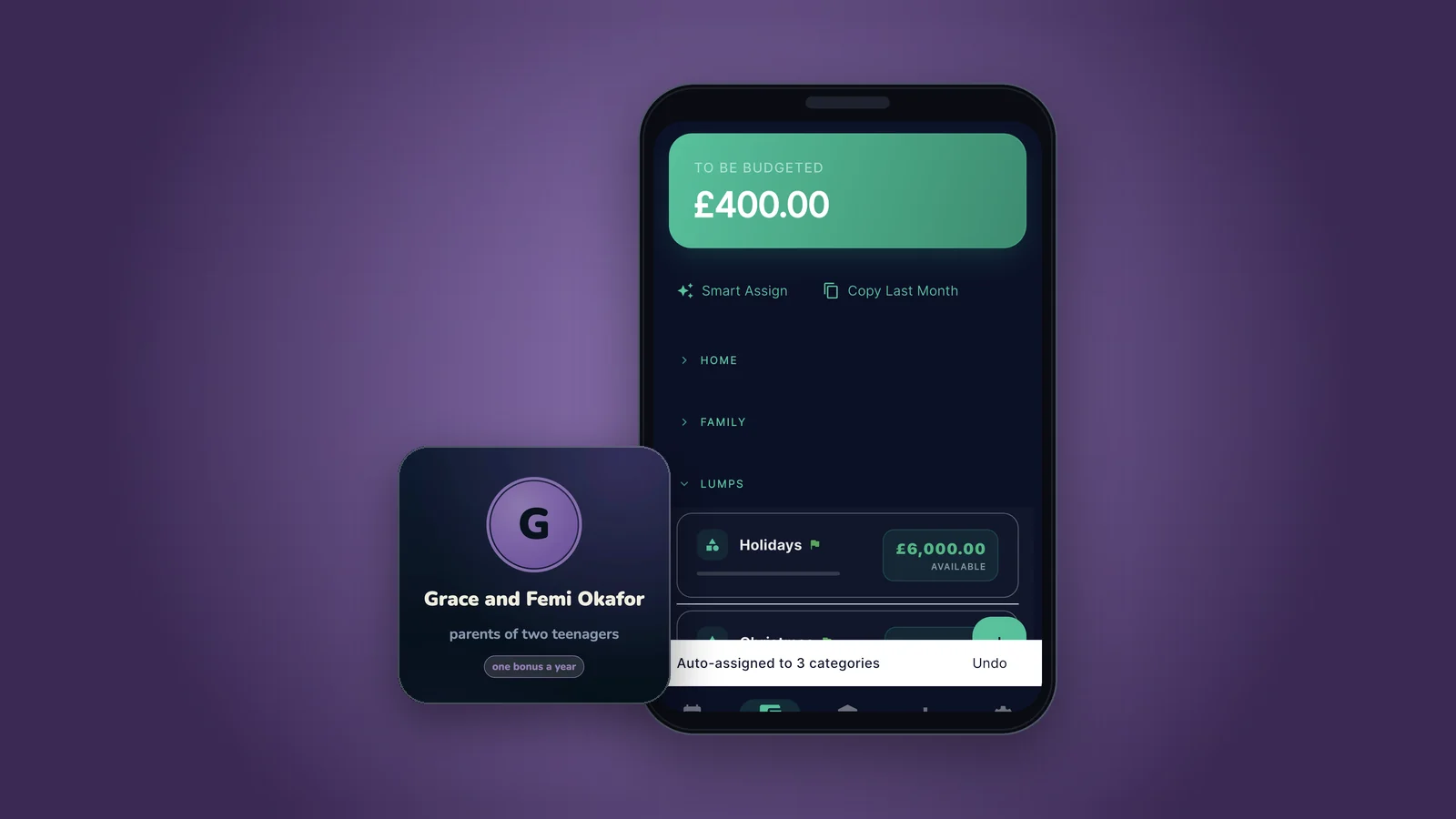
£2,000 of Femi’s £11,000 bonus went somewhere in the spring and neither he nor Grace can say where. The rest they can: a kitchen and a summer. Then September’s university term and Christmas went on the card. Added up once, the year’s lumps came to £10,600, almost the whole bonus, and it was spent before the first fell due.
Grace and Femi Okafor. The households in these Shorts are illustrations built from typical UK figures, not real people, and every number below is worked on the household’s sheet.
What happened
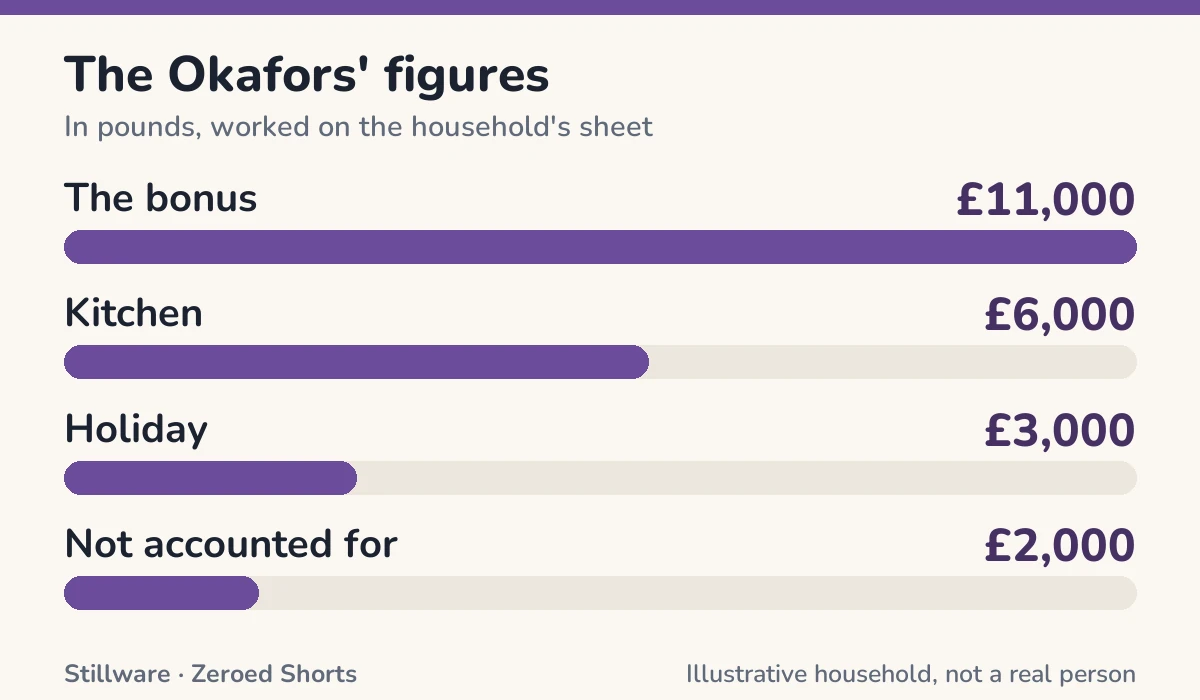
Grace and Femi Okafor can account for most of last year’s bonus. Of the £11,000 that landed in March, they know that £6,000 went on the kitchen and £3,000 on the summer. That is £9,000 they can name. The other £2,000 went somewhere in the spring, and neither of them can say where. By June, none of the bonus was left.
The couple have two teenagers and take home £9,800 a month between them, with Femi’s bonus arriving once a year on top. What made the missing £2,000 matter was what happened next. In September the university term fell due, and in December so did Christmas, and both went on the card. The monthly budget then spent the months until spring paying that card off. When they finally sat down and listed the year’s large costs, the picture was clear. Holidays, summer and winter together, came to £6,000 across the year. Christmas was £1,400. The first term at university was £3,200. All told, that was £10,600, and they had never once added it up.
That total sat almost exactly against the bonus. The Okafors had treated the bonus as extra money, something to enjoy or improve the house with. In fact it was the year’s lumps arriving early, very nearly to the pound, and it had been spent before the first of those lumps came due. It was never extra. The £2,000 nobody can account for simply went the way money goes when it has no job to do.
So the question they now ask when the bonus arrives is not what to do with it, but which envelope it fills first. The calendar answers that for them: holidays in July, university in September, Christmas in December, filled in date order on the day the money lands. Put £10,600 into those three envelopes and £400 remains. That £400 is the only part of the bonus that was ever genuinely extra. The kitchen, meanwhile, stopped being something paid for out of a lump already spoken for. It became a monthly decision, weighed against the £9,800 a month they actually live on.
The approach they arrived at is simple enough to do before any lump lands: write the year’s big costs on one line. That line is the lump’s job list, and whatever is left over after it is the only real extra. When this year’s bonus came, their three envelopes each had a target, all three were filled from it at once, and £400 stayed free.
The working
Every figure the Short says, and where it comes from on the household’s sheet.
| The Short says | Figures | Derivation |
|---|---|---|
| two thousand pounds / the other nine thousand | bonus_last - bonus_kitchen - bonus_holiday; bonus_kitchen + bonus_holiday | on the sheet |
| nine thousand eight hundred | takehome = 9,800 | on the sheet |
| eleven thousand | bonus_last = 11,000 | on the sheet |
| six thousand / three thousand | bonus_kitchen = 6,000; bonus_holiday = 3,000 | on the sheet |
| six thousand across the year / fourteen hundred | holidays = 6,000; christmas = 1,400 | on the sheet |
| three thousand two hundred / ten thousand six hundred | uni_first_term = 3,200; holidays + christmas + uni_first_term | on the sheet |
| ten thousand six hundred / four hundred left | annual_lumps = 10,600; bonus_last - annual_lumps | annual_lumps = holidays + christmas + uni_first_term |
| nine thousand eight hundred a month | takehome = 9,800 | on the sheet |
The turn
The bonus is not extra money; it is the year’s lumps arriving early, almost to the pound, spent before the first of them fell due.
The Short
Monday
- Write the year’s lumps on one line.
- The day a lump lands, fill those envelopes in date order.
- What is left is the only part that was ever extra.
In Zeroed
the Okafors’ three envelopes carry a target each. Assign underfunded filled all three from the bonus in one tap, and four hundred stayed free.
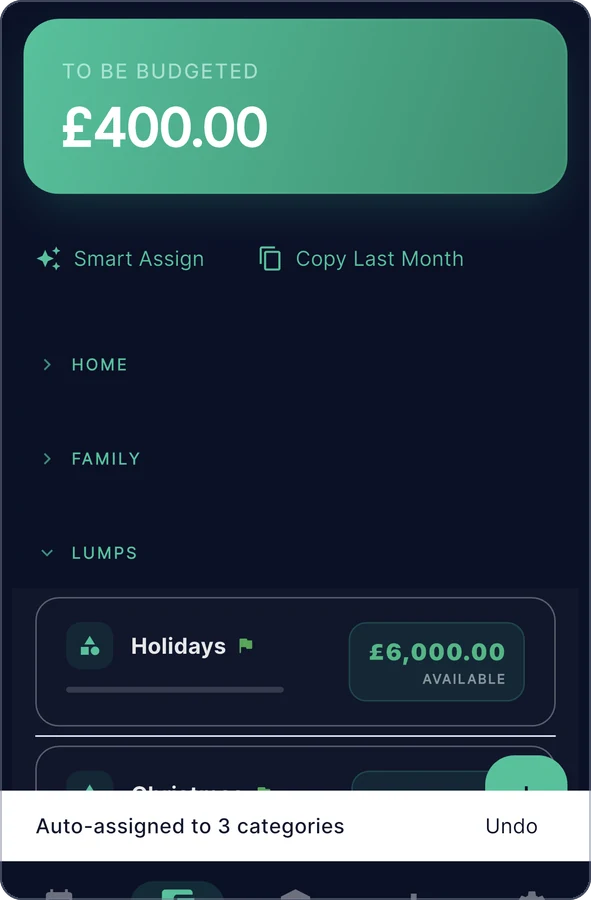
Zeroed: Offline Budget Planner is the app in the Short — envelope budgeting you buy once. It works offline, with no bank login, no subscription and no data harvesting; the first thirty-four days are free, no card needed. Try Zeroed.