Arabian Mate in Chess: Pattern, Examples and Puzzles
The Arabian mate is a checkmate in the corner of the board, delivered by a rook and a knight. The rook stands next to the king and gives the check. The knight, two squares away diagonally from the king, protects the rook and covers the other escape square. With the king on h8: rook on h7, knight on f6.
Updated
Arabian mate at a glance
Delivered by
A rook (check) and a knight (support)
The king
On a corner square: h8, a8, h1 or a1
Key squares
For a king on h8: rook on h7, knight on f6
Cure for the defender
Keep a piece guarding the squares beside the corner king, or give it room to leave the corner
The pieces are one rook and one knight, against a king on a corner square.
The picture for a king on h8: rook on h7, knight on f6. The rook gives the check and covers g7, and the knight covers g8 and protects the rook.
The knight stands on the same diagonal as the king, two squares away. It is not a knight's move away from the king.
Look for a way to drive the king into the corner first. In the first example below, a knight check (Nf6+) sends the king to h8 and the rook follows.
The rook needs a route to the square beside the king, often along the seventh rank or the h-file.
Worked examples from the daily puzzles
Each position comes from a real game in the open Lichess puzzle database and is checked before it is published. Set it up, look for the pattern, and only then read the solution.
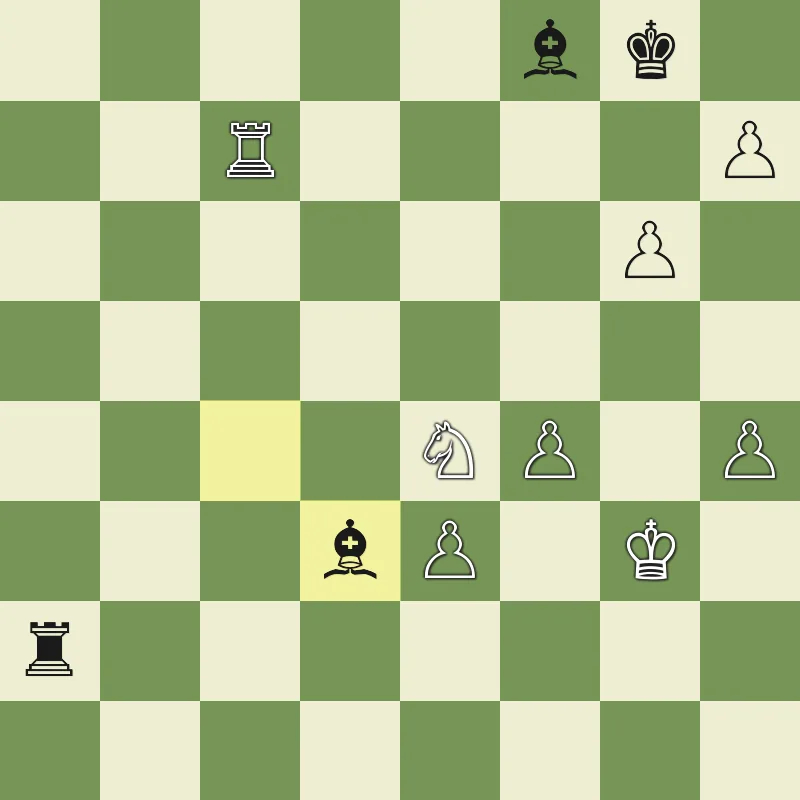
Daily Chess Puzzle #1: White to play (rated 805)
White to play. Black has just played bishop to d3. It looks harmless, but Black's king on g8 is short of squares, and our knight and rook are already close by. Can you see the check that drives the king into the corner?
Play it on Lichess before reading on: lichess.org/training/00H8a.
Position (FEN): 5bk1/2R4p/6p1/8/4NP1P/3bP1K1/r7/8 w - - 3 46
Solution
Nf6+ — White: Knight to f6, check.
Kh8 — Black: King to h8.
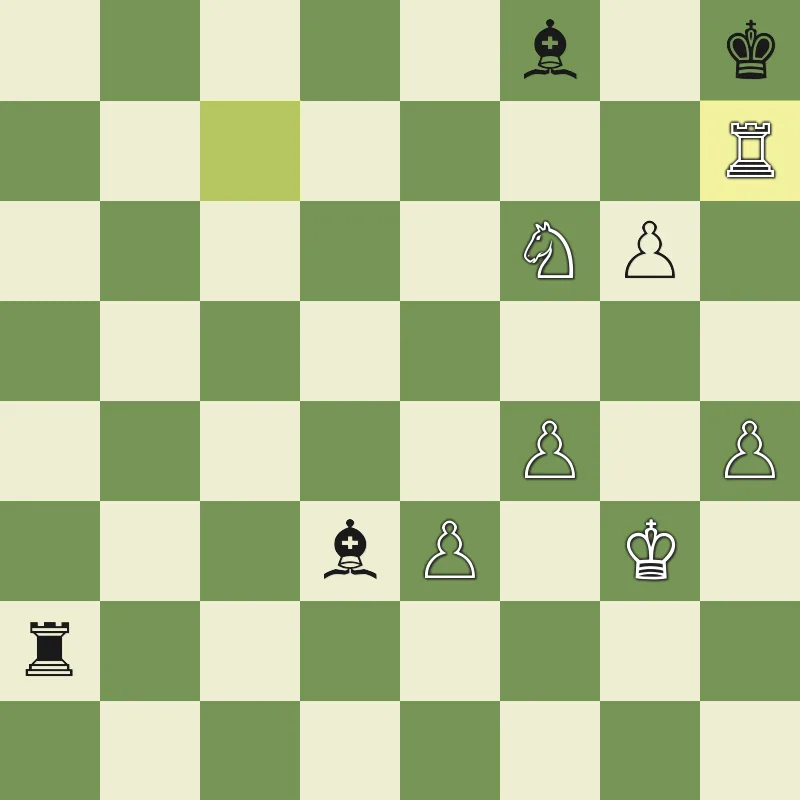
Rxh7# — White: Rook takes on h7, checkmate.
Knight to f6, check. The king cannot go to f7, because our rook on c7 controls that square. So Black's only move is king to h8. And now, rook takes on h7. Checkmate.
Why this is the Arabian mate. The black king is on h8. White's rook on h7 gives the check and covers g7, and the knight on f6 covers g8 and protects the rook, so the king cannot take it.
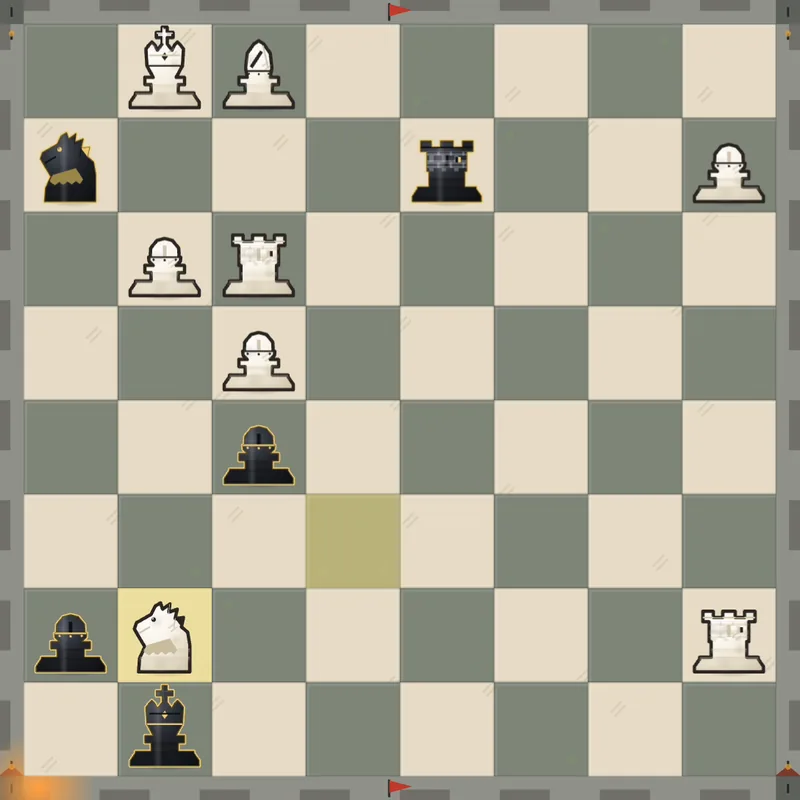
Black to play. White just played knight takes on g7. It wins a pawn, or so it seems. The white king on g1 is short of squares. The king is running out of squares. Can you find the winning check?
Play it on Lichess before reading on: lichess.org/training/02Mt2.
Position (FEN): 6k1/R5Np/8/5p2/5P2/5RP1/P2r3n/5BK1 b - - 0 32
Solution
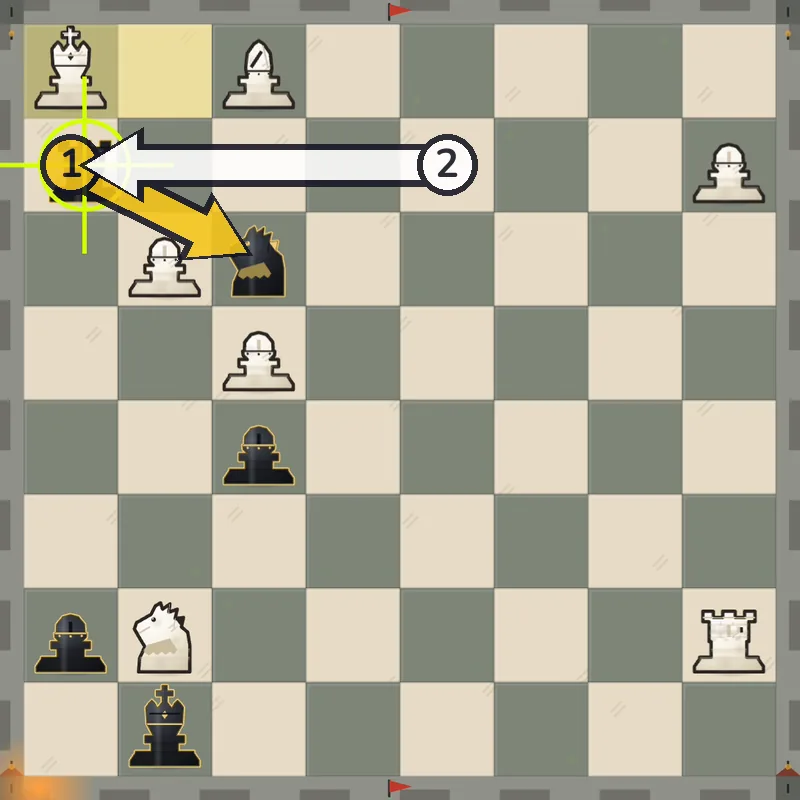
Nxf3+ — Black: Knight takes on f3, check.
Kh1 — White: King to h1.
Rh2# — Black: Rook to h2, checkmate.
Knight takes on f3, check. The king cannot go to f2, because our rook on d2 controls that square. White has no choice. King to h1. And now, rook to h2, checkmate.
Why this is the Arabian mate. The pattern appears in the other corner, with Black delivering it. White's king is on h1, Black's rook on h2 gives the check and covers g2, and the knight on f3, two squares away on the diagonal, protects the rook and covers g1.
Putting the rook next to the king before the knight is in place. An unprotected rook is simply captured by the king.
Checking from the wrong side. Make sure your check pushes the king into the corner rather than out towards the centre.
Defending: ignoring a knight that can jump to the long diagonal (f6 for a king on h8). Count the knight's squares before you tuck the king away in the corner.
Where does the name come from?
Wikipedia notes that the Arabian mate is mentioned in an ancient Arabic manuscript, and that the pattern comes from an older form of chess in which the knight and the rook were the two most powerful pieces.
Arabian mate FAQ
What is the Arabian mate?
A checkmate in which a rook and a knight trap the king in a corner. The rook sits next to the king and gives the check, and the knight, two squares away diagonally, protects the rook and covers the last escape square.
Why is it called the Arabian mate?
Wikipedia notes that the pattern is mentioned in an ancient Arabic manuscript, and that it comes from an older form of chess in which the knight and the rook were the two most powerful pieces.
Does the Arabian mate only work in the corner?
Yes. The pattern is defined by a king trapped on a corner square, with the rook beside it and the knight two squares away on the diagonal.
How can I practise the Arabian mate?
Work through the puzzles on this page, then try the daily puzzles linked below. RankUp Chess, an offline chess academy for kids, has a library of 5,000+ puzzles you can filter by difficulty and theme. It is free to play, with no ads and no subscription.
Related checkmate patterns
Anastasia's mate: A knight and a rook trap the king between the edge of the board and its own piece.
Corner mate: A rook or queen confines the king to the corner and a knight gives the mate.
Morphy's mate: A bishop gives the mate while a rook and a pawn confine the king.
RankUp Chess is an offline chess academy for kids: 5,000+ puzzles, 10 AI levels and lessons. Free to play forever, one payment unlocks it all. No ads, no subscription.
RankUp Chess. No ads, no subscription and it works offline.