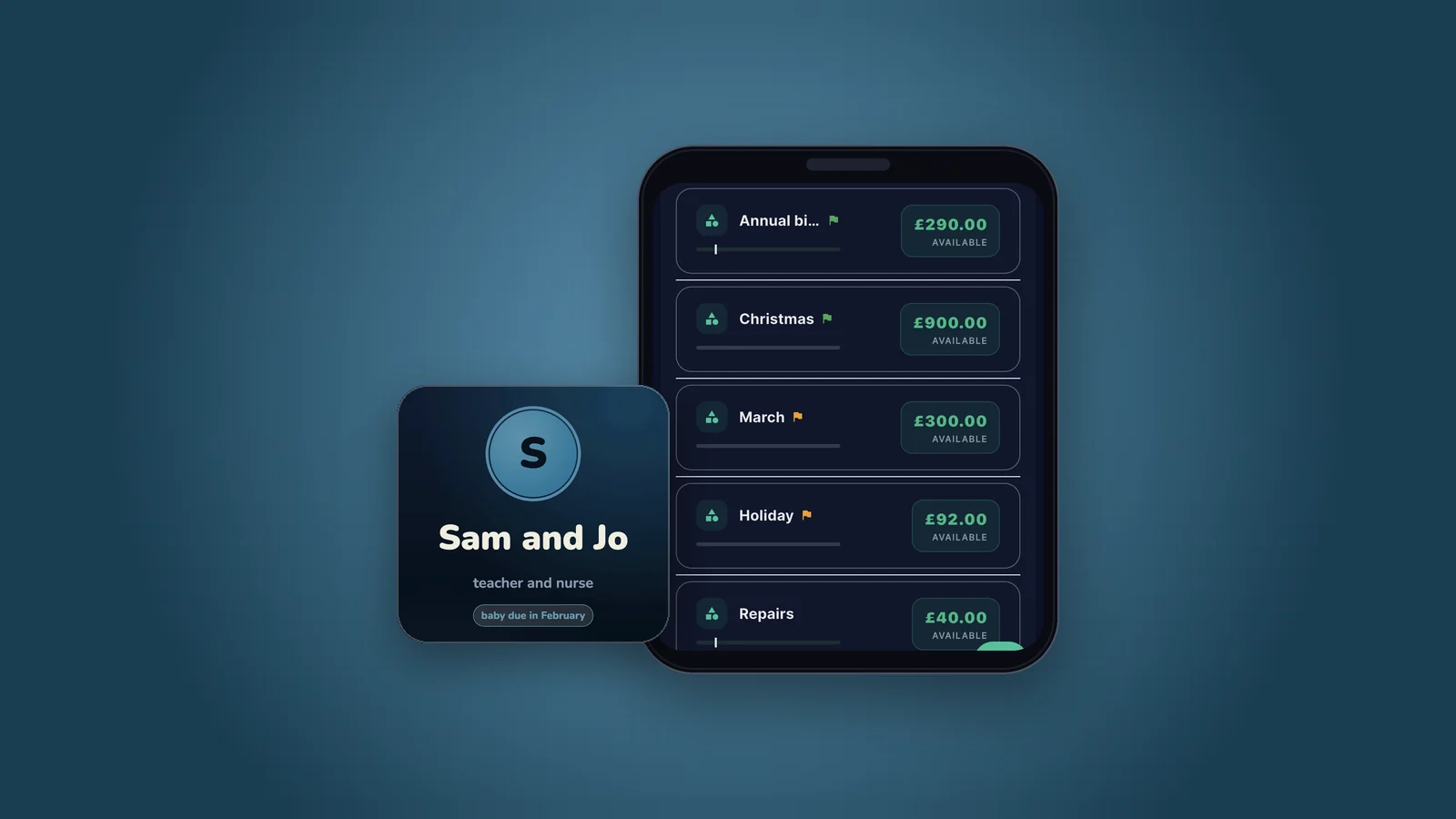
Jo’s HR letter says her pay drops to £1,180 a month from March, for six months. Sam said “we’ll manage”. The drop is £1,120 a month, six times: £6,720. Five paydays at £300 spare covers £1,500 of it. The rest has answers; a feeling does not.
Sam and Jo, teacher and nurse. The households in these Shorts are illustrations built from typical UK figures, not real people, and every number below is worked on the household’s sheet.
What happened
The letter from HR arrived, and Jo read it at the kitchen table. Sam’s response was the one plenty of couples reach for in that moment: they would manage somehow. It was meant kindly, and it was probably true in a general sense. But a reassurance is not a figure, and nothing can be planned around it. The figure that mattered, once they worked it out, was £6,720.
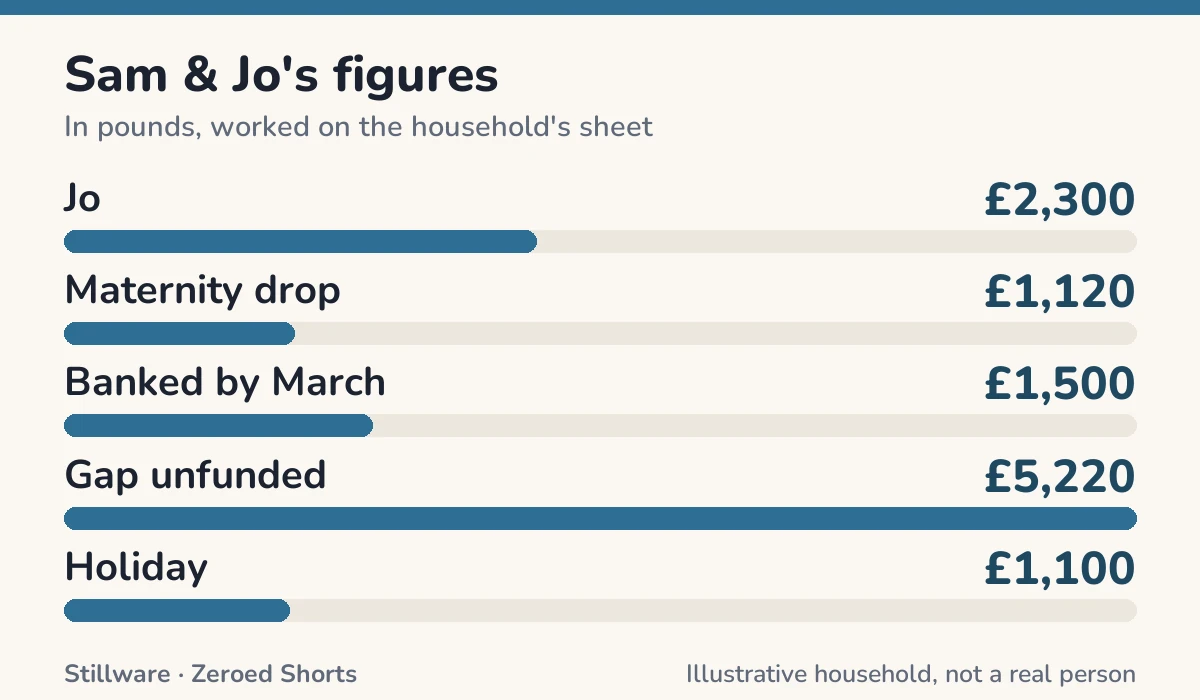
Sam is a teacher and Jo a nurse, and their first baby is due in February. From March, according to the letter, Jo’s pay will fall to £1,180 a month. At the moment she takes home £2,300, so the drop is £1,120 every month. The letter also settled how long that lasts: six months. Multiply the monthly drop across that stretch and the household is facing a shortfall of £6,720.
That changed the nature of the conversation. Instead of a vague worry about whether they would cope, there were three plain questions with plain answers: when the drop begins, how much it is, and how long it goes on. Having the number turned out to be far less frightening than not having it had been. A feeling of dread gives nothing to work with. A total, even an uncomfortable one, does.
Next came the question of what could be put aside before the drop began. Between now and March there are five paydays, and on each of them the couple usually have about £300 to spare. Banked rather than spent, that comes to £1,500 by the time Jo’s pay changes. Take it off the gap and £5,220 remains to be found. That is still a serious amount, but it is a far better position than a shrug, because a specific sum has specific answers and a mood has none.
Those answers were within reach. The holiday, at £1,100, could be paused. The regular payments they make into an envelope for annual bills could be paused too, for the six months of reduced pay. And the habit of reaching for the credit card could be stopped before it had a chance to form. Each of those choices could only be made now, in October, while there was still time for them to make a difference. So Sam and Jo opened an envelope named March and started filling it from the very next payday, rather than waiting for the letter’s date to arrive. For any couple facing a pay change, the working is the same: the size of the drop multiplied by the months it lasts, said aloud at the table, with the spare from each payday banked from now on.
The working
Every figure the Short says, and where it comes from on the household’s sheet.
| The Short says | Figures | Derivation |
|---|---|---|
| six thousand seven hundred and twenty | maternity_drop * maternity_months | on the sheet |
| four thousand seven hundred | takehome = 4,700 | takehome = sam + jo |
| one thousand one hundred and eighty a month | jo_maternity_pay = 1,180 | on the sheet |
| two thousand three hundred / eleven hundred and twenty | jo = 2,300; jo - jo_maternity_pay | on the sheet |
| six months / six thousand seven hundred and twenty | maternity_months = 6; maternity_drop * maternity_months | on the sheet |
| five paydays / three hundred / fifteen hundred | months_to_march = 5; spare = 300; spare * months_to_march | spare = takehome - spend |
| five thousand two hundred and twenty | maternity_gap - banked_by_march | on the sheet |
| pause the holiday: eleven hundred | holiday = 1,100 | on the sheet |
The turn
The number is not the scary part; the scary part was not having it, because you cannot plan for “we’ll manage.
The Short
Monday
- The drop times the months.
- Say it at the table.
- Bank the spare from the next payday, not from March.
In Zeroed
Sam and Jo’s envelope is called March. Five paydays in, it holds fifteen hundred, and the row says what each payday needs.
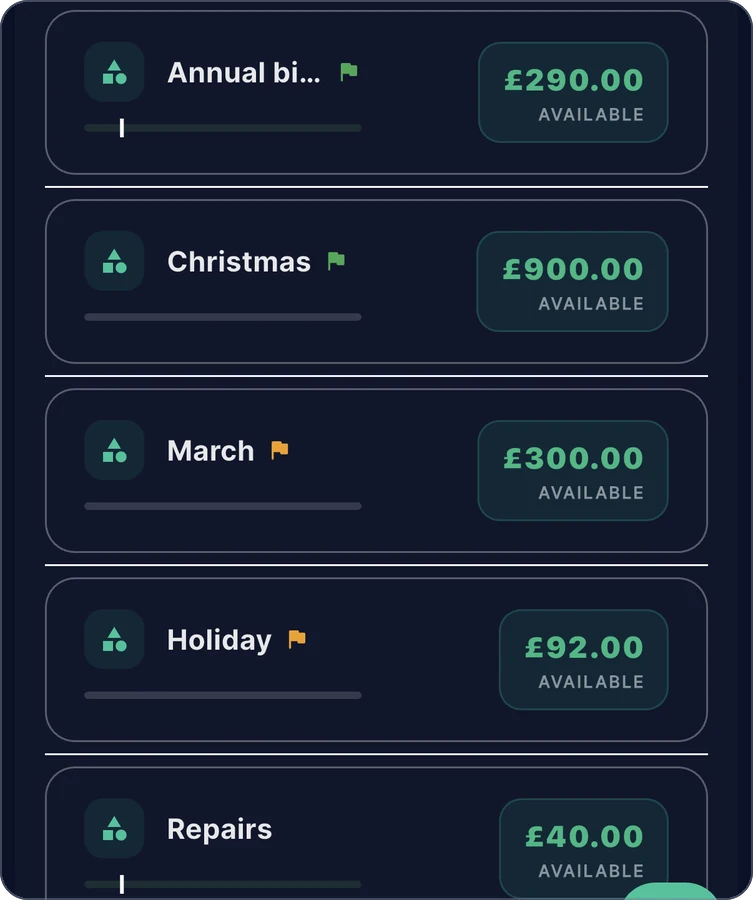
Zeroed: Offline Budget Planner is the app in the Short — envelope budgeting you buy once. It works offline, with no bank login, no subscription and no data harvesting; the first thirty-four days are free, no card needed. Try Zeroed.