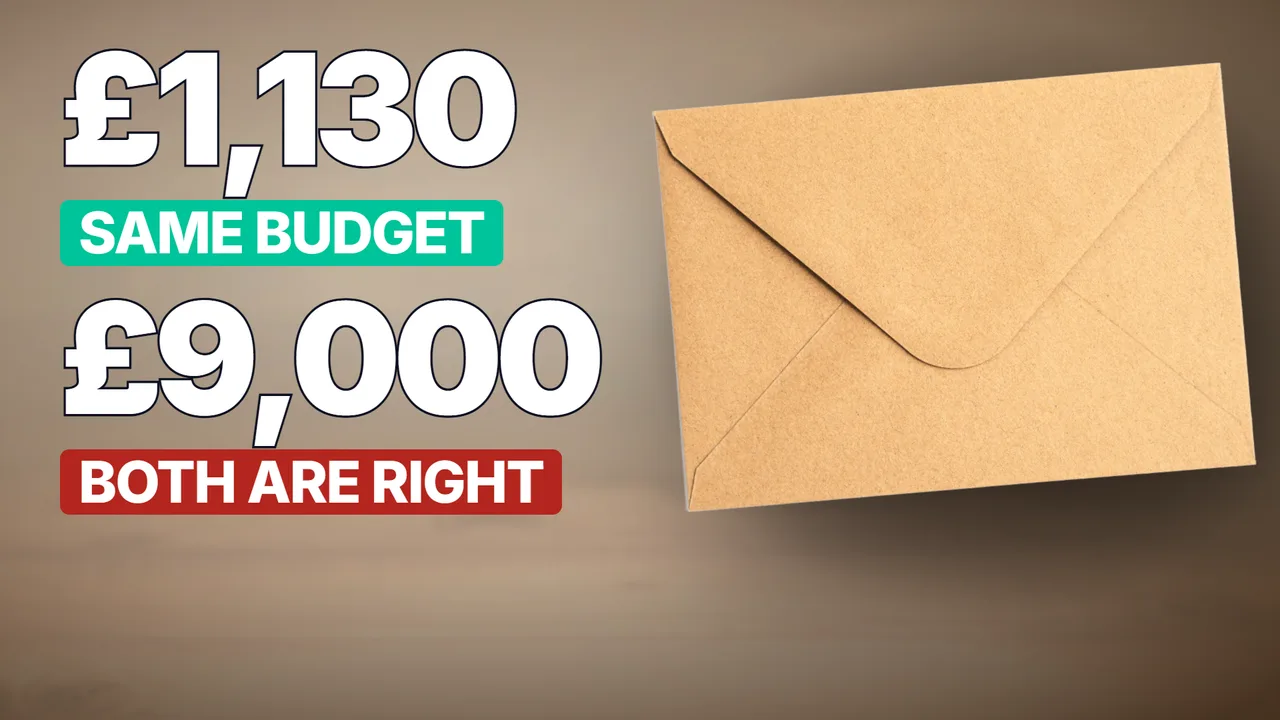
The short answer: on a £2,400-a-month household, “how much emergency fund” has four honest answers — £1,130, £1,500, £4,500 and £9,000 — and the one you should aim at first is the smallest. Every guide gives you the rule: three to six months of essential expenses. None of them gives you the second number, which is how long its own answer takes you to save. On this budget those four targets are two months, two months, six months and twelve months away. That gap is why people quit.
The rule is right. It is just unpriced
MoneyHelper says three months of essential expenses as a minimum. Hargreaves Lansdown, Aviva, the Post Office and the UKPersonalFinance wiki all say three to six months of essentials, and they are careful to say essentials — not gross income, and not the gym, the subscriptions, the takeaways or the holiday.
That is correct, and this article is not going to argue with it. The problem is what happens next: the advice stops at the ratio. It does not tell you what three to six months is in pounds for your budget, and it never tells you how long that is in paydays. So “three to six months of expenses” arrives as a single instruction and lands as anything between a two-month job and a two-year one, depending on which end of it you heard.
One household, six envelopes
Every figure below comes from the same budget, and nothing else. Take-home £2,400 a month, single renter, paid on the 1st.
| Envelope | Monthly | Would you still pay it if the income stopped? |
|---|---|---|
| Rent | £950.00 | yes |
| Bills (phone, energy, streaming) | £180.00 | yes |
| Groceries | £250.00 | yes |
| Transport | £120.00 | yes |
| Eating out | £80.00 | no |
| Fun money | £60.00 | no |
| Plan | £1,640.00 |
Run that one test down the column — if the money stopped arriving on Friday, would this still leave my account? — and the month splits in two. £1,500 would still leave. £140 would not. Eating out and fun money are the first two things a lost income cancels, and they are the two the guides are already telling you to exclude.
After the six envelopes, this budget has £760 a month left. That is not a savings target anybody chose; it is the remainder, and it is the number that decides how long every answer below takes.
The four answers, priced and dated
| Target | What it covers | Amount | Months of saving at £760 |
|---|---|---|---|
| One month of what leaves anyway | rent + bills | £1,130 | 2 |
| One month of everything you would still pay | + groceries + transport | £1,500 | 2 |
| Three months of that | the low end of the rule | £4,500 | 6 |
| Six months of that | the high end of the rule | £9,000 | 12 |
Four figures, one budget, nearly eight times apart from end to end. All four get called “the emergency fund”, depending on who is talking.
And notice the argument that actually gets had. Should eating out and fun money be counted? Over three months, including them takes the target from £4,500 to £4,920 — £420. That is the whole thing people argue about in the comments. The argument nobody has is the one in the same table: three months against six months is £4,500 apart, and six more months of saving every spare pound.
The reason the pot keeps getting emptied
There is a second reason the number comes out too big, and it is not the ratio’s fault. A lot of what people keep in this pot is not an emergency at all.
An MOT is not an emergency. Neither is the car tax, the insurance renewal, or Christmas. Those have dates. You know roughly when they are coming and roughly what they cost, and money for them belongs in its own envelope, funded a twelfth at a time — a sinking fund, not an emergency fund. MoneyHelper makes the same distinction, and so does most of the internet.
What almost nobody does is add the sinking funds up. We did, on a smaller budget: four ordinary sinking funds came to £160 a month, and £90 of it did not exist anywhere in the plan. If those costs are sitting inside your emergency fund instead, two things happen. The target looks enormous, and you spend it — on an MOT, in March, exactly as planned by everyone except you.
Start at £1,130, not at £9,000
The first target is not three months of anything. It is one month of what leaves whether or not you are working: the rent and the bills. £1,130 on this budget, and at £760 a month it is funded in your second month.
It is the smallest of the four and it is the only one that is two paydays away. That matters more than it sounds, because the failure mode here is not choosing the wrong target — it is being handed the £9,000 one on day one and never starting.
Then the honest caveat, which every date in this article depends on: it assumes the whole £760 goes to savings. Save half of it and the far dates double — £9,000 moves from twelve months to two years. The first target moves by one payday, from month two to month three. That asymmetry is the argument for starting small in one line.
If you want the twelve-month answer, it is £18,000 and two years of every spare pound. It is a real answer with a real price, and it deserves to be chosen rather than inherited.
How to do it on paper
- Write the month out as envelopes — every one of them — and total it.
- Mark each envelope: if the income stopped on Friday, would this still leave the account?
- Add up only the ones that survive. That is one month of what you would still pay.
- Take the dated costs out — MOT, car tax, insurance renewal, Christmas. They get their own envelopes, a twelfth a month.
- Make your first target one month of rent plus the bills, and fund it on payday like a bill, not from whatever is left at the end of the month.
- Only then choose between three months and six, knowing what each one costs in paydays.
A notebook does all six steps. So does a spreadsheet, and so does any budgeting app that lets you name an envelope and put money in it.
Where Zeroed fits
I built Zeroed because step 5 is where this falls over. “Save what is left” is not a plan, and a savings account with one balance in it cannot tell you whether that balance is your emergency fund, your car insurance or next Christmas.
Zeroed is envelope budgeting on your own device: you name the envelopes, you fund them on payday, and the emergency fund is a row with a target you can see — separate from the dated ones, which is the whole point of this article. It works offline, there is no bank login, and it is one payment rather than a subscription. If you would rather use a notebook, the method above is the same method.
Working out your own number first? The emergency fund calculator prices one, three and six months of your own essentials in a minute.
Questions people actually ask
Does “expenses” mean my income? No. Essential outgoings — the ones that would still leave your account if your income stopped. On the budget above that is £1,500 a month, not £2,400.
Three months or six? Six if your income is irregular, self-employed, commission-based or the only one in the household; three if it is stable and there are two of them. But choose it knowing the difference is £4,500 and six months of saving, not as a shrug.
Where should I keep it? Somewhere you can reach it within a day or two. Which account is a different question from this one, and not a budgeting question — this article does not answer it.
Should I do this before paying off debt? You can do both, and we priced what “both” costs: on a £3,000 card it was £28.35 over a year.
What if I have nothing spare at all? Then the first job is the month, not the fund. Start with one envelope on a low income and come back to this.
This is education about a budgeting method, not financial advice. Every figure here is arithmetic on the one household budget shown above; your own numbers will differ, which is rather the point.