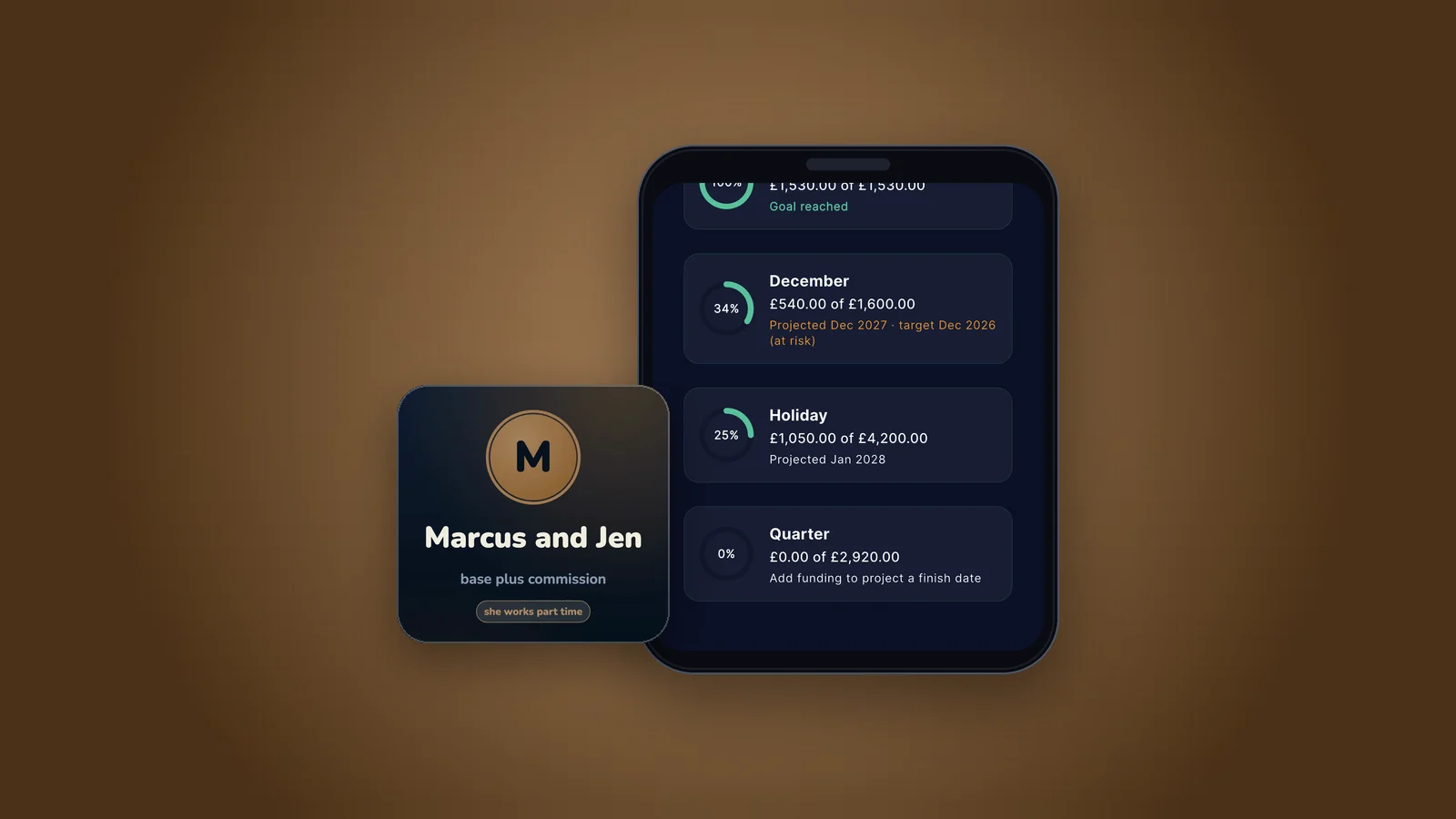
The booking was £2,800, paid in a good quarter, and it felt done. Then spending money, the airport, and ten days of dog-sitting: £1,400 that was never “the holiday”, a third of the real total, on the card in a month with no commission.
Marcus and Jen. He is a sales director on a base plus commission; she works part time.. The households in these Shorts are illustrations built from typical UK figures, not real people, and every number below is worked on the household’s sheet.
What happened
Marcus and Jen have never said the number £4,200 out loud. As far as they were concerned, the holiday cost £2,800. Marcus is a sales director paid a base salary plus commission, and Jen works part time, so their income arrives in good quarters and lean ones, and that pattern matters to how this went.
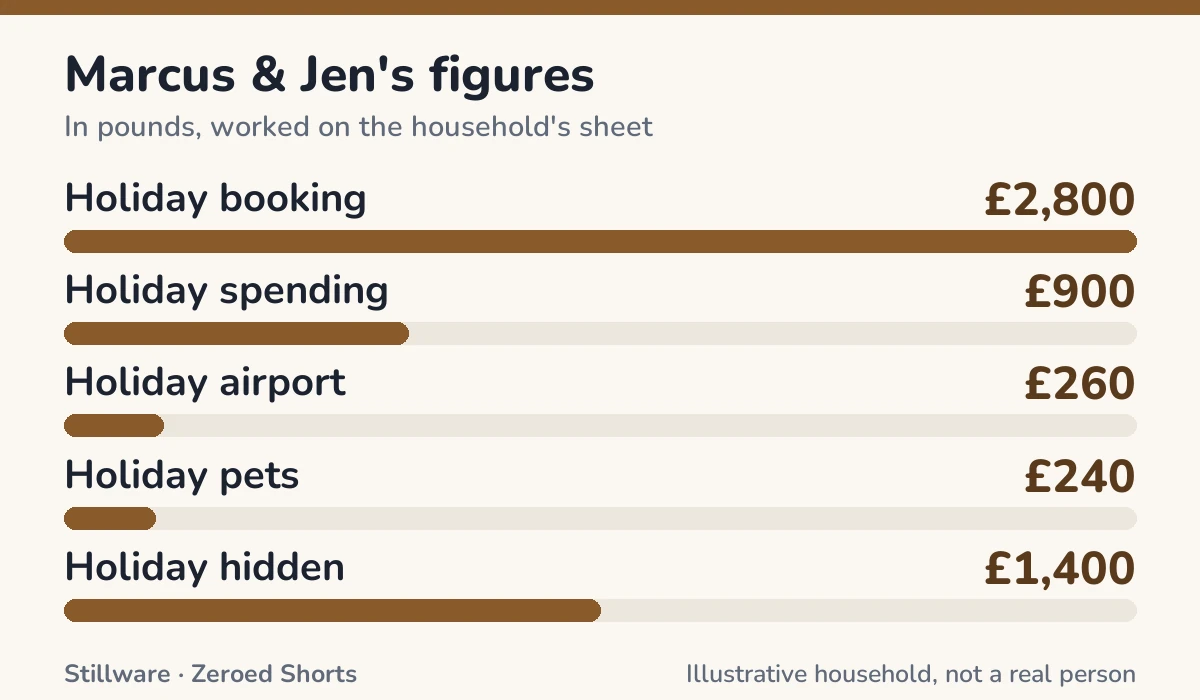
The £2,800 was the booking: the flights and the apartment. It was paid in a good quarter, in one go, and once it was paid the holiday felt done. Then the holiday itself happened. Spending money while they were away came to £900. The airport added £260, between the parking, the early breakfast and the things people buy simply because they are standing in an airport. The dog stayed at a sitter’s for ten days, which cost £240.
That was £1,400 that had never counted as the holiday. It was a third of the real total, it went on the card, and it landed in a month with no commission. The booking had taken the good quarter, so the rest fell on the bad one that followed.
That is the turn. The booking is only two-thirds of a holiday. The other third arrives while everyone is wearing shorts and nobody is counting, and because it comes in small pieces rather than one payment, it never feels like part of the price. For a household on a base and commission, that third does particular damage, because it reliably lands on the quarter that was never meant to pay for it.
The change was to price the holiday whole. The booking, the spending money, the airport, the animals and the taxi home all go into one figure, which for Marcus and Jen is £4,200, and the holiday envelope is for that amount rather than the part with a receipt. When a good quarter comes in, it funds the whole trip, not just two-thirds of it, and the holiday stops quietly costing the quarter after it.
Anyone can find their own version of that third. Take the last holiday’s booking, then add every line from the ten days around it: the spending, the travel to and from the airport, the pet care, the meals on the way. Divide those extra lines by the total, and that is the share that never made it into the plan. Marcus and Jen’s envelope now has a single target, the whole £4,200, so the third after the booking lands on the envelope rather than on the card.
The working
Every figure the Short says, and where it comes from on the household’s sheet.
| The Short says | Figures | Derivation |
|---|---|---|
| four thousand two hundred / two thousand eight hundred | holiday_booking + holiday_spending + holiday_airport + holiday_pets; holiday_booking = 2,800 | on the sheet |
| two thousand eight hundred was the booking | holiday_booking = 2,800 | on the sheet |
| nine hundred / two hundred and sixty | holiday_spending = 900; holiday_airport = 260 | on the sheet |
| two hundred and forty | holiday_pets = 240 | on the sheet |
| fourteen hundred / a third | holiday_total - holiday_booking; holiday_hidden / holiday_total = 0.33 | on the sheet |
| four thousand two hundred | holiday_total = 4,200 | holiday_total = holiday_booking + holiday_spending + holiday_airport + holiday_pets |
The turn
The booking is two-thirds of a holiday; the other third lands when you are not counting, on the quarter after the one that paid.
The Short
Monday
- Last holiday’s booking, plus every line in the ten days around it.
- Divide the lines by that total.
- That is your third.
In Zeroed
Marcus and Jen’s Holiday envelope has one target: the whole four thousand two hundred. So the third after the booking lands on the envelope, not on the card in a bad quarter.
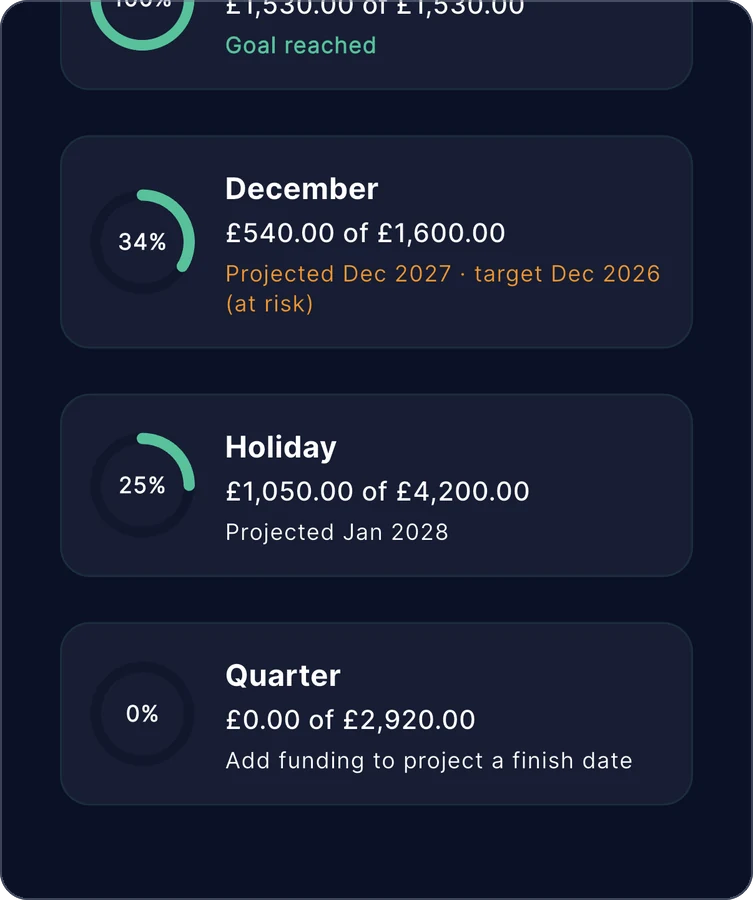
Zeroed: Offline Budget Planner is the app in the Short — envelope budgeting you buy once. It works offline, with no bank login, no subscription and no data harvesting; the first thirty-four days are free, no card needed. Try Zeroed.