Two nurses, same ward, same band, same shifts. Mia can account for every pound; Jo has £340 a month she cannot, and has since January: £3,060. When she finally read the statement, the seven strange names were two things, the hospital canteen and a parking app. The money went to work.
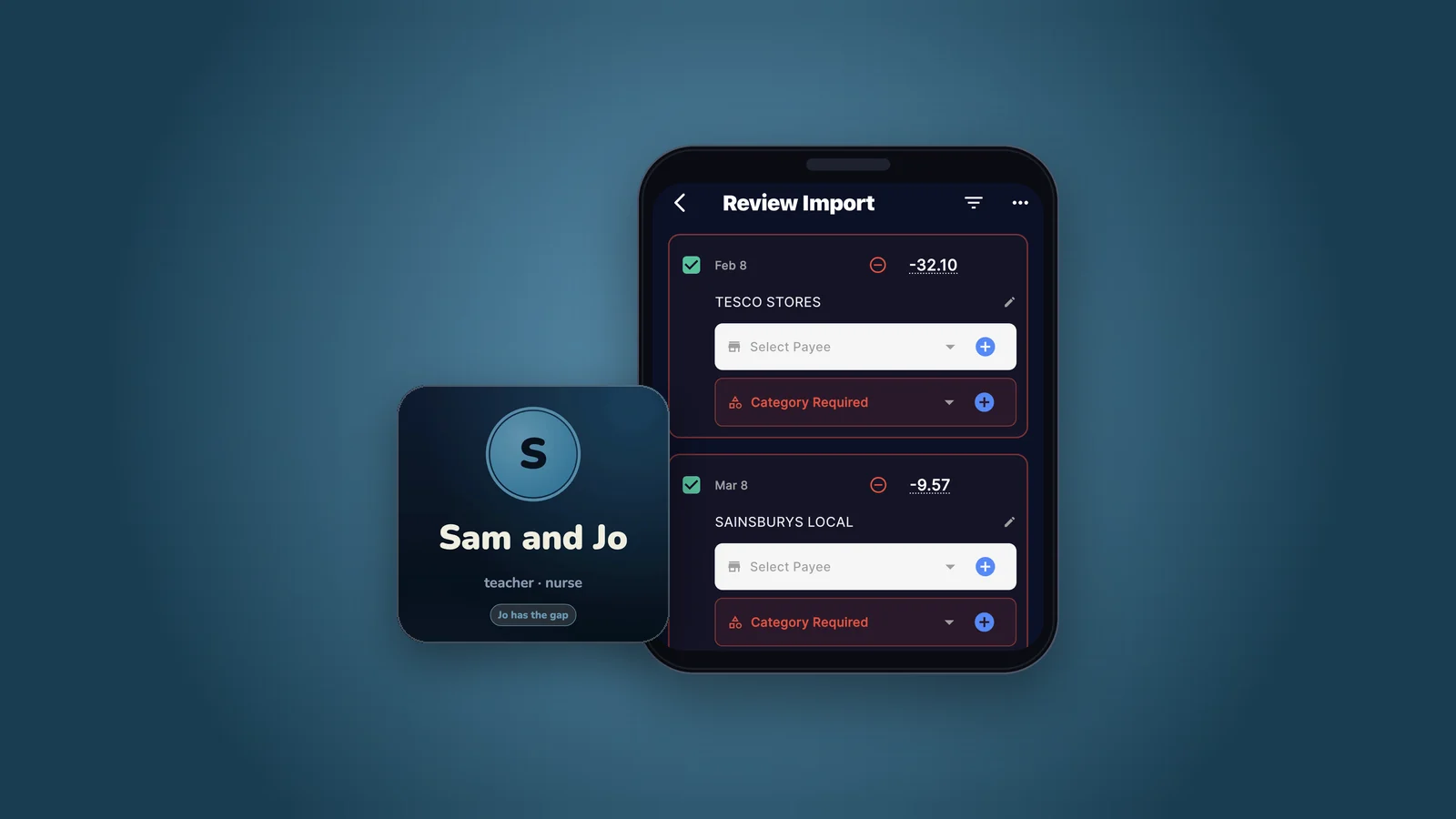
Sam and Jo, teacher and nurse. The households in these Shorts are illustrations built from typical UK figures, not real people, and every number below is worked on the household’s sheet.
What happened
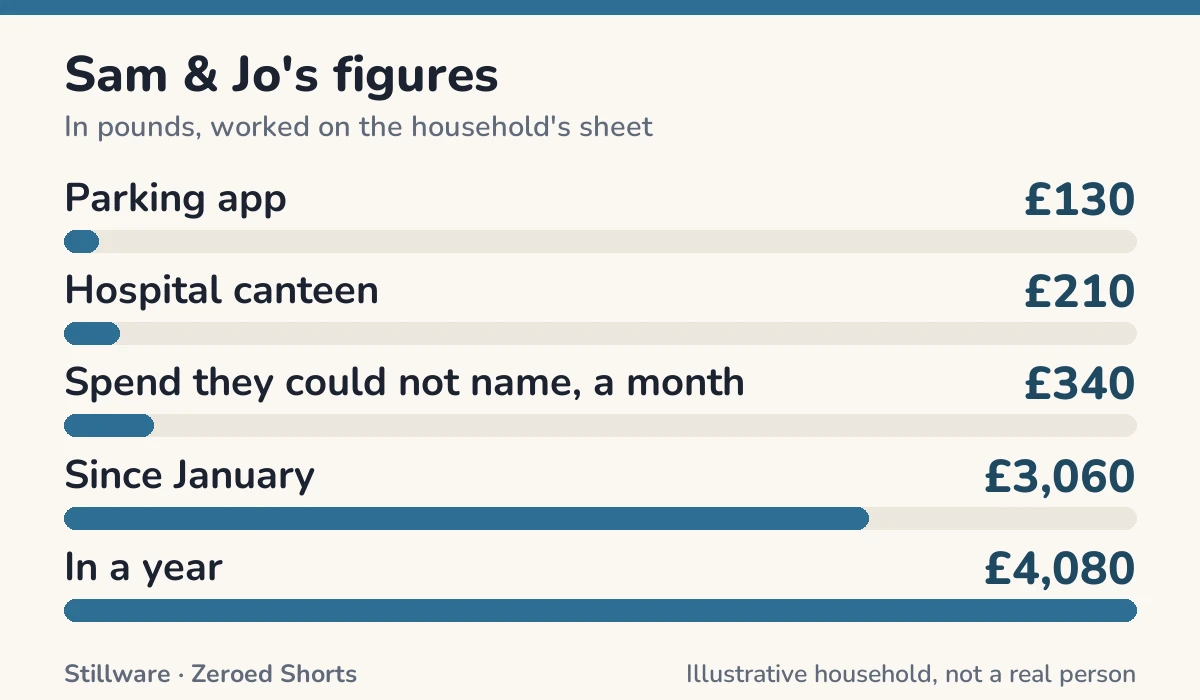
Seven names on Jo’s bank statement meant nothing to her. They were payees she had never heard of, and they turned up every month, taking £340 between them that she could not put a name to. Jo is a nurse, married to Sam, who teaches, and this gap had been there since January. Nine statements on, that came to £3,060 spent on things she could not identify.
What made it stranger was Mia. The two of them are nurses on the same ward, on the same band, working the same shifts, and Mia can account for every pound she spent last month. Her statement is full of the same kind of odd, unfamiliar names. The difference is that on the first of every month, Mia spends 15 minutes finding out what each one is. Jo had meant to do the same all year. Every time she looked, the list seemed long, the names seemed strange, and the right moment never arrived.
Eventually she sat down with Mia and the statement and gave it the same 15 minutes. The seven names turned out to be only two things. One was the card terminal in the hospital canteen, which accounted for £210 a month. The other was a parking app that billed under the name of its parent company, which took £130. The mystery money had not been frittered away on nothing. It had gone to work, every day, on lunches and parking. Over a year that is £4,080, and none of it had ever appeared in the budget, simply because none of it had a recognisable name.
The obvious reading would be that Mia is more disciplined than Jo. That is not really what separated them. Mia has a date, and Jo had an intention. A date comes round and gets done. An intention waits for a good moment, and a good moment never quite comes. Jo’s gap was never a spending problem so much as a problem of when she would look.
The method that closed it fits into one sitting. Take last month’s statement and total the lines that cannot be named. Then give that total a fixed date, either the first of the month or payday, and 15 minutes. For Jo, the canteen terminal and the parking payments now carry proper names, and the £210 she spends on lunches at work has an envelope of its own.
The working
Every figure the Short says, and where it comes from on the household’s sheet.
| The Short says | Figures | Derivation |
|---|---|---|
| three hundred and forty she cannot | unknown_spend = 340 | on the sheet |
| nine statements / three thousand and sixty pounds | unknown_statements_since_january = 9; unknown_spend * unknown_statements_since_january | on the sheet |
| seven payees | unnamed_payees = 7 | on the sheet |
| fifteen minutes | colleague_minutes = 15 | on the sheet |
| fifteen minutes / two hundred and ten / one hundred and thirty | statement_minutes = 15; unknown_canteen = 210; unknown_spend - unknown_canteen | on the sheet |
| four thousand and eighty pounds a year | unknown_spend * 12 | on the sheet |
| fifteen minutes | statement_minutes = 15 | on the sheet |
The turn
The seven names Jo could not place were two things, the hospital canteen and a parking app; the money went to work, unlabelled, not frittered.
The Short
Monday
- The total of last month’s lines you cannot name.
- Give it a date, the first or payday, and fifteen minutes.
In Zeroed
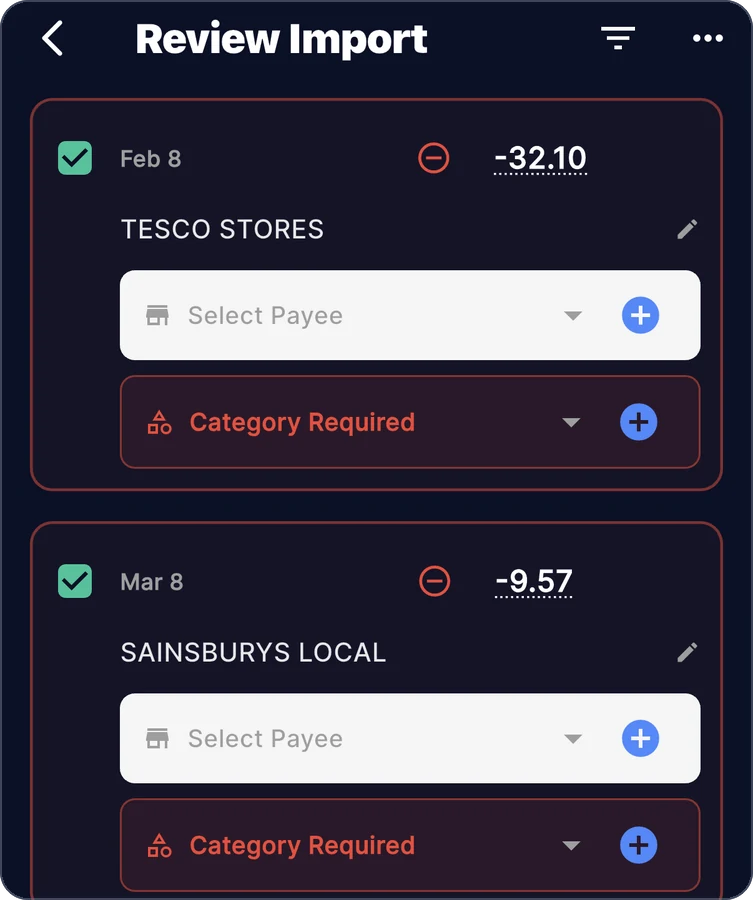
Jo’s imported statement shows the canteen terminal and the parking app already named by a rule. Two hundred and ten for lunches, in an envelope of its own.
Zeroed: Offline Budget Planner is the app in the Short — envelope budgeting you buy once. It works offline, with no bank login, no subscription and no data harvesting; the first thirty-four days are free, no card needed. Try Zeroed.