Two women on the same grade, same £2,600, and last year both had a dentist and a laptop go wrong. One paid from an envelope. One put the laptop on a card and it is still there. The difference is one habit, and one target.
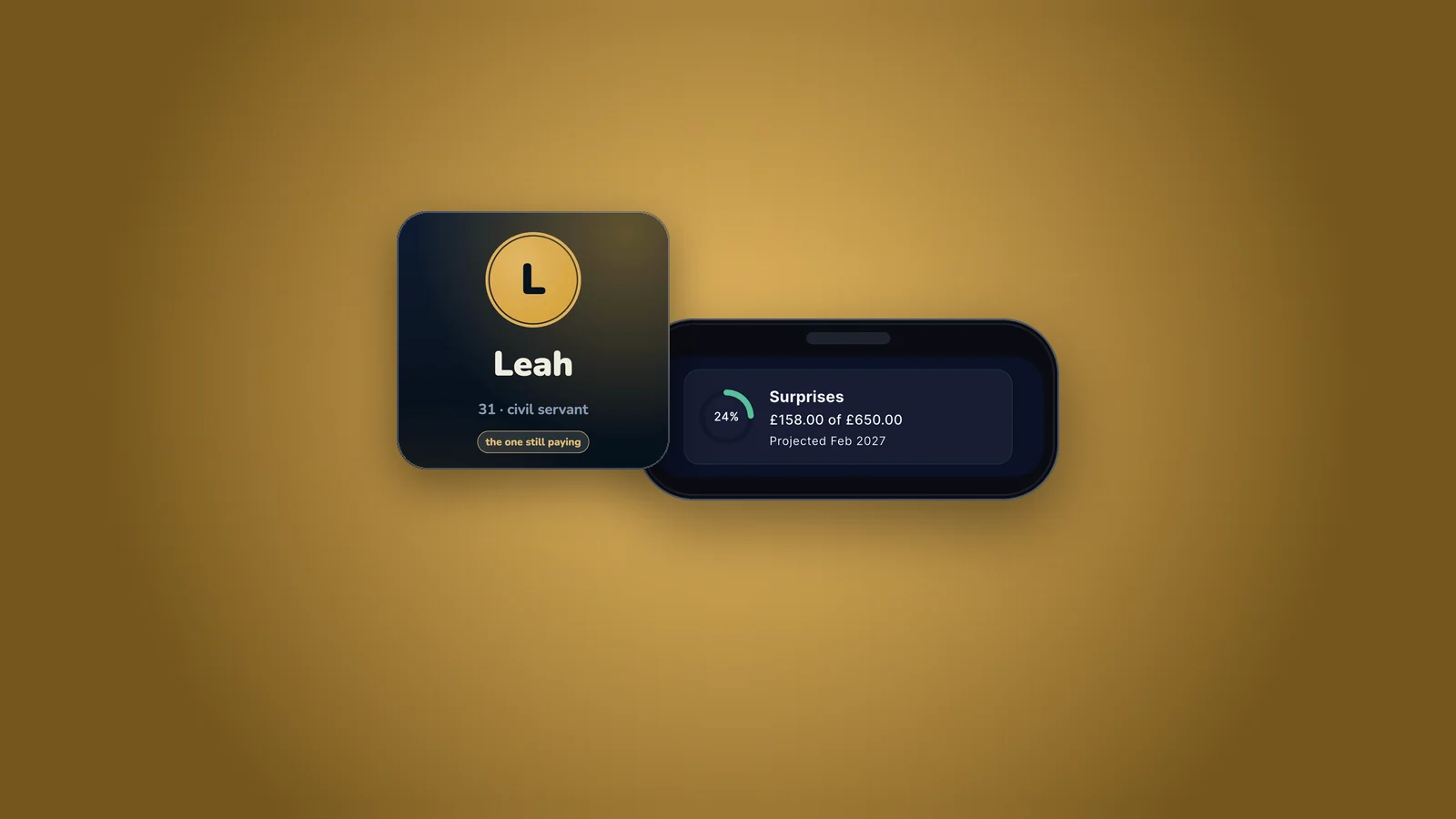
Leah, thirty-one, a civil servant. The households in these Shorts are illustrations built from typical UK figures, not real people, and every number below is worked on the household’s sheet.
What happened
Picture two women in the same job, on the same grade, each taking home £2,600 a month. Last year both of them had the same pair of unwelcome bills: a dentist, then a laptop that stopped working. One of them paid for both straight away and moved on. The other is still paying. Leah, a civil servant, is the second. The first, who might as well be called Leah B, works in the next office along.
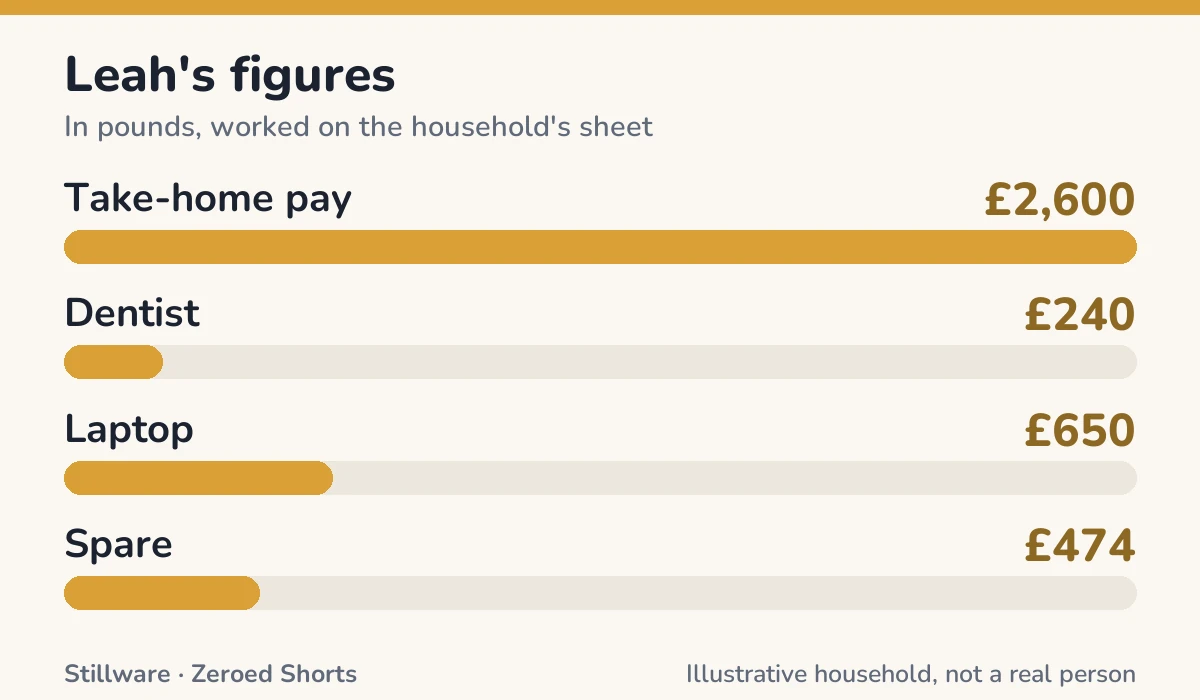
The bills were identical. The dentist came to £240 for each of them, and the laptop to £650. Leah B covered both from an envelope she keeps for surprises. Leah had nothing set aside, so the laptop went on a credit card, and the balance is still sitting there. It would be easy to assume that Leah B simply earns more or spends less, but neither is true. In a good month both women have the same £474 left over once the regular costs are paid.
The whole difference comes down to one habit. On payday, Leah B moves £158 into her surprises envelope before she does anything else. Leah leaves hers in her current account, fully intending to save it, and by the end of the month it has quietly gone. Nor is this a matter of willpower. Leah did try. She looked up how big an emergency fund ought to be, found the usual advice of three months of expenses, and worked her own figure out at £6,378. At £158 a month that would take 40 months to build. The target looked so far off that she never began at all.
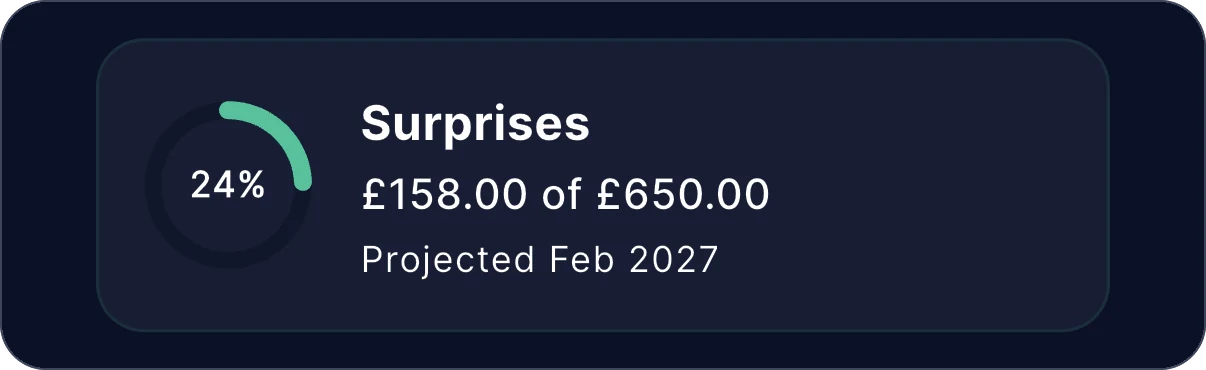
That was where the real mistake lay. The advice itself is not wrong, but it is the wrong place to start. A first target does not need to be three months of spending; it can simply be the largest thing that ended up on a card last year. For Leah, that is the £650 laptop. Measured against that, the picture changes completely. At £158 a month she reaches it in five months, by February, and from then on the next broken laptop is a transfer rather than a debt.
So Leah has made the same move her colleague makes. Her first goal is £650, funded on payday before any other spending gets a look in, and it is due to be complete in February, five paydays from now. Once it is there, the fund carries on growing past that first line, and the larger three-month cushion builds from it over time instead of waiting for a start that never comes.
The working
Every figure the Short says, and where it comes from on the household’s sheet.
| The Short says | Figures | Derivation |
|---|---|---|
| two thousand six hundred a month | takehome = 2,600 | on the sheet |
| two hundred and forty / six hundred and fifty | dentist = 240; laptop = 650 | on the sheet |
| four hundred and seventy-four spare | takehome - committed | on the sheet |
| one hundred and fifty-eight | surprises_monthly = 158 | on the sheet |
| six thousand three hundred and seventy-eight | committed * 3 | on the sheet |
| forty months | round(three_months_costs / surprises_monthly) | on the sheet |
| five months, February | ceil(laptop / surprises_monthly); October + 5 | on the sheet |
The turn
The difference between the two women is not income or discipline; it is that one moves the money on payday, and the first target is the last thing that hurt, not the big number.
The Short
Monday
- Your first target is the biggest thing that went on a card last year.
- Fund it on payday, before anything else.
In Zeroed
Leah’s Surprises goal reads six hundred and fifty, and the ring shows February at her pace: five payday moves from now.
Zeroed: Offline Budget Planner is the app in the Short — envelope budgeting you buy once. It works offline, with no bank login, no subscription and no data harvesting; the first thirty-four days are free, no card needed. Try Zeroed.