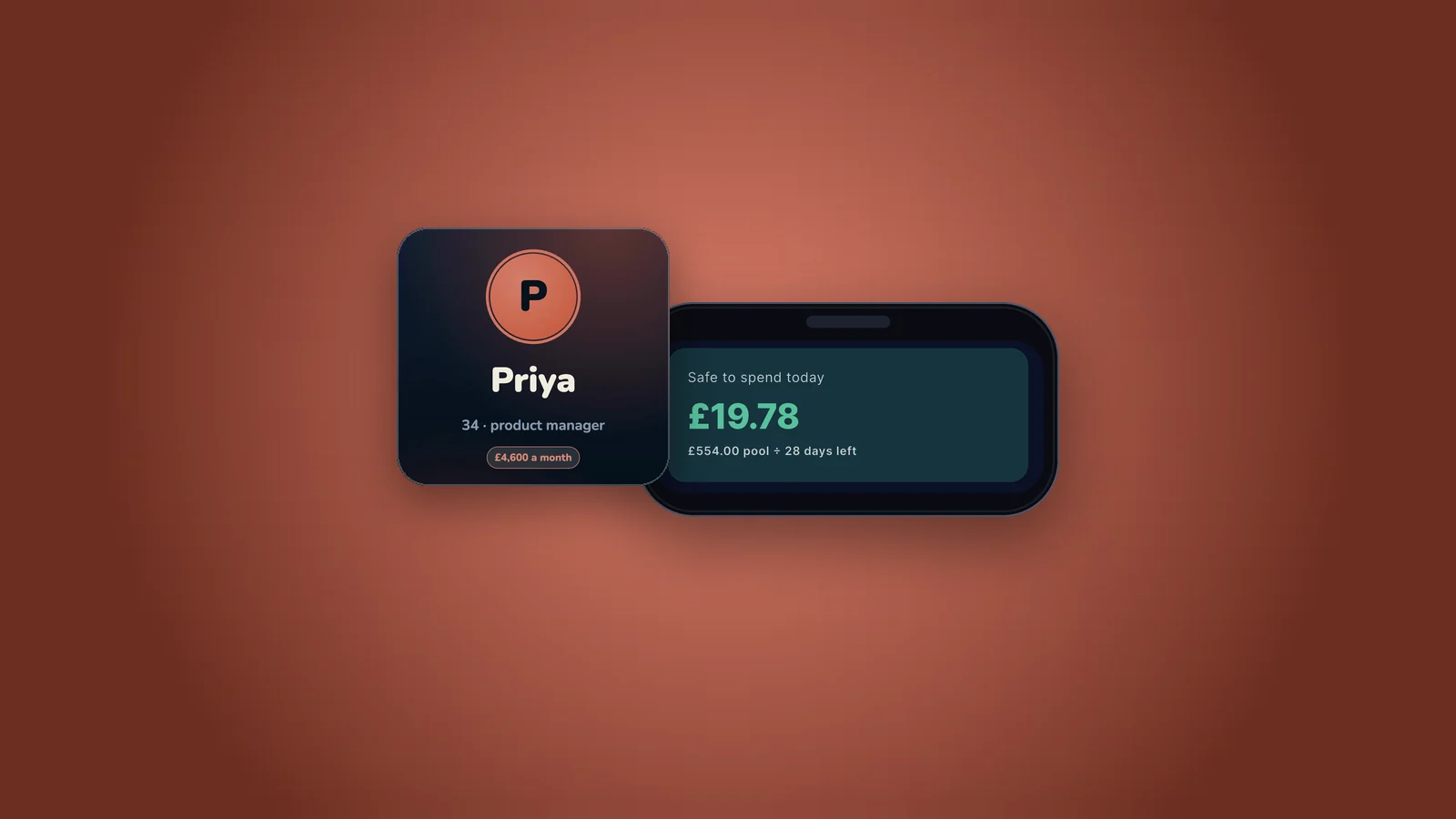
On the twenty-fifth, before anything is spent, Priya reads the statement, names every line, and writes three numbers: the card, already held in its envelope, what is committed before the next payday, and what the pay leaves after savings. The third one runs the month.
Priya, thirty-four, product manager. The households in these Shorts are illustrations built from typical UK figures, not real people, and every number below is worked on the household’s sheet.
What happened
Priya’s whole money system takes fifteen minutes on payday and comes down to three numbers. Those three numbers run the rest of her month. She is thirty-four, a product manager, and she takes home £4,600 a month.
Her payday falls on the twenty-fifth. Before anything is spent, the statement comes in and every line on it gets a name. That part takes about ten minutes, and it is the warm-up rather than the point.
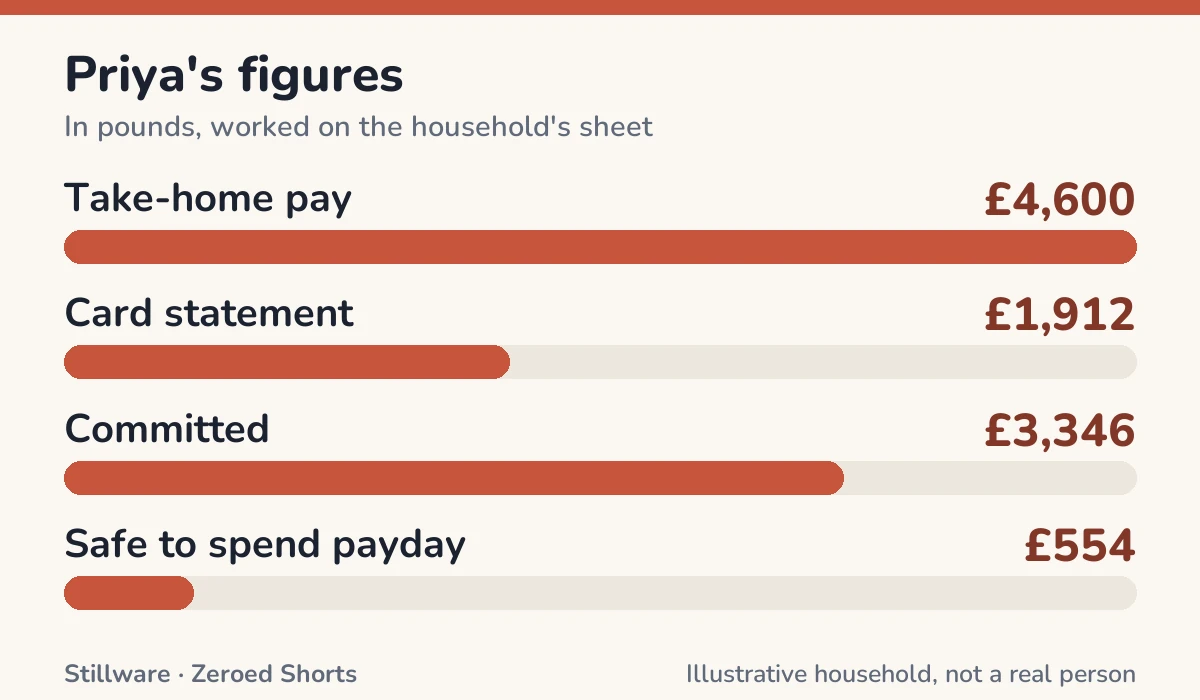
The first number is the card. This month it is £1,912. That is last month’s spending, and it is paid from money already set aside for the card, not from the pay that has just arrived. Keeping it separate means the new month starts clean rather than already part spent.
The second number is everything committed before the next payday: the rent, the bills, travel, groceries and the weekly envelopes for eating out and the like. Altogether that comes to £3,346. None of it is optional, and all of it will leave before the next pay arrives.
The third number is what the pay leaves once the committed spending and the month’s savings are taken out. With £700 going to savings, that leaves £554. This is her spending money for the month, and it is the only one of the three numbers she looks at again until the next payday.
That is the turn. The ritual looks as though it is about the past, because it starts with last month’s statement. It is not. Naming the lines is just the warm-up. The real purpose is the third number, set at the one moment in the month when the money is whole and nothing has yet been spent. At any other point, the figure would be a guess about what is left. On payday, it is a fact.
Once that number is set, every purchase over the following thirty days has something to be measured against. Without it, the only measure is a feeling, and feelings are generous early in the month and anxious at the end of it. With it, a dinner or a pair of shoes is either inside £554 or it is not.
The method is the same for anyone. On the next payday, open the statement, name the lines, and write down three numbers: the card, the committed spending, and what is safe to spend. Then put them somewhere visible. Priya’s third number sits on the first screen she sees each day, so every purchase for the month is measured against £554, not a feeling.
The working
Every figure the Short says, and where it comes from on the household’s sheet.
| The Short says | Figures | Derivation |
|---|---|---|
| fifteen minutes | payday_minutes = 15 | on the sheet |
| four thousand six hundred | takehome = 4,600 | on the sheet |
| the twenty-fifth | payday_day = 25 | on the sheet |
| one thousand nine hundred and twelve | card_statement = 1,912 | on the sheet |
| three thousand three hundred and forty-six | fixed_costs + groceries + subs + eating_out_budget | on the sheet |
| five hundred and fifty-four | takehome - committed - savings_intended | on the sheet |
The turn
The ritual is not about the past; categorising is the warm-up; the point is one number, set at the only moment the month is whole.
The Short
Monday
- On your next payday, statement, names, three numbers, written where you will see them.
In Zeroed
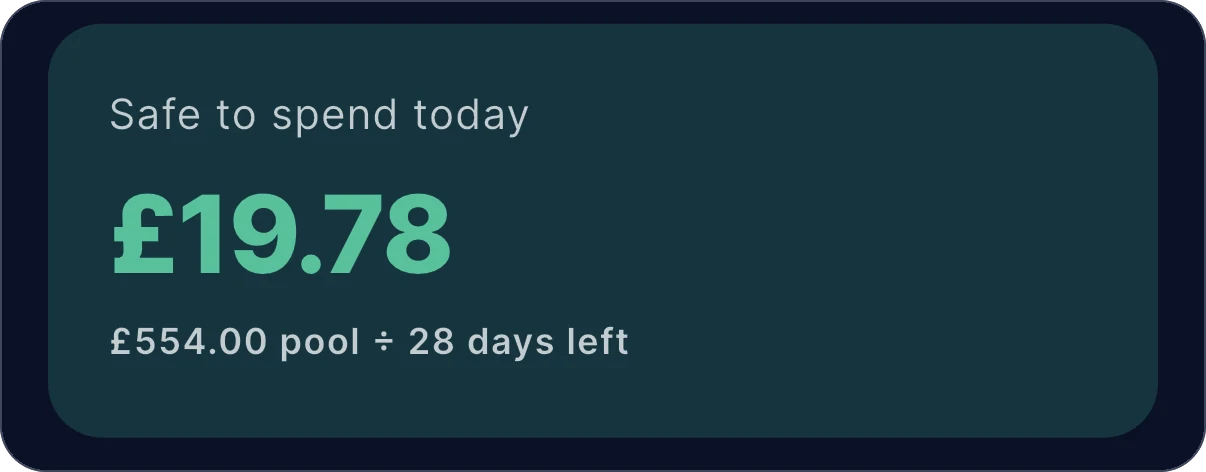
Priya’s number three sits on the Today screen as safe to spend. So every purchase for thirty days is measured against five hundred and fifty-four, not a feeling.
Zeroed: Offline Budget Planner is the app in the Short — envelope budgeting you buy once. It works offline, with no bank login, no subscription and no data harvesting; the first thirty-four days are free, no card needed. Try Zeroed.