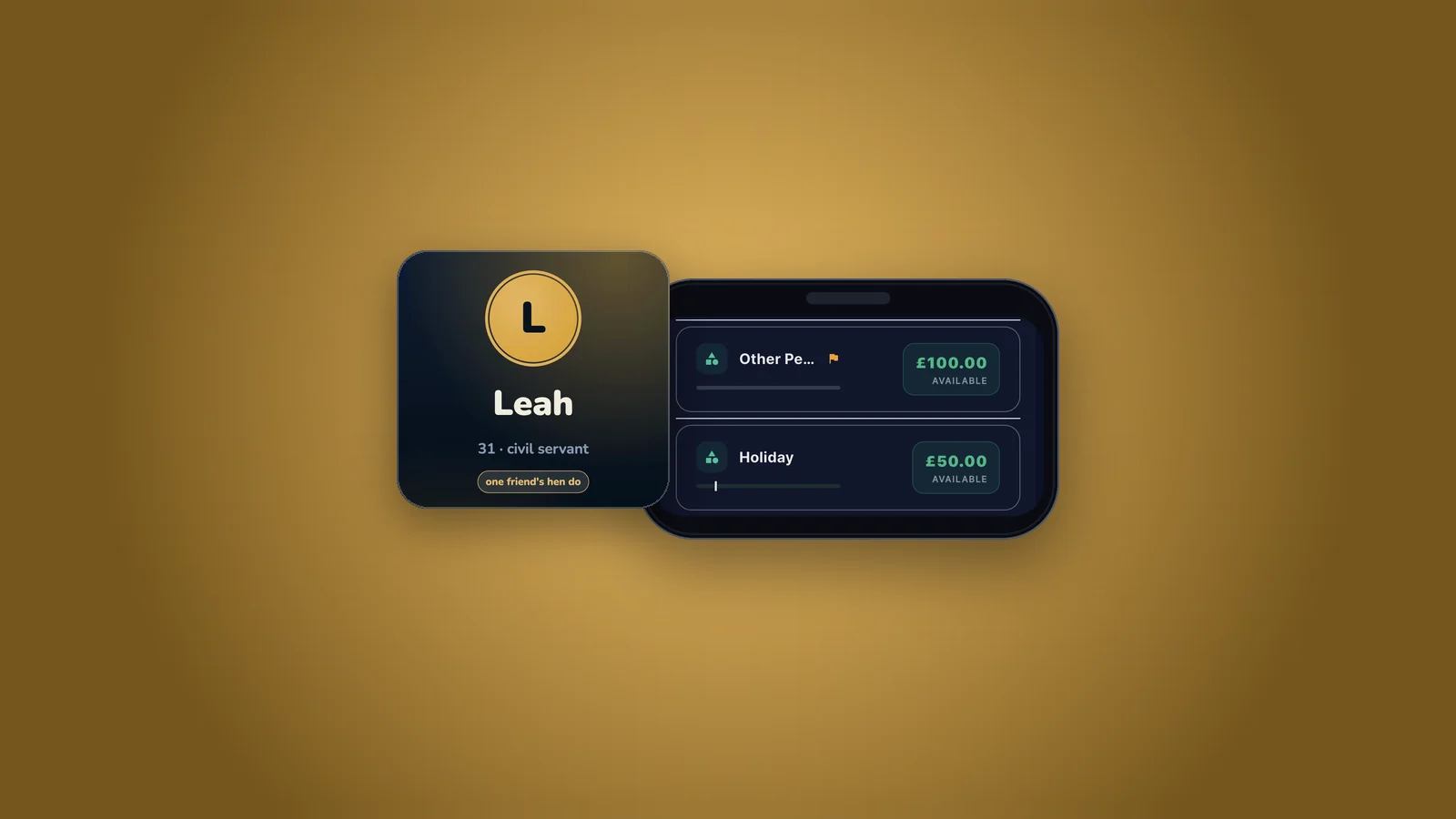
A hen-do deposit of £120 became £480 by the end of the weekend, and Leah has three more weddings this year. Nobody budgets for other people’s weddings, and for a single person in her thirties they are the biggest line that is not rent. The one with a date goes first.
Leah, thirty-one, a civil servant. The households in these Shorts are illustrations built from typical UK figures, not real people, and every number below is worked on the household’s sheet.
What happened
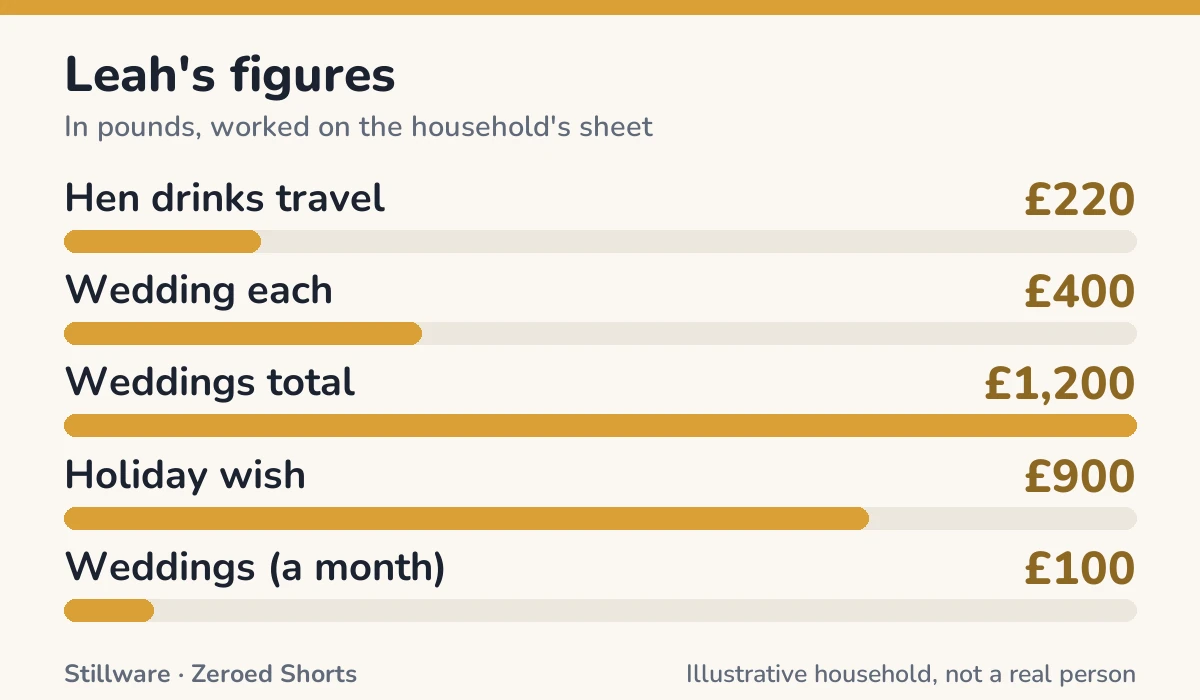
It began with a modest line on Leah’s bank statement: a £120 deposit for a friend’s hen do. By the time the weekend was over, that single celebration had cost her considerably more. The dress came to £140. Drinks and the train fare added another £220. Altogether, one friend’s wedding had taken £480, and none of it had been planned for in advance.
That might have been a one-off, except that it was not. Leah, a civil servant, has three more weddings to attend this year. Hardly anyone treats other people’s weddings as a budget category, yet for her, this year, they add up to her largest single cost after rent. With each likely to cost about £400, the three together come to £1,200, and every one of them already has a fixed date in the diary.
The real question was which pot of money should get priority. For some time Leah had been trying to build up savings for a holiday, around £900, with no particular date attached. Instinctively that felt like the more important goal, the thing she actually wanted for herself. But the two goals behave very differently. A wedding in February will happen in February whether or not Leah is ready for it. The holiday can be moved, shortened or pushed back a few months without anybody minding. The spending with a fixed date always arrives first, so it has to be funded first, and the flexible one can wait its turn.
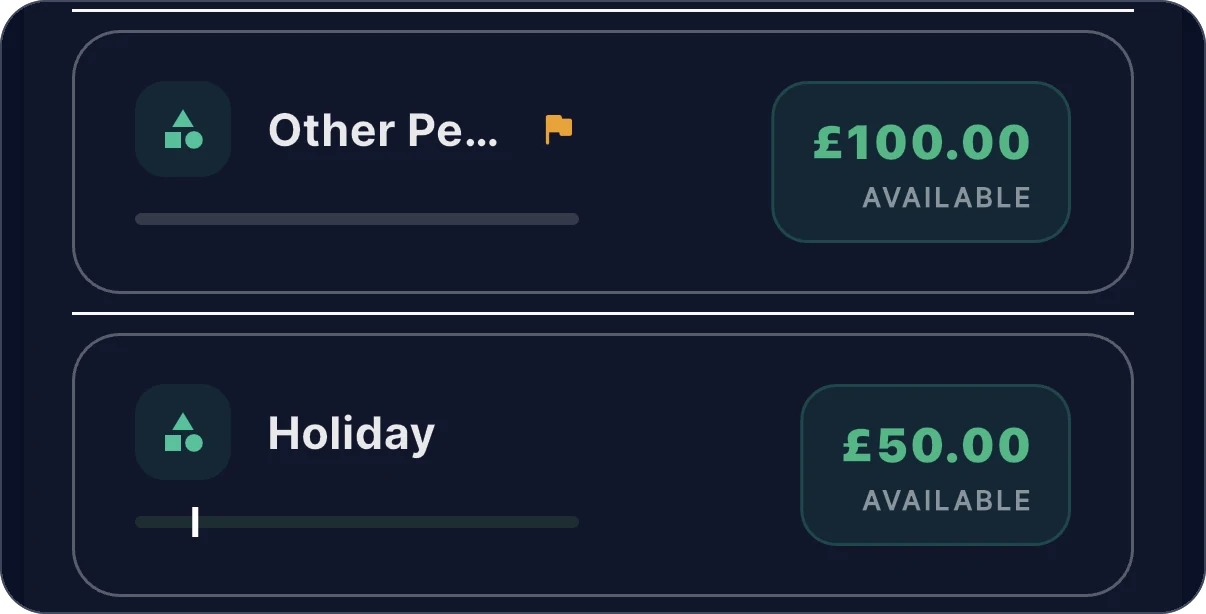
So Leah split the weddings out into their own envelope, named Other People’s Weddings, and spread the £1,200 across the year. That works out at £100 a month, going in steadily, with February, the date of the next wedding, marked on it as the first deadline. The holiday fund still gets money, but only what remains once the weddings are covered. The difference is that it now receives its share honestly, rather than looking healthy for a few months and then being quietly emptied to pay for a hen weekend.
The approach is simple enough for anyone with a busy social calendar to borrow. Go through the year and note every date that will cost money, whether that is weddings, birthdays or trips planned by other people. Add those costs together and spread the total evenly over the months until the last of them. That envelope comes first each month, because those dates will not move. Whatever is left after that goes to the wish list, which, for the time being, can afford to wait.
The working
Every figure the Short says, and where it comes from on the household’s sheet.
| The Short says | Figures | Derivation |
|---|---|---|
| one hundred and twenty / four hundred and eighty | hen_deposit = 120; hen = 480 | hen = hen_deposit + hen_dress + hen_drinks_travel |
| two thousand six hundred | takehome = 2,600 | on the sheet |
| one hundred and twenty / one hundred and forty | hen_deposit = 120; hen_dress = 140 | on the sheet |
| two hundred and twenty / four hundred and eighty | hen_drinks_travel = 220; hen_deposit + hen_dress + hen_drinks_travel | on the sheet |
| three more this year | weddings_left = 3 | on the sheet |
| about four hundred each / twelve hundred pounds | wedding_each = 400; weddings_left * wedding_each | on the sheet |
| nine hundred, no date | holiday_wish = 900 | on the sheet |
| a wedding in February | next_wedding_month | on the sheet |
| one hundred a month | weddings_total / 12 | on the sheet |
The turn
The one with a date always goes first; a wedding in February does not move, a holiday does — fund the thing that cannot.
The Short
Monday
- Every date on the calendar that costs money, added up, spread across the months until the last one.
- That envelope is first.
- The wish list waits.
In Zeroed
Leah’s Other People’s Weddings envelope has February on it and one hundred a month going in. The holiday fills from what is left.
Zeroed: Offline Budget Planner is the app in the Short — envelope budgeting you buy once. It works offline, with no bank login, no subscription and no data harvesting; the first thirty-four days are free, no card needed. Try Zeroed.