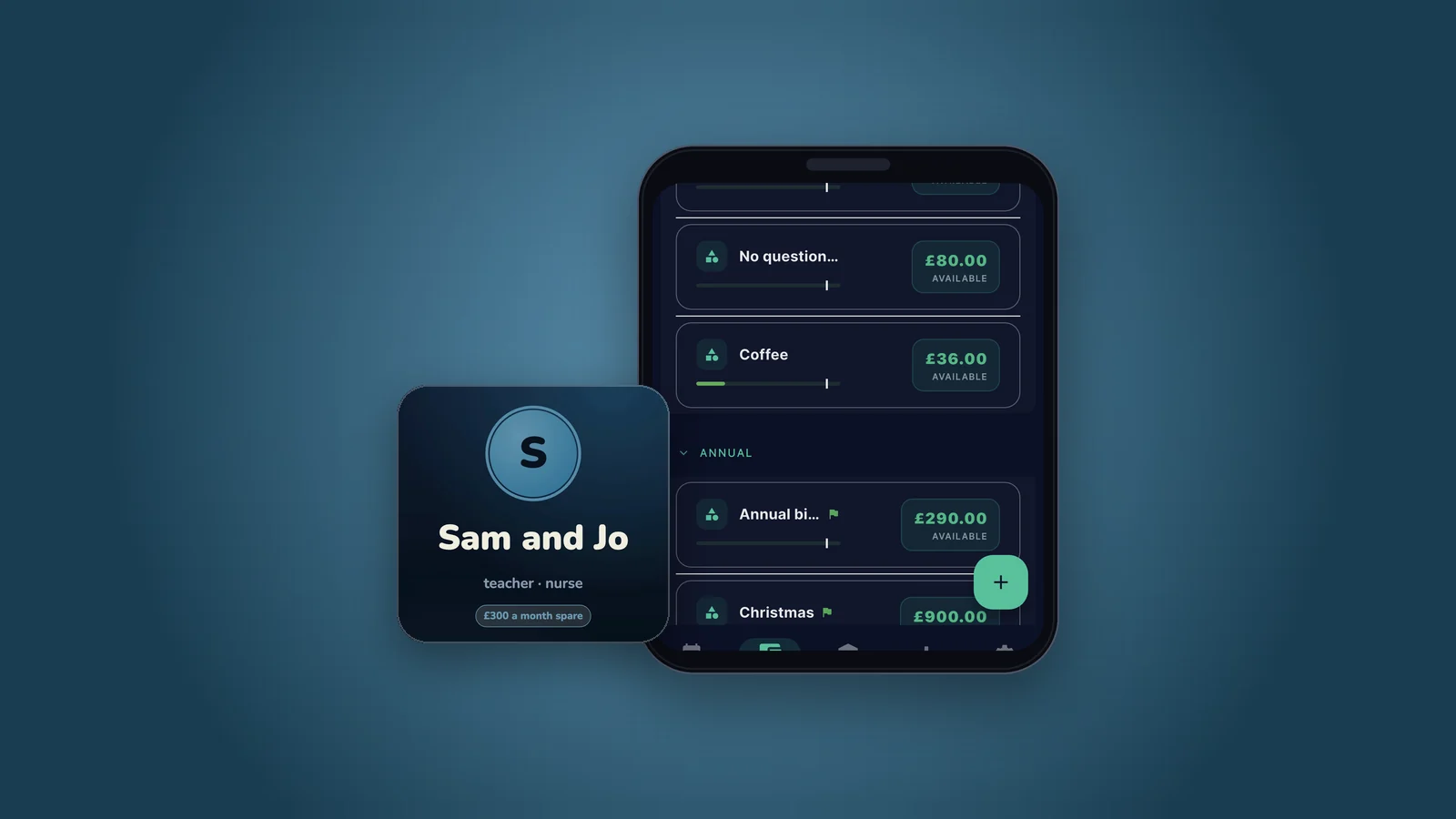
After rent, bills, food and the car, Sam and Jo have £300 a month spare. Last December cost £900: three months of spare, spent in one, then a card until April. Christmas is not expensive. It is known.
Sam and Jo, teacher and nurse. The households in these Shorts are illustrations built from typical UK figures, not real people, and every number below is worked on the household’s sheet.
What happened
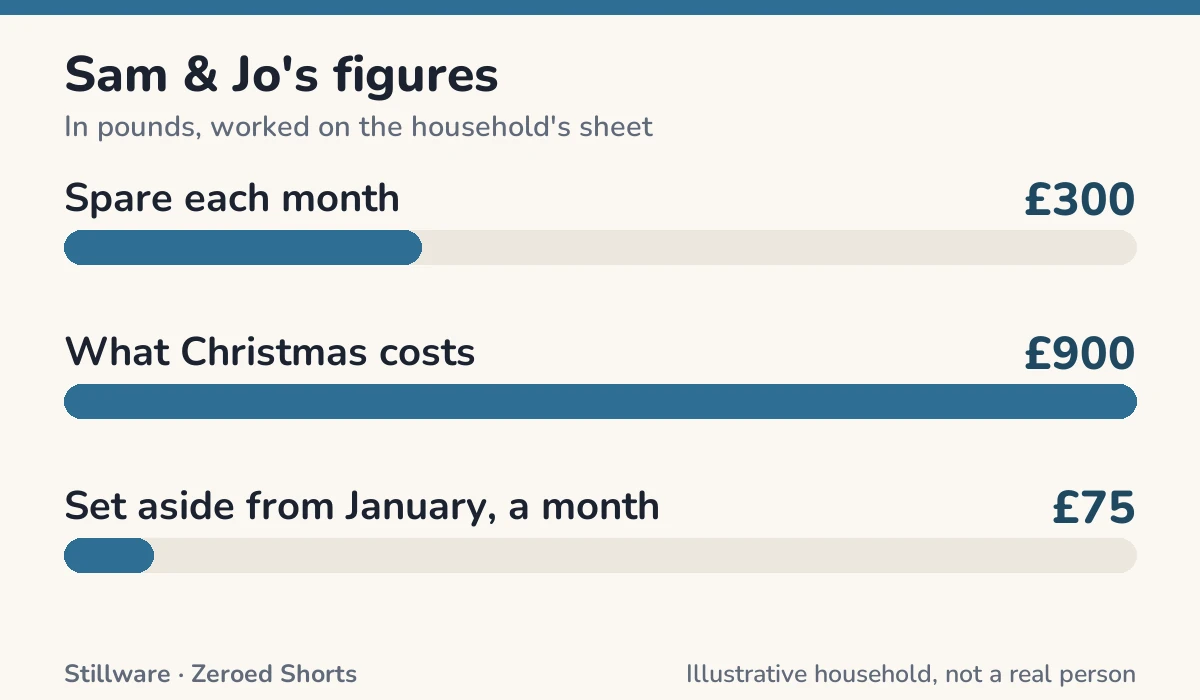
Once rent, bills, food and the car are paid, Sam and Jo have £300 a month left over. He teaches, she is a nurse, and between them they take home £4,700 a month, so that £300 is the part of the budget with any room in it. Every year, Christmas swallows three months of it, and every year it still manages to take them by surprise.
Last December cost them £900. Nothing about it was lavish: presents, food, the train home to family and the work party. It was an ordinary Christmas by any measure. But because nothing had been set aside for it, January began on a credit card, and it was April before the balance cleared. Four months of paying off for the sake of one month of celebrating. Which is a strange thing when looked at squarely. Christmas is not a bill that arrives without warning. It turns up every year, and they know it is coming.
That was the turn in their thinking. Christmas, for Sam and Jo, was not really expensive. It was known. It falls on the same date every year and costs very nearly the same amount each time, and yet they had been treating it as if it were an emergency. The credit card was never the cost of Christmas itself. It was the cost of being surprised by it. The £900 was always going to be spent; the only thing that varied was whether the money was there beforehand or had to be clawed back afterwards.
So they started a Christmas envelope in the same week they worked this out, in October. Starting that late in the year means it takes all of their spare money, £300 a month through to December, which is not comfortable. But it is three months of saving before the day instead of four months of repaying after it, and there is no card balance waiting in the new year. Had they started the envelope back in January, spreading the same £900 across the whole year, it would have needed just £75 a month. It is the same Christmas either way, for a quarter of the monthly strain.
Their method takes a few minutes with last December’s statement. Take what Christmas actually cost and divide it by the money left spare each month, and the answer is the number of months Christmas really costs. For Sam and Jo that answer is three, and it is why they did not wait until January to begin. Their envelope is on course to hold the full £900 by Christmas Day, with October’s share already in it.
The working
Every figure the Short says, and where it comes from on the household’s sheet.
| The Short says | Figures | Derivation |
|---|---|---|
| three months | christmas / spare | on the sheet |
| four thousand seven hundred | takehome = 4,700 | takehome = sam + jo |
| three hundred pounds a month spare | spare = 300 | spare = takehome - spend |
| nine hundred | christmas = 900 | on the sheet |
| three | christmas / spare | on the sheet |
| three hundred a month / seventy-five | spare = 300; christmas / 12 | spare = takehome - spend |
The turn
Christmas is not expensive, it is known — same date, nearly the same number, every year — and they treat it like a surprise.
The Short
Monday
- Last December’s total divided by your monthly spare is the months it costs.
- Start the envelope this week.
In Zeroed
Sam and Jo’s Christmas envelope shows nine hundred by the twenty-fifth, with October’s share already in.
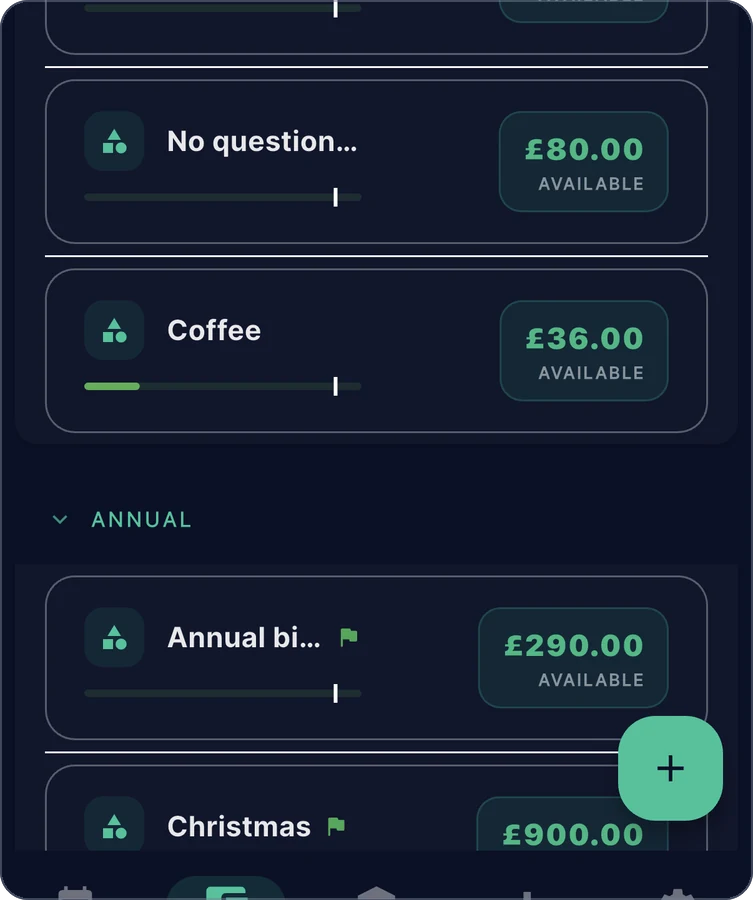
Zeroed: Offline Budget Planner is the app in the Short — envelope budgeting you buy once. It works offline, with no bank login, no subscription and no data harvesting; the first thirty-four days are free, no card needed. Try Zeroed.