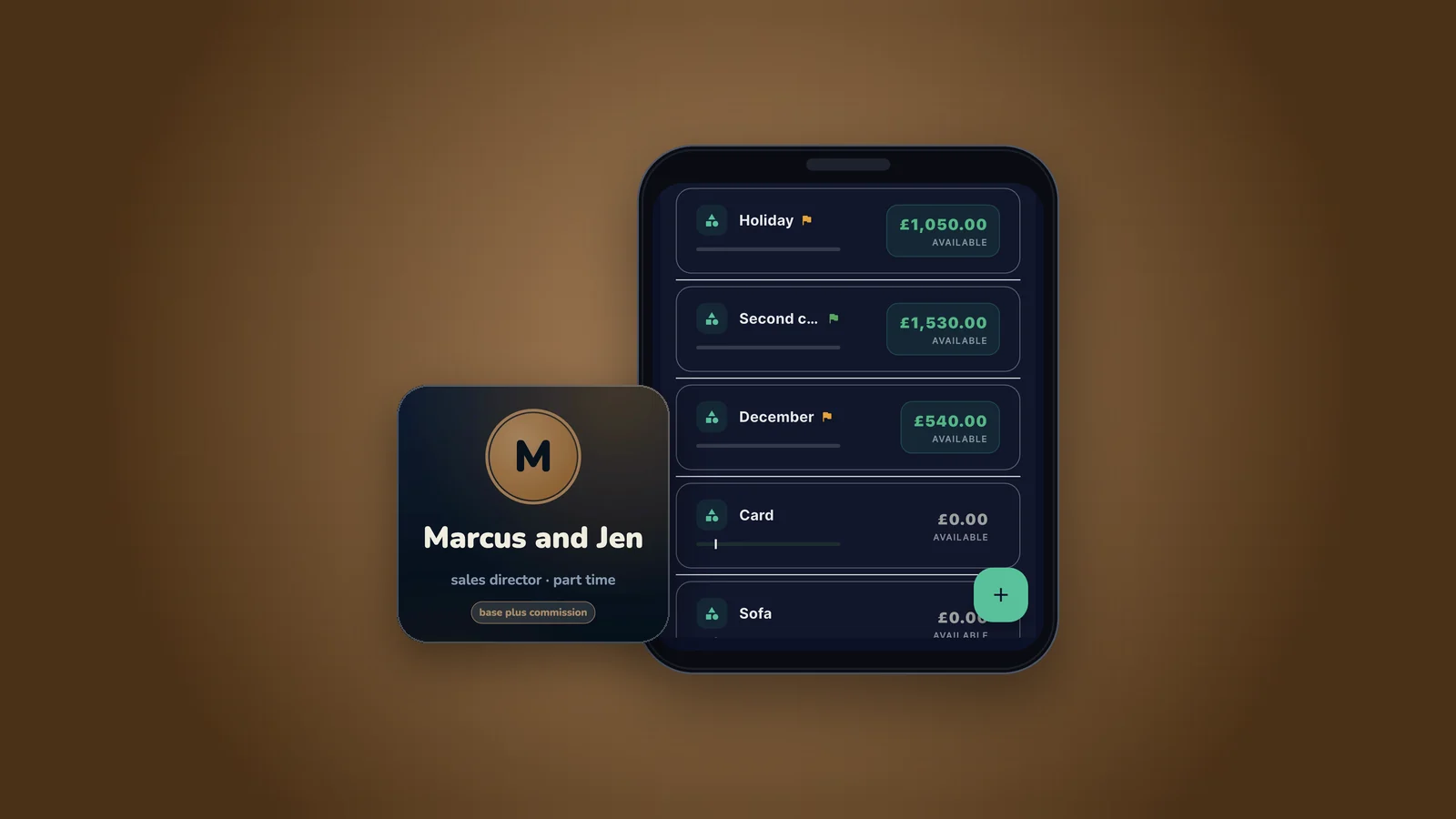
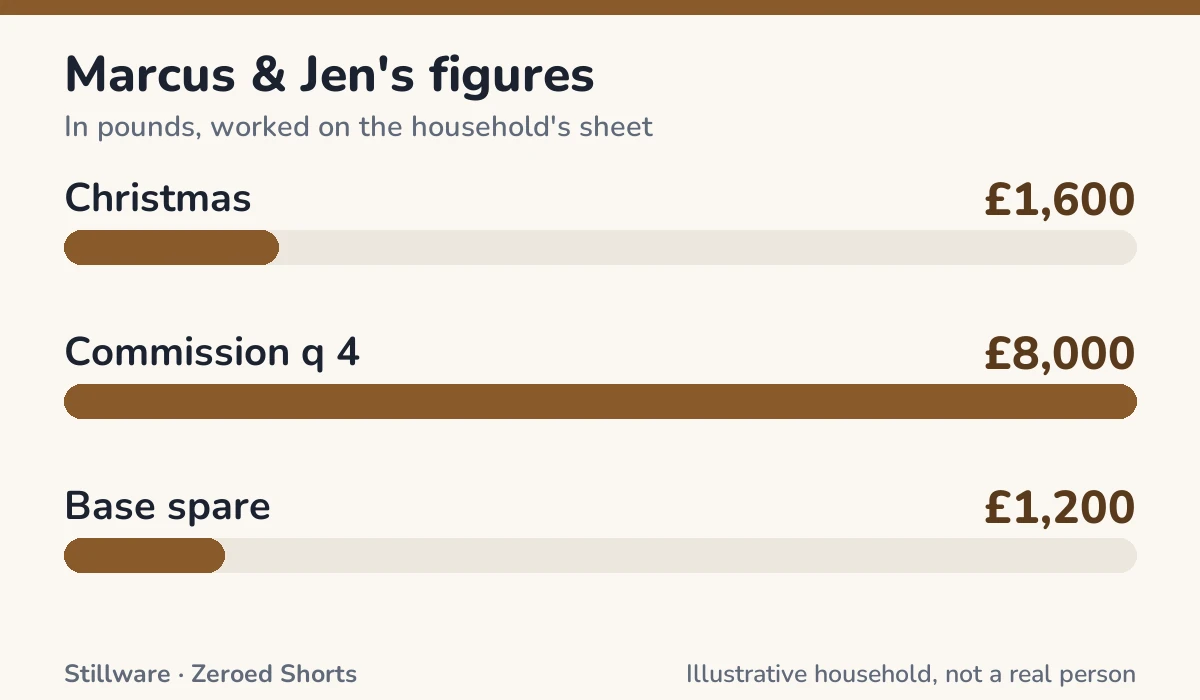
Marcus’s fourth-quarter commission is paid in January. Christmas, stubbornly, stays in December, a base month with £1,200 spare against £1,600 of Christmas. Everything goes on the card “because the commission is coming”, and January starts by paying for December.
Marcus and Jen. He is a sales director on a base plus commission; she works part time.. The households in these Shorts are illustrations built from typical UK figures, not real people, and every number below is worked on the household’s sheet.
What happened
Every November, Marcus and Jen have the same conversation about how much to spend on Christmas. Marcus is a sales director, paid a base salary with commission on top, and Jen works part time. The answer they reach is always roughly the same, £1,600, and for years they treated that figure as the heart of the matter. It turned out they had been asking the wrong question altogether.
The question that mattered was not how much Christmas costs but when the money to pay for it actually turns up. For this household, it turns up in January. Marcus’s commission for the final quarter of the year is the largest of his four payments, £8,000 last year, and it is paid out the month after Christmas. December itself is an ordinary base-salary month, with £1,200 to spare after the regular bills. Set against a £1,600 Christmas, that leaves a gap of £400 before a single extra treat is bought.
So December was the month that broke, every year. With the spare money not quite covering the festivities, everything went on the credit card, justified by the thought that the commission was on its way. And it was. The payment duly arrived in January and cleared the card. But that meant the best month of their year began by paying off the one before it, and the lump that should have felt like breathing room was spent before it landed.
The turn was seeing that the problem had nothing to do with overspending. A variable income does not shift Christmas; the date stays fixed in December whatever happens at work. What it shifts is the moment the money for Christmas arrives. That makes it a problem of timing, a matter of the calendar, rather than a question of how careful they are with presents.
The fix they settled on is modest and deliberately dull. They took the £1,600, spread it across the year, and now move £135 every month into an envelope called December. Crucially, that money comes from Marcus’s base pay, not from the commission. By Christmas the envelope is full, the festive spending is already covered, and January’s commission arrives with nothing to catch up on, so the good month finally gets to be good. For anyone whose income comes in lumps, the same approach applies: take the cost of each big date, divide it by the months left until it arrives, and pay it from the regular income rather than waiting for the lump.
The working
Every figure the Short says, and where it comes from on the household’s sheet.
| The Short says | Figures | Derivation |
|---|---|---|
| sixteen hundred | christmas = 1,600 | on the sheet |
| eight thousand last year / twelve hundred spare | commission_q4 = 8,000; base_spare = 1,200 | base_spare = base_total - fixed |
| Christmas is sixteen hundred | christmas = 1,600 | on the sheet |
| the spare is twelve hundred | base_spare = 1,200 | base_spare = base_total - fixed |
| sixteen hundred divided by twelve: one hundred and thirty-five | ceil(christmas / 12; -5) | on the sheet |
The turn
A variable income does not move Christmas; it moves when the money for it shows up, and that is a calendar problem, not a spending one.
The Short
Monday
- For every big date, ask when its money arrives.
- If it is after, that date’s cost divided by the months until it, from the base, now.
In Zeroed
Marcus and Jen’s December envelope takes one hundred and thirty-five a month from the base. By the twenty-fifth it is full, and January stays January.
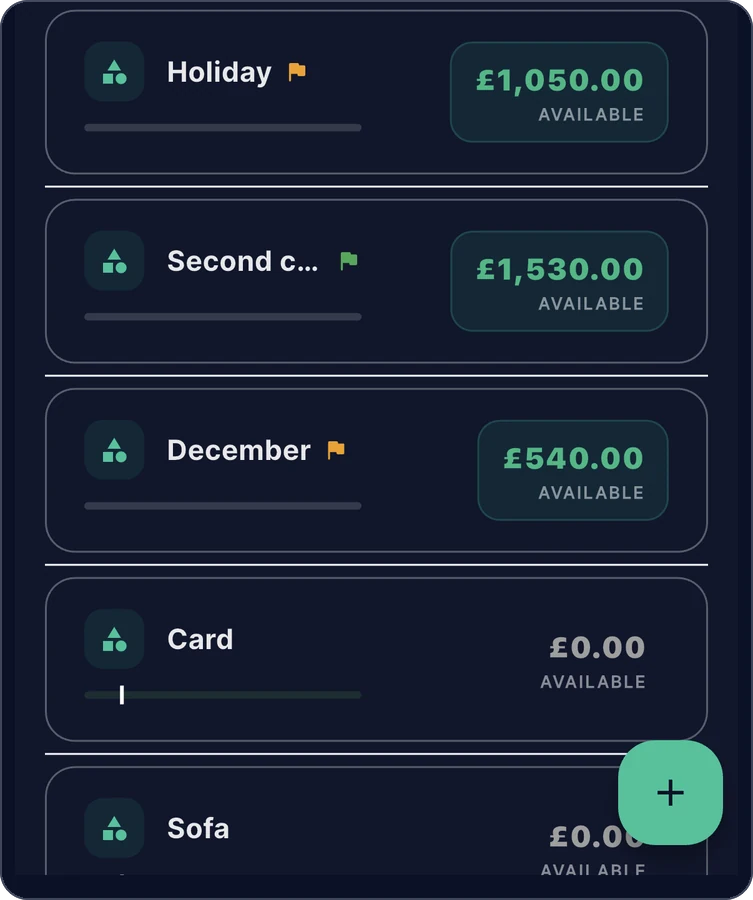
Zeroed: Offline Budget Planner is the app in the Short — envelope budgeting you buy once. It works offline, with no bank login, no subscription and no data harvesting; the first thirty-four days are free, no card needed. Try Zeroed.