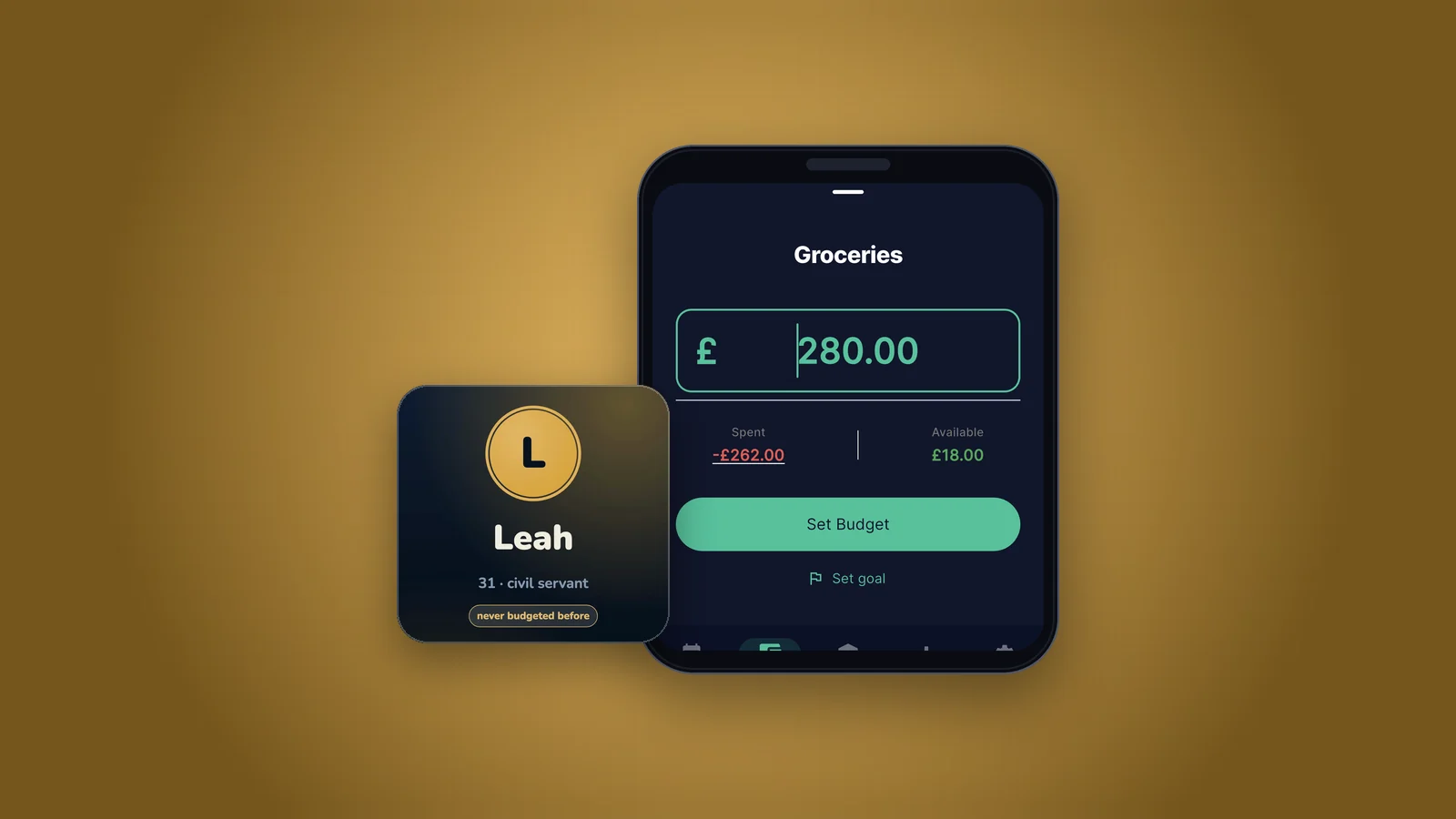
Day thirty of Leah’s first budget and she was about to quit: the template said 50 / 30 / 20 and her month said 52 / 41 / 6, with wants £286 over on nothing wild. The template had not failed and neither had she. The first month’s job was to find out what the numbers are; month two started from them.
Leah, thirty-one, a civil servant. The households in these Shorts are illustrations built from typical UK figures, not real people, and every number below is worked on the household’s sheet.
What happened
Leah had never kept a budget before, so when she finally started one she chose the template everyone seems to recommend: half of take-home pay for needs, thirty per cent for wants, twenty per cent saved. She is thirty-one and works in the civil service, and her take-home is £2,600 a month. On that basis the split was easy to work out. Needs got £1,300, wants got £780, and savings got £520. On day one it felt like a proper plan.
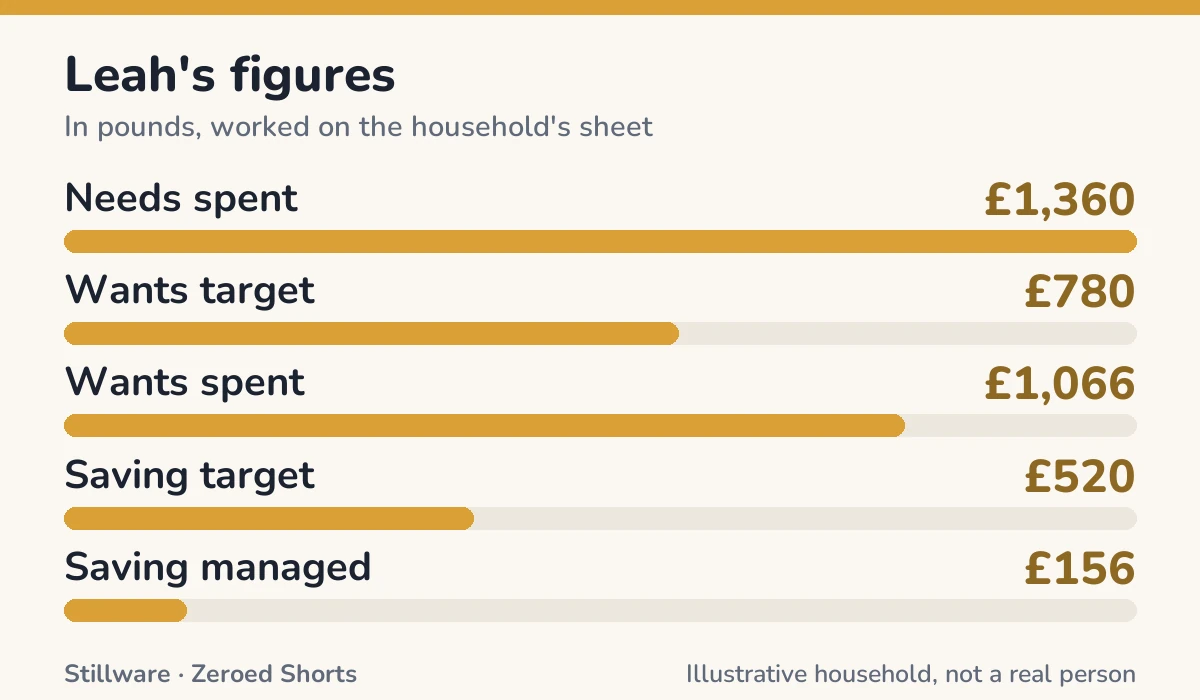
By day thirty she was ready to give up. Her needs had come to £1,360, a little over. Her wants had come to £1,066. Her savings had come to just £156, which worked out at six per cent rather than twenty. Measured the template’s way, her month read fifty-two, forty-one, six. The wants line was the one that stung, because she had not been reckless. There had been a deposit for a hen do, a birthday, the gym and one weekend away. None of it was anything anyone would call extravagant, and yet it had taken her £286 over.
Leah’s instinct was that the plan had failed, and that she had failed it. Neither was true. The first month of a budget was never supposed to hit the numbers in the first place. Its real job was to find out what the numbers actually are. Seen that way, fifty-two, forty-one, six was not a verdict on her at all. It was a map of where her money really goes, and nobody can budget from an ideal. A budget has to start from where the person is actually standing.
So in month two she stopped measuring herself against the template and set her envelopes to the real figures she had just recorded: needs at what needs had cost, wants at what wants had cost, savings at what she had actually saved. Then she allowed herself one change each month. Every month, five per cent moves from wants across to savings. Not the full jump to twenty per cent overnight, just five, a step small enough to keep. The template stayed in the picture, but as a direction of travel, not a pass mark.
For anyone setting out on a first budget, the lesson from Leah’s month is the one she arrived at herself. Any template will do as a starting point. What matters is treating the first month as a record, not a test. The measured numbers become the budget; the template only tells you which way to lean. Her day-thirty figures are the map she set month two from.
The working
Every figure the Short says, and where it comes from on the household’s sheet.
| The Short says | Figures | Derivation |
|---|---|---|
| fifty-two, forty-one, six / fifty, thirty, twenty | round(needs_actual / takehome * 100); round(wants_actual / takehome * 100); round(save_actual / takehome * 100); 50; 30; 20 | on the sheet |
| two thousand six hundred / thirteen hundred | takehome = 2,600; needs_target = 1,300 | needs_target = takehome * 0.5 |
| seven hundred and eighty / five hundred and twenty | wants_target = 780; save_target = 520 | wants_target = takehome * 0.3; save_target = takehome * 0.2 |
| thirteen sixty / one thousand and sixty-six | needs_actual = 1,360; wants_actual = 1,066 | on the sheet |
| one hundred and fifty-six / six percent / two hundred and eighty-six over | save_actual = 156; round(save_actual / takehome * 100); wants_actual - wants_target | on the sheet |
The turn
The template did not fail and neither did she; the first month’s job was never to hit the numbers, it was to find out what they are.
The Short
Monday
- Pick any template, run the first month as a record not a test, set month two to the real numbers, then move five percent a month.
In Zeroed
a tap on any row of Leah’s day-thirty budget shows its budgeted, spent and left in one place: the map she set month two from.
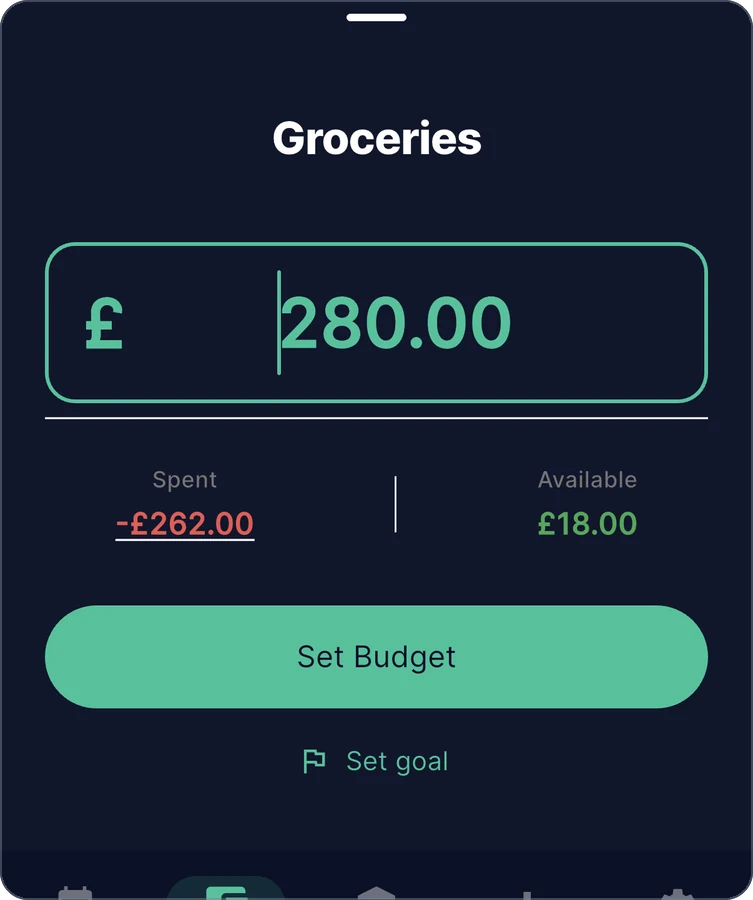
Zeroed: Offline Budget Planner is the app in the Short — envelope budgeting you buy once. It works offline, with no bank login, no subscription and no data harvesting; the first thirty-four days are free, no card needed. Try Zeroed.