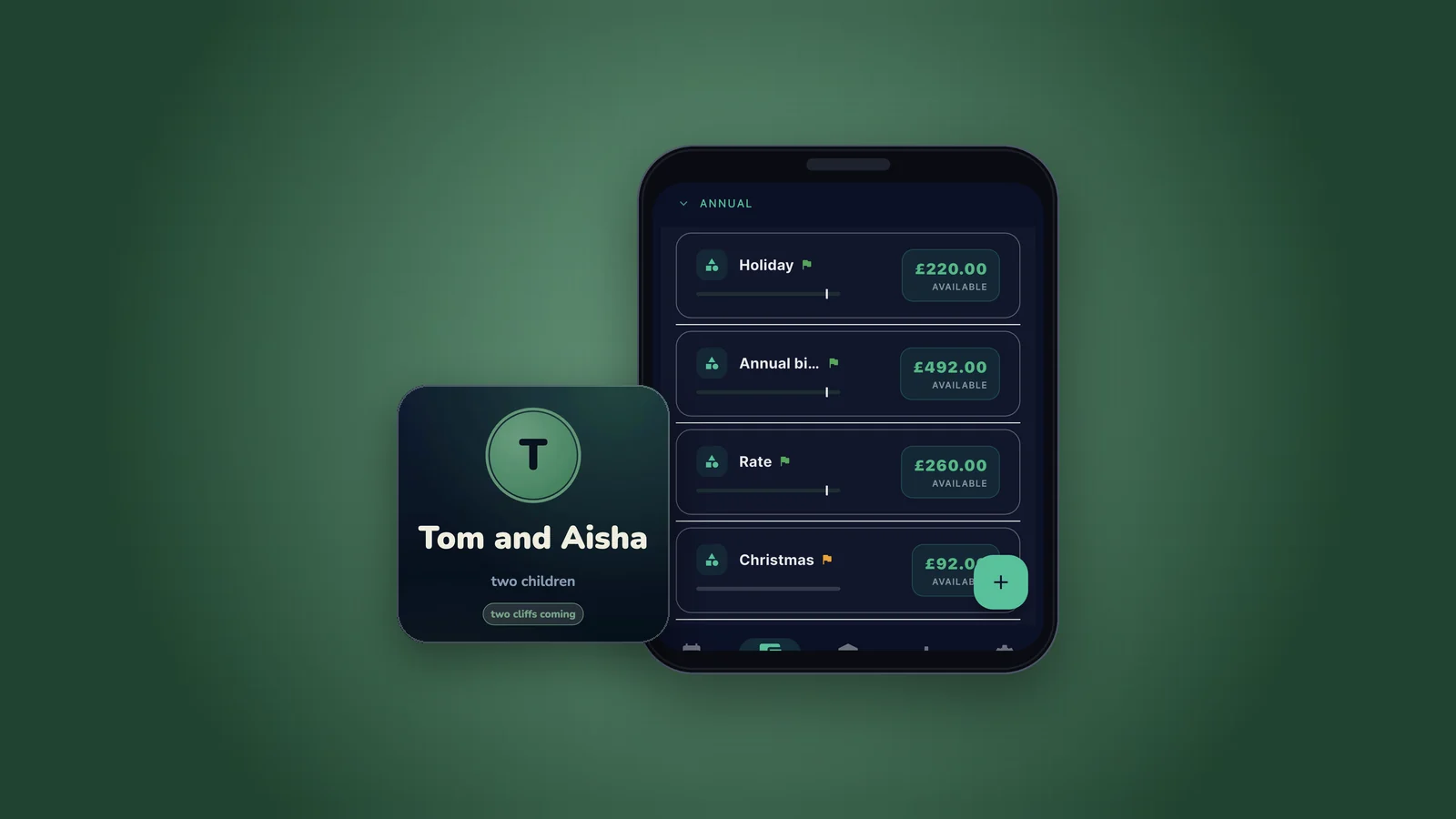
March: the fixed rate ends and the payment rises by about £260. September: nursery stops and £1,120 a month comes back. Tom and Aisha talk about September. The cliffs are in the wrong order, and the one that costs is first.
Tom and Aisha, two children. The households in these Shorts are illustrations built from typical UK figures, not real people, and every number below is worked on the household’s sheet.
What happened
Friends keep congratulating Tom and Aisha on the approaching end of nursery fees. With two children and the youngest due to start school in September, the £1,120 they pay every month for childcare is about to come back to them, and it is easy to see why that is the change everybody mentions. But it is only one of two big shifts in their finances next year, and it is not the first to arrive.
The earlier one comes in March. That is when their fixed mortgage rate ends, and the letter from the lender has already given them a rough idea of what follows: around £260 more every month. Put the two dates side by side and the difficulty is obvious. The rise begins six months before the nursery money is freed up, which means they will be paying the higher amount for half a year, £1,560 in total, before a single month of relief arrives to soften it.
Everyone, including the couple themselves, had been looking at the change that pays. The change that costs was the one quietly scheduled first, and that ordering was the real story. A windfall in September does nothing for a shortfall that starts in March. Whichever change takes money away needs to be dealt with first, however much more cheerful the other one is to talk about.
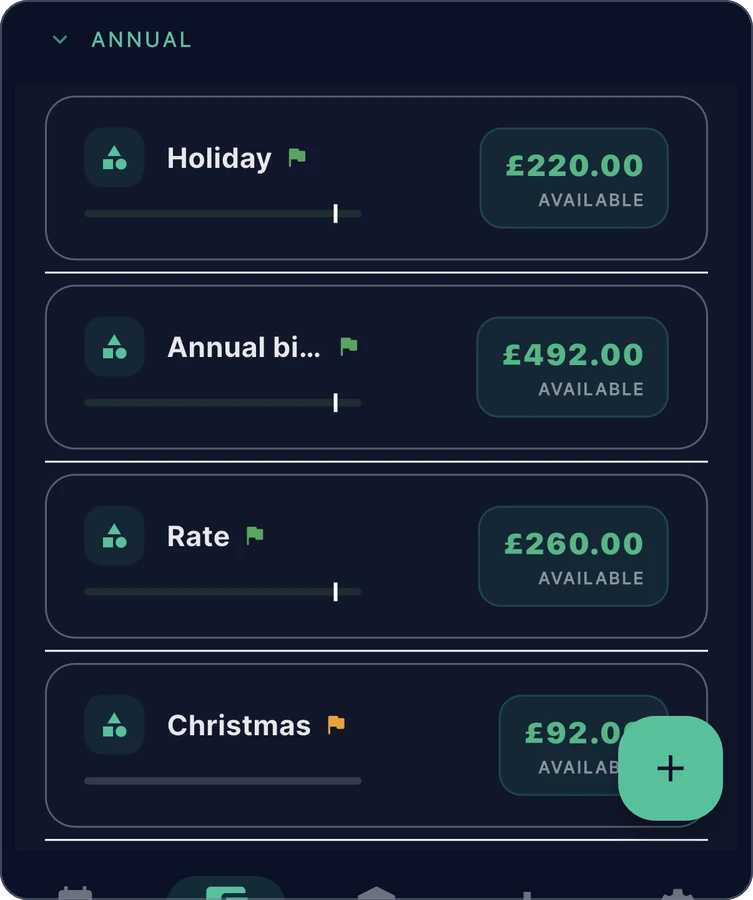
So they have started behaving as though March has already come. From this month onwards, £260 moves into an envelope named Rate, exactly the amount the new mortgage payment is expected to add. This does two jobs at once. It lets them live on the higher payment in advance and discover whether the rest of the budget can absorb it. It also builds a cushion. By the time March arrives they will have practised the new payment for five months, and the envelope will hold £1,300 towards the first six months at the new rate.
Then, when September comes and the nursery bill stops, the £1,120 a month does not simply drift into everyday spending. It arrives with a purpose already assigned to it, because the costlier cliff has been planned for in good time. The habit behind it is easy to borrow: write down the next two dated changes to the household’s money, put them in date order rather than order of excitement, and fund whichever one costs first by rehearsing it now, before the letter takes effect.
The working
Every figure the Short says, and where it comes from on the household’s sheet.
| The Short says | Figures | Derivation |
|---|---|---|
| six months apart | cliff_gap_months = 6 | cliff_gap_months = months between mortgage_change and nursery_end |
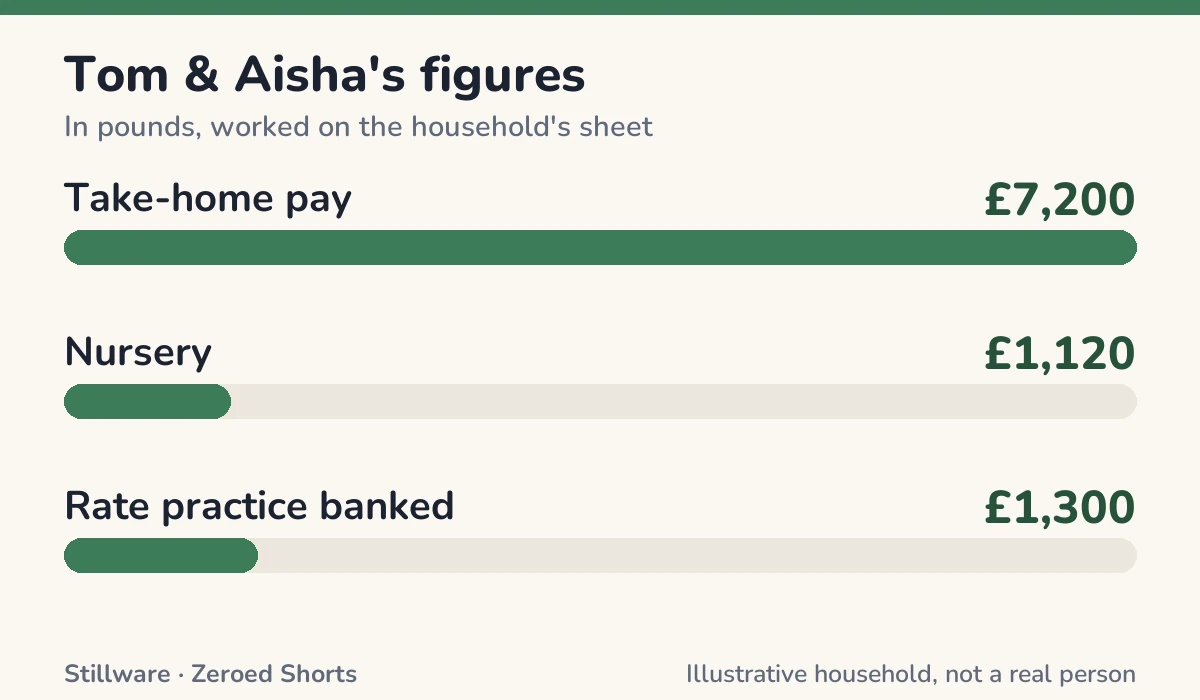
| seven thousand two hundred | takehome = 7,200 | takehome = tom + aisha |
| about two hundred and sixty more a month | rate_shock = 260 | on the sheet |
| eleven hundred and twenty a month, back | nursery = 1,120 | on the sheet |
| six months of the higher payment | cliff_gap_months = 6 | cliff_gap_months = months between mortgage_change and nursery_end |
| two hundred and sixty moves into an envelope | rate_shock = 260 | on the sheet |
| five months / thirteen hundred | practice_months = 5; rate_shock * practice_months | on the sheet |
| eleven hundred and twenty a month is free | nursery = 1,120 | on the sheet |
The turn
Everyone talks about the cliff that pays; the cliffs are in the wrong order, and six months of the higher payment come before a single month of the nursery money.
The Short
Monday
- The next two dated changes, in date order.
- The one that costs is funded first, by practising it from this month.
In Zeroed
Tom and Aisha’s Rate envelope shows this month’s two hundred and sixty in, five months before the letter bites.
Zeroed: Offline Budget Planner is the app in the Short — envelope budgeting you buy once. It works offline, with no bank login, no subscription and no data harvesting; the first thirty-four days are free, no card needed. Try Zeroed.