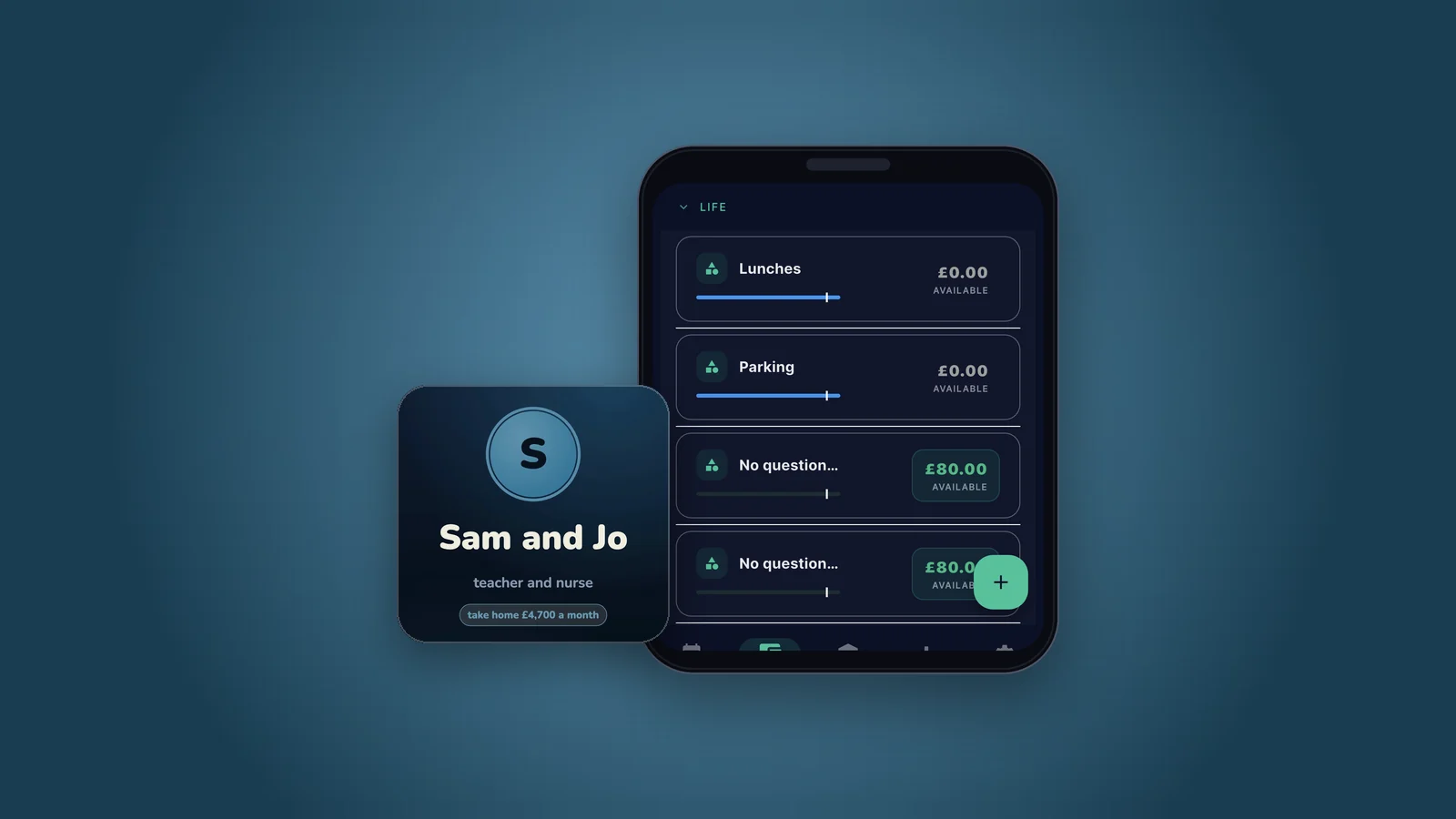
Sam and Jo’s biggest argument this year was about a £4.50 coffee. It was never about the coffee. They have £300 spare a month and no rule about whose it is, so every small thing is a negotiation. The fix is £80 each and nothing to say.
Sam and Jo, teacher and nurse. The households in these Shorts are illustrations built from typical UK figures, not real people, and every number below is worked on the household’s sheet.
What happened
Sam and Jo, a teacher and a nurse, take home £4,700 a month between them. Their biggest argument this year was about £4.50. Jo bought a coffee on the way to a shift. Sam saw it on the statement and said the thing people say. It turned into a proper row, and it was never really about the coffee.
What was actually going on was simpler and more structural. They had £300 spare each month and no rule at all about whose it was. Without a rule, every small purchase became a quiet negotiation, and a coffee was enough to set one off. The amount did not matter. The lack of an agreement did.
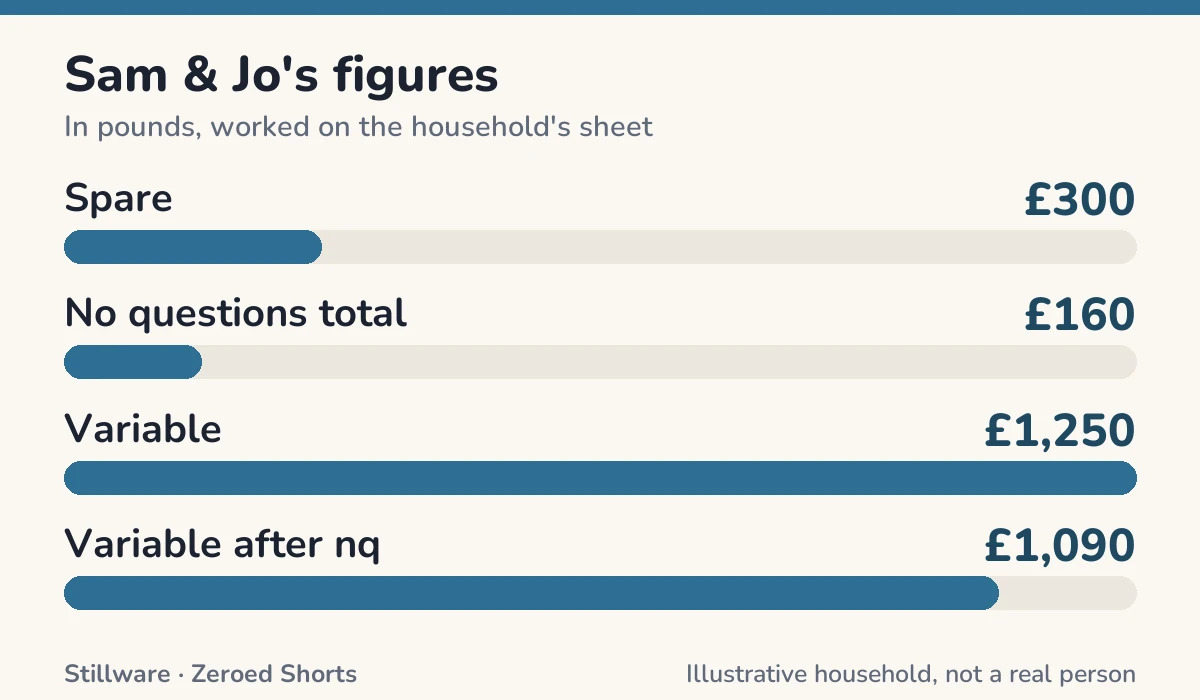
The fix was a short conversation. Each of them would get a number, no questions asked and no receipts required. They settled on £80 each, which is £160 a month between them, or about three percent of what comes in. It was not a large figure, and it did not need to be.
That was the turn. On a tight budget, money that nobody has to justify looks like the first thing to cut, because it does not pay a bill or clear a debt. In practice it is the last thing to cut. It is the cheapest peace a couple can buy, and losing it costs more in arguments than it ever saves in pounds.
The money did not appear from nowhere. It was carved out of the variable spending they were already doing, rather than added on top of it. Their variable budget of £1,250 a month became £1,090, plus two small envelopes with their names on them. Nothing else in the household budget had to change to make room, and the total going out each month stayed the same.
Now, when Jo buys a coffee before a shift, it comes out of her envelope. Nobody says anything, because there is nothing to say, and that is the whole point of the arrangement. For any couple who find themselves arguing about small things, the step is the same: a number each, agreed tonight. It can be small. What matters is that it is written down, so the next small purchase is already decided before anyone sees it on a statement.
The working
Every figure the Short says, and where it comes from on the household’s sheet.
| The Short says | Figures | Derivation |
|---|---|---|
| four pounds fifty | coffee = 4.50 | on the sheet |
| four thousand seven hundred | takehome = 4,700 | takehome = sam + jo |
| three hundred spare a month | spare = 300 | spare = takehome - spend |
| eighty pounds each | no_questions_each = 80 | on the sheet |
| one hundred and sixty a month / about three percent | no_questions_each * 2; 160 / 4700 = 3.4 % | on the sheet |
| twelve hundred and fifty becomes ten ninety | variable = 1,250; variable - no_questions_total | on the sheet |
The turn
The argument is never about the four pounds fifty; on a tight budget no-questions money looks like the first thing to cut, and it is the last.
The Short
Monday
- A number each, tonight, carved out of the variable spending you already do.
- Small is fine, written down is what matters.
In Zeroed
Sam and Jo have two no-questions envelopes, eighty pounds in each. So the next coffee comes out of Jo’s, and there is nothing to argue about.
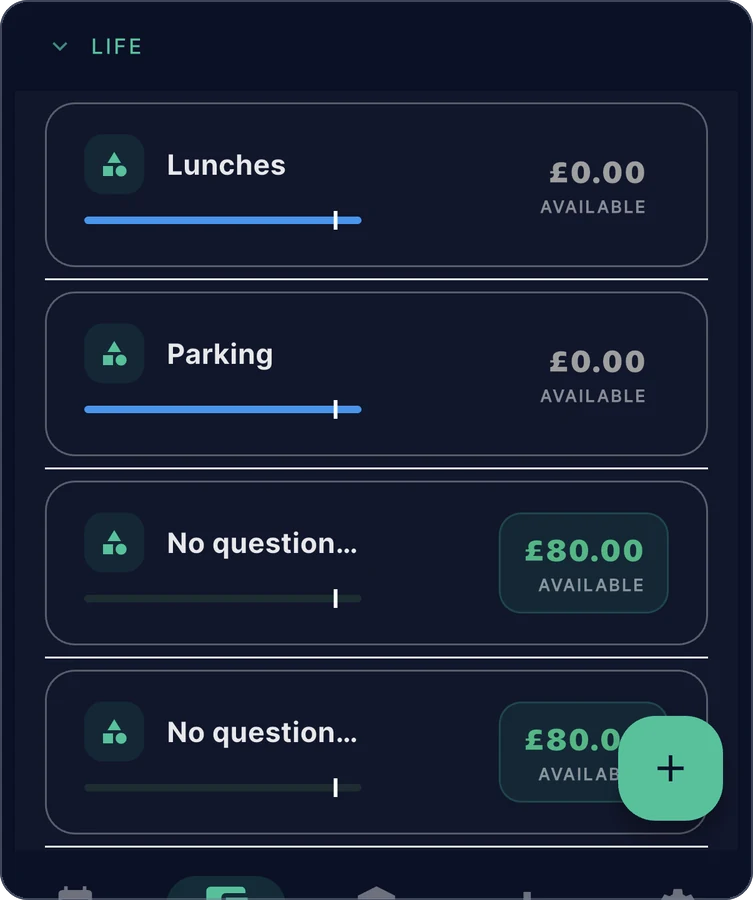
Zeroed: Offline Budget Planner is the app in the Short — envelope budgeting you buy once. It works offline, with no bank login, no subscription and no data harvesting; the first thirty-four days are free, no card needed. Try Zeroed.