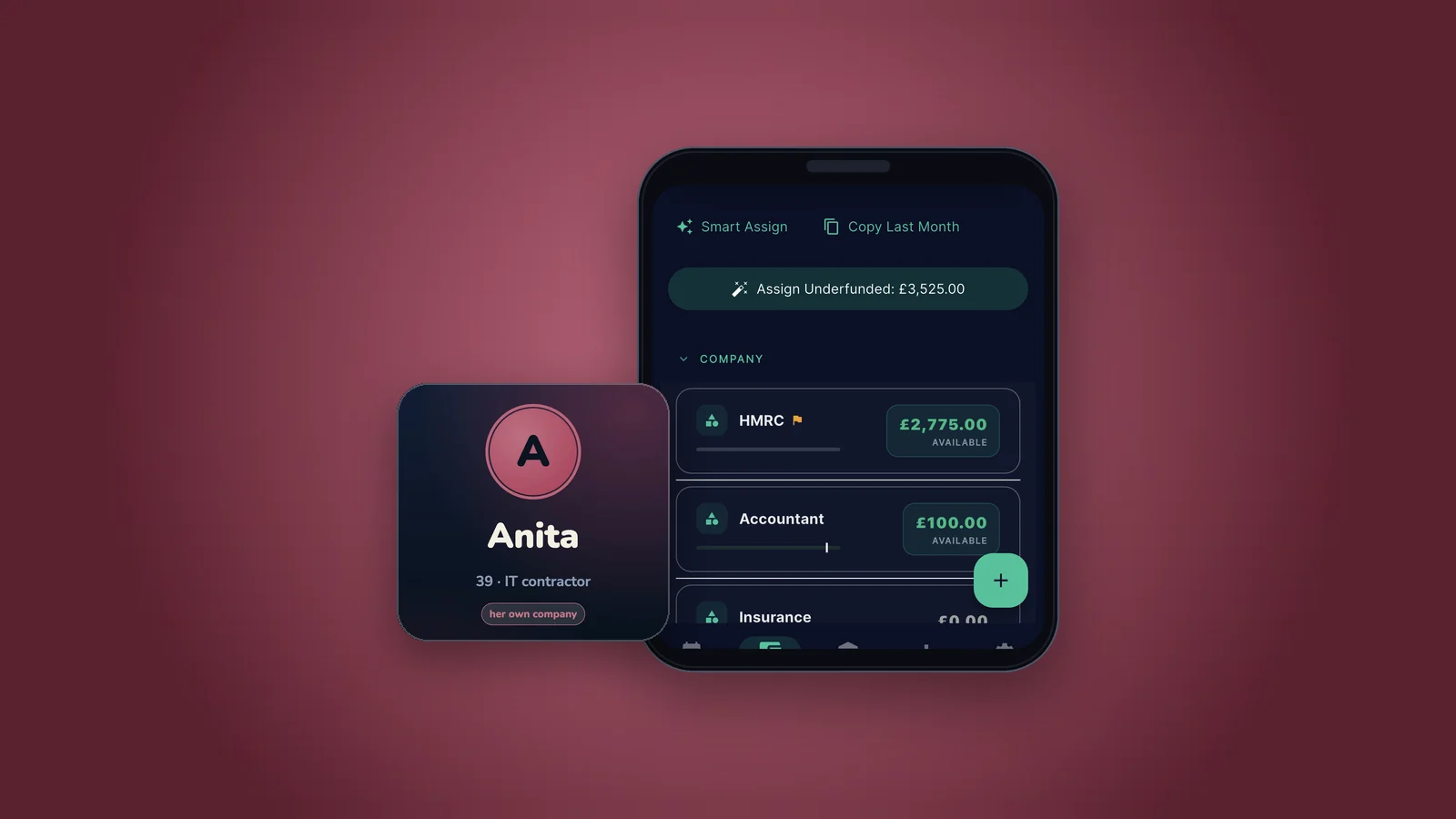
For six years Anita has paid her tax out of savings, twice a year, and been surprised both times: £66,600 in all. The question she asks every January, how much can I pay myself, is the wrong one. The right one is how much of each invoice was never hers: £925 a month, moved first.
Anita, thirty-nine, an IT contractor with her own company. The households in these Shorts are illustrations built from typical UK figures, not real people, and every number below is worked on the household’s sheet.
What happened
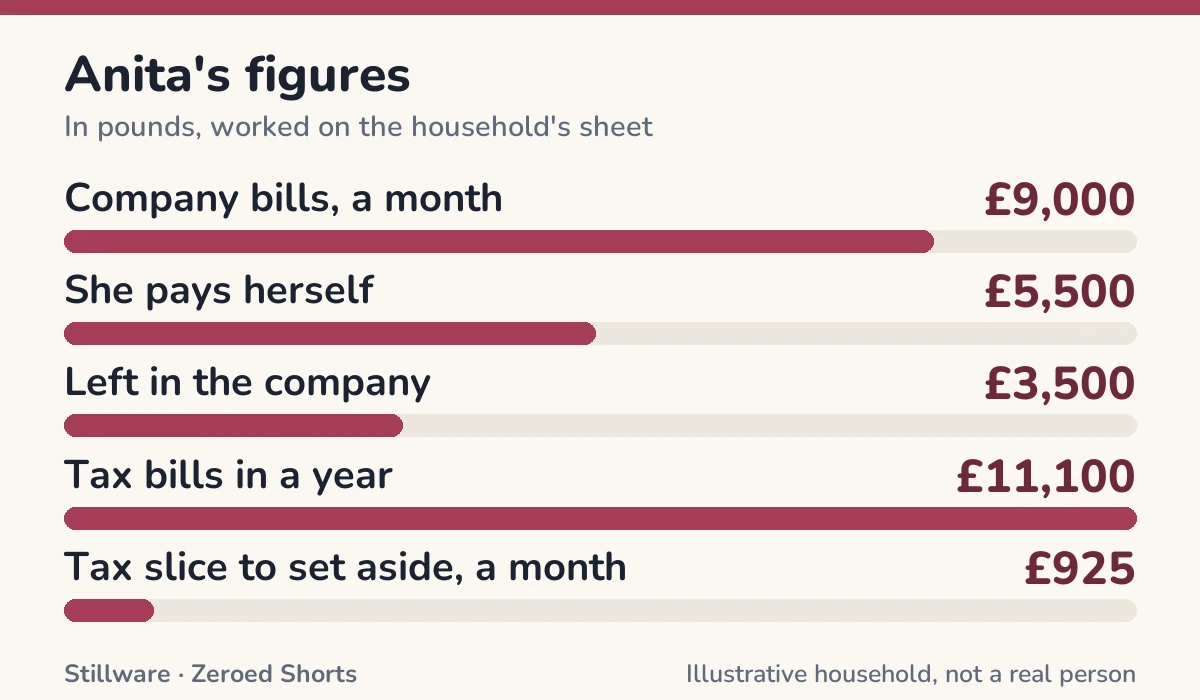
For six years, Anita has met her tax bill the same way: out of savings, twice a year, with the same jolt of surprise each time. Added up, that surprise comes to £66,600. She is thirty-nine, an IT contractor who runs her own company, and on paper the arrangement looks comfortable. The company bills £9,000 a month, and she pays herself £5,500 of it.
That leaves £3,500 a month sitting in the company, and it has always felt like a cushion, the money she leans on when January arrives. January always arrives with a number. The accountant tells her £7,400, and then July brings another £3,700. Both times the money comes out of savings, and both times it lands like something nobody could have seen coming. The pattern fed itself, too. Each year the cushion looked a little bigger, so each year she paid herself a little more, and each year the bill grew alongside it. Which leaves an odd question hanging: how can a bill that turns up every January still be a surprise?
The answer is that she had been asking the wrong question. Every January, the question in her head was how much she could afford to pay herself. What she had not seen was that the tax was never really a bill at all. It was a slice of every invoice she sent, a slice that had never belonged to her. January did not create the debt; it only sent the receipt. Put the two payments together and the slice has a size. £7,400 and £3,700 make £11,100 a year, and divided by twelve that is £925 of every month’s invoice. Not a cushion, not savings, and never hers.
So Anita changed the order of things rather than the amounts. When an invoice lands, the £925 moves first, into its own envelope under a name that is not hers. Only after that does she pay herself. It is the same money as before, simply moved on a different day.
Finding the number is not hard for anyone in the same position: last year’s bill, or the accountant’s estimate, divided by twelve, moved on the day each invoice is paid and before any salary goes out. For Anita, the envelope now fills by £925 a month against a January target, and this January the bill will be a transfer rather than a shock.
The working
Every figure the Short says, and where it comes from on the household’s sheet.
| The Short says | Figures | Derivation |
|---|---|---|
| six years / sixty-six thousand six hundred pounds | years_contracting = 6; tax_year * years_contracting | on the sheet |
| five and a half thousand / nine thousand a month | pays_self = 5,500; invoices_month = 9,000 | on the sheet |
| three and a half thousand a month | invoices_month - pays_self | on the sheet |
| seven thousand four hundred / three thousand seven hundred | tax_jan = 7,400; tax_jul = 3,700 | on the sheet |
| eleven thousand one hundred / nine hundred and twenty-five | tax_jan + tax_jul; tax_year / 12 | on the sheet |
The turn
The tax is not a bill that arrives in January; it is a slice of every invoice that was never hers, and January only sends the receipt.
The Short
Monday
- Take last year’s bill or the accountant’s estimate, divide by twelve, and move that slice the day each invoice is paid, before paying yourself.
In Zeroed
Anita’s HMRC envelope holds nine hundred and twenty-five a month against a January target. This January is a transfer, not a surprise.
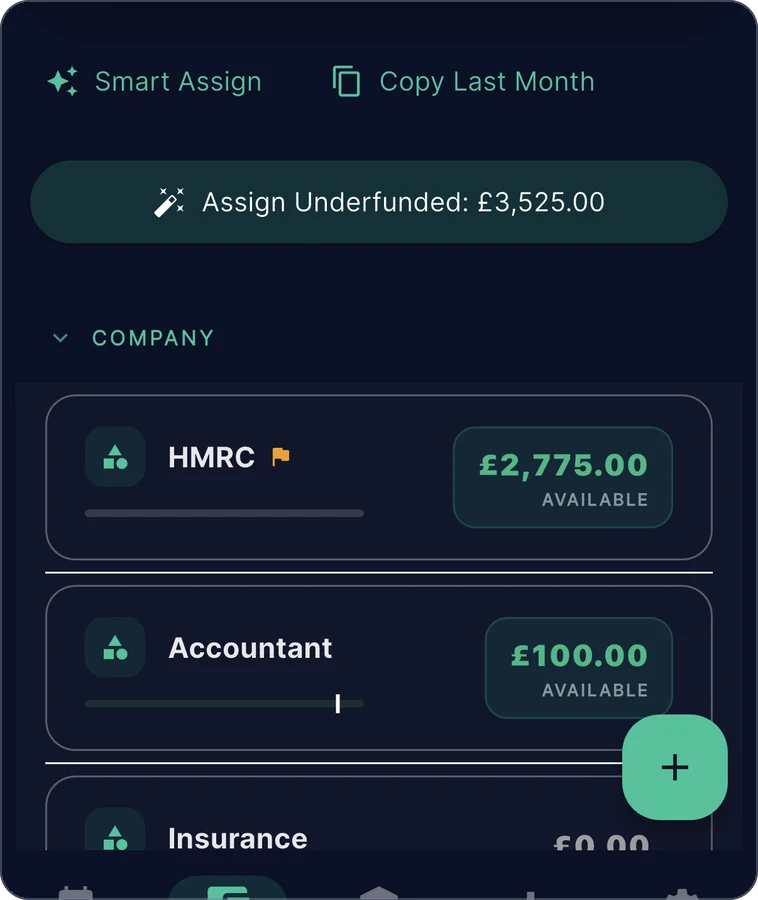
Zeroed: Offline Budget Planner is the app in the Short — envelope budgeting you buy once. It works offline, with no bank login, no subscription and no data harvesting; the first thirty-four days are free, no card needed. Try Zeroed.