
Nature Sounds for Deep Sleep: Which Ones Actually Work
You’re tired of lying awake while your brain replays the day’s worst moments. You’ve tried counting breaths, adjusting the thermostat, even the podcast about medieval pig farming. Nothing sticks. Nature sounds for deep sleep might be the missing piece — but only if you pick the right type and play it the right way.
After reading this, you’ll know which nature sounds to try for your sleep struggles — whether racing thoughts keep you up, traffic noise leaks through your windows, or you simply can’t switch your brain off after a screen-filled day. You’ll also learn how to keep the volume low, speaker placement tricks, and why it helps to have your nature sounds play without an internet connection.
Nature sounds for deep sleep are usually explained by masking. The idea is that a steady, predictable sound narrows the gap between quiet and a sudden noise, so there is less for your brain to flag. A car door slamming at 2 AM is jarring partly because it stands out against silence; a steady background sound makes that contrast smaller.

The research is more limited than the marketing suggests. In a small 2017 study in Scientific Reports (17 healthy adults, awake in a brain scanner), listening to natural sounds was linked to a rise in a heart-rate measure of parasympathetic, rest-and-digest activity compared with artificial sounds; the study did not measure sleep (Gould van Praag et al., 2017). A 2021 systematic review of continuous noise as a sleep aid, such as white noise, rated the evidence that it improves sleep as very low quality and said more research is needed; it also raised the possibility of harm to sleep and hearing (Riedy et al., Sleep Medicine Reviews). That review did not look at nature recordings specifically, but the honest summary is this: nature sounds are worth trying if you like them, and they are not a proven treatment.
But there’s a practical catch: an app that streams its sounds needs a working connection at the moment you need it.
A sleep sound that has to be streamed needs an internet connection at 2 AM, which is not a moment you want to spend troubleshooting your Wi-Fi.
Why the 2 AM Problem Breaks Streaming Nature Sounds for Deep Sleep
You wake up at 2:17 AM with your mind running. Maybe it’s work. Maybe it’s that conversation you keep replaying. You reach for your phone to play rain sounds — and the app spins. Buffering. Loading. The Wi-Fi router in your hallway needs a reset that requires getting out of bed.
This isn’t a connectivity issue. It’s an architecture issue.
Some sleep sound apps are subscription-based and stream their audio from remote servers. When your internet hiccups — when your ISP has a maintenance window at 3 AM, when your neighbor’s router floods your channel, when the provider’s CDN has an outage — a streamed sleep aid becomes a frustration aid. If you use an app, check whether it lets you download sounds for offline play.
There’s also cost and data to think about. Some sleep apps rent you the same rain loop for a monthly fee, and an app that runs online may collect usage data such as when you sleep and how long you listen. Read the privacy policy of any app you use for sleep.
So here’s a pattern worth avoiding:
- Problem: You can’t fall asleep without background sounds.
- Attempt: You download a popular app with good reviews.
- Failure: The app asks for an account, a subscription or an always-on connection.
- Real Solution: Nature sound files stored locally on your device, or a sound feature built into your phone. No account. No internet required.
Your phone may already have one. On iPhone and iPad, Apple’s Background Sounds feature (Settings, then Accessibility, then Audio/Visual) plays sounds such as ocean and rain, and Apple says that on iOS 26 or later you can add a timer so the sounds stop at a set time. Because it is a setting on the phone rather than a streaming service, you can test it in airplane mode to see that it plays without a connection.
For the problem-solution arc to work, the audio has to live where you live — on the device in your hand.
Rain Sounds for Deep Sleep: The Steady-State Champion
Steady rainfall is broadband noise: sound energy spread across many frequencies at once, which is why it is often compared to white or pink noise. Some people find that even, steady sound soothing, like a weighted blanket for your ears.
- Light drizzle: Often used for the initial wind-down phase. The gentle patter gives your brain something light to follow while you drift off.
- Steady downpour: The classic choice. Consistent volume means fewer sudden changes to startle you.
- Rain on different surfaces: Rain hitting leaves sounds different from rain on a metal roof. Experiment with recordings to find your texture preference.
- Distant thunder: Can help cover low-frequency city rumble. The thunder should be occasional, not frequent.
Keep the volume low. Harvard Health’s advice for sleep noise is to keep it no louder than a background conversation (31 March 2025 article). As a rough rule of thumb, you should still be able to hear a person speaking in a normal voice across the room, and the rain should not drown out your own breathing. For context, the World Health Organization’s guideline values for sleep in a bedroom are 30 dB LAeq for continuous noise and 45 dB LAmax for single noise events. Those figures are about unwanted noise rather than playback, but they show why quieter is the safer direction.

The key to rain sounds is consistency: a steady sound tends to fade into the background more than a changing one.
Recordings matter. A poorly made recording can have clicks, hiss or an audible seam where the loop restarts, and those can register as sudden sounds. Choose a recording that loops smoothly, and download it so it plays the same way every time.
Forest Sounds for Sleeping: Bio-Masking at Its Best
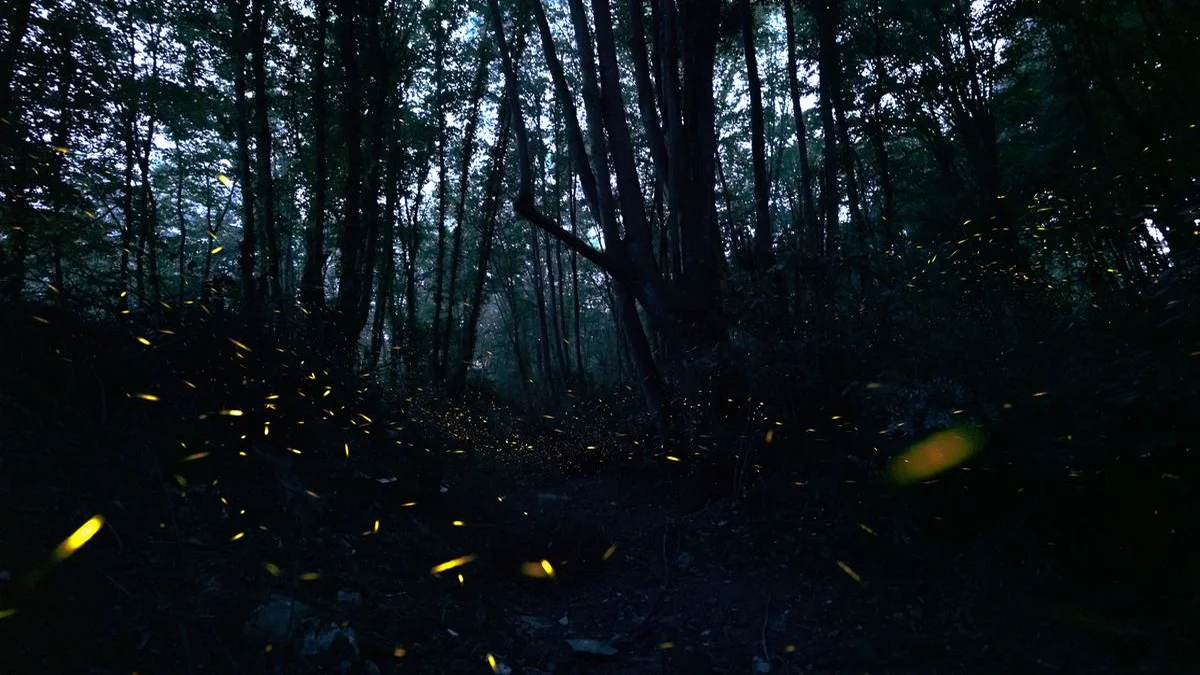
Forest sounds for sleeping use a different mechanism. Instead of steady noise, forests offer layered, organic soundscapes. Birds at dawn. Crickets at dusk. Wind moving through leaves. These sounds carry more rhythmic variety than rain, which some people find helpful if their minds tend to wander.
Think of the forest soundscape as biological masking: a layered mix of insects, birds and wind sitting over mechanical noise. “Bio-masking” is our shorthand here, not an established scientific term, and this is the idea rather than a measured result. Some people who live in cities find it easier to relax with natural sound in the background than with traffic hum.
Here is how you might match forest sounds to the moment:
- Crickets and night insects: Often chosen for the transition from wakefulness to light sleep. The rhythmic chirping gives a gentle tempo to follow.
- Dawn chorus: Birdsong that builds slowly is a gentler start to the morning than an alarm for some people who wake too early. Others find birdsong too alerting (see below).
- Wind and leaves: An underrated forest sound. Broad, rustling sound covers a wide range of frequencies, which makes it a good candidate for softening a mix of electronics hum and traffic.
- Distant water in forest: A creek or stream combined with forest ambience offers the depth of rainforest without the intensity of a downpour.
Forest sounds can take the edge off irregular urban noise, but they will not erase a siren or a slamming door.
One practical note: some people find lively birdsong too engaging to sleep to. If dawn chorus keeps you awake, you’re not defective. Switch to wind-heavy forest recordings instead.
Ocean Sounds for Sleep: The Broad-Spectrum Solution
Ocean sounds for sleep occupy a fascinating middle ground. Waves produce a sound profile that’s more variable than steady rain — you get the crash, the hiss, the retreat — but the variation happens in a rhythm predictable enough that some people tune it out.
The surf cycle is slow and regular: a wave builds, crashes and retreats, and there is a pause. Some people find it easy to slow their breathing to that rhythm. Whether ocean sounds relax you is a matter of personal preference, not an established effect.
- Crashing waves: A more dramatic option that can cover more of the background. Keep the volume low, since loud crashes can be startling.
- Gentle lapping: For light sleepers who want minimal acoustic stimulation.
- Distant surf: A softer background hum that can sit under low-frequency noise without dominating your auditory field.
Your device placement changes how ocean sounds work. Speakers on a bedside table point sound directly at your head. A phone placed on the floor or in a corner reflects sound off walls, creating a more diffuse acoustic field. For ocean sounds especially, indirect placement may make the recording feel more immersive and less directional.
Ocean sounds are a good one to try if you want something rhythmic without being busy.
A fifth option: streams and running water
If rain feels too busy and waves too dramatic, running water is worth a try. A stream or a small waterfall gives a steady, gentle, broadband sound similar to rain, without the rise and fall of surf. Choose a recording without sudden splashes, bird calls or an audible loop point. Like every sound in this guide, it comes down to personal preference.
Thunder Sounds: Use With Caution
Thunder belongs in the toolkit, but it’s not for everyone. Slow-building storm recordings with distant thunder can help cover deep, low-frequency noise: highway rumble, train tracks, building HVAC systems.
The risk with thunder is startle response. A crack that’s too loud or too close can startle you awake just as you’re drifting off. If you’re drawn to thunder sounds, follow these guidelines:
- Choose recordings where the thunder sits well below the rain layer
- Look for “distant storm” recordings, not “storm overhead” ones
- If your app lets you mix layers, start with the thunder very quiet, then adjust up
- Skip thunder if sudden loud sounds are a trigger for you, for example with PTSD, an anxiety disorder or a strong startle reflex
Thunder is the sound in this guide most likely to startle you, so keep it quiet and distant.
The same offline principle applies here. If storm audio has to be fetched from a server, a slow connection can cause stutters or gaps, and a break in a steady soundscape is the audio equivalent of someone flicking the lights every few seconds.
Building Your Nightly Routine: Volume, Placement, and Breathing
Getting nature sounds right requires more than picking a nice recording. The setup matters. Here’s a practical framework for building a routine that works for you.
Volume Settings That Protect Your Ears
Loud sound over long periods can damage hearing: the US National Institute for Occupational Safety and Health (NIOSH) treats noise at 85 dBA and above as hazardous. Sleep sounds should sit far below that, but phones can also play alarms, notifications and other audio at full volume, so check your volume before you fall asleep.
- Target range: Keep it low, no louder than a background conversation
- Test method: Set the volume so you can still hear a person speaking in a normal voice across the room
- Avoid: Turning the volume up to drown out loud noise. If a noise is too loud for a quiet recording to cover, deal with the source of the noise instead
- Use a timer, or a seamless loop: Some people prefer the sound to stop after a set time, others want it all night. Try both. Either way, avoid recordings that end abruptly, because sudden silence can itself wake you
Speaker Placement That Works
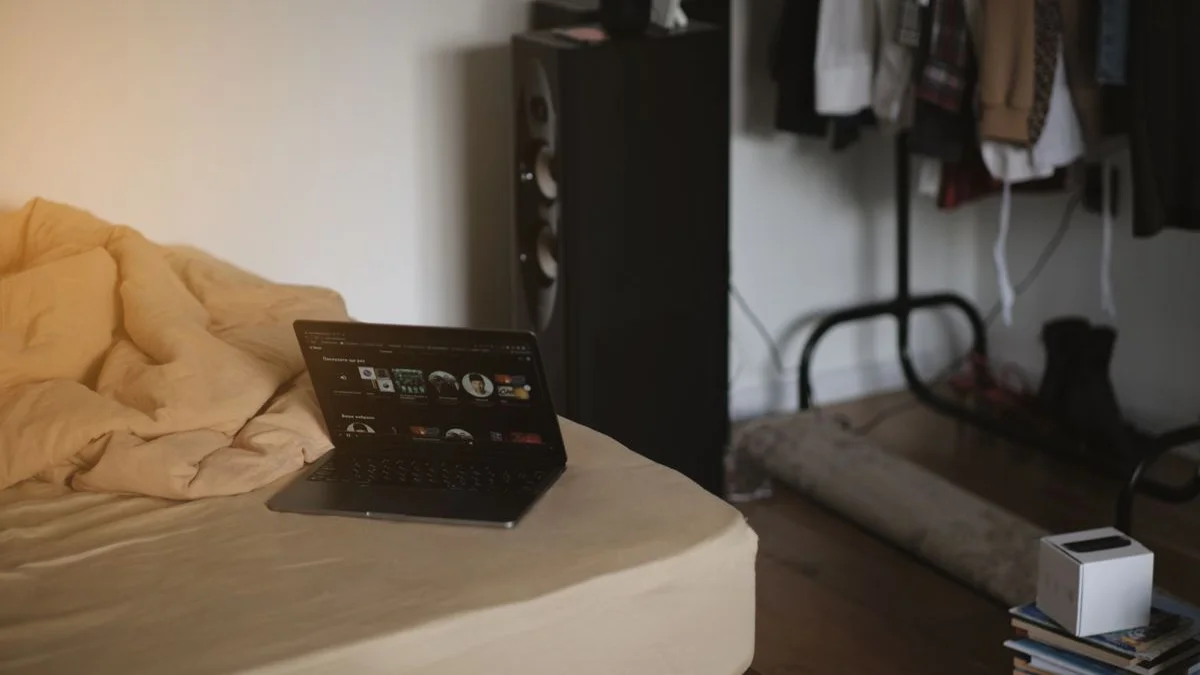
Where you put your playback device changes everything. Keep a phone out from under your pillow and bedding: fire services such as Essex Fire and Rescue warn against charging a phone under a pillow, and London Fire Brigade advises against leaving phones plugged in to charge overnight, so charge it earlier in the evening. A dedicated speaker on a bedside table points audio straight at your ears, which some people find less relaxing.
Better approach: try placing the speaker a few feet from your head, aimed away from you. Sound reflects off the wall and reaches you diffused, which some people find feels more distant and less intrusive.
Combining Nature Sounds With Breathing
Nature sounds and slow breathing can go well together. Rain sounds give you a steady auditory reference point. Ocean sounds give you a rising-and-falling rhythm. Try matching your breathing to the recording:
- Choose an ocean or wave recording with a cycle you can follow
- Inhale for four counts as the wave builds
- Exhale for six counts as the wave retreats
- Let the pattern continue for ten minutes
A 2018 systematic review found that slow breathing was associated with increases in heart rate variability, a marker linked to parasympathetic activity (Zaccaro et al., Frontiers in Human Neuroscience). If a longer exhale feels uncomfortable, use the simpler NHS exercise instead: count steadily from one to five on the in breath and again on the out breath, for at least five minutes. The sounds can give you something steady to anchor the pattern to.
Why Offline Nature Sounds Matter More Than You Think
Every nature sound category we’ve covered shares one hidden requirement: they need to play without interruption. And the most reliable way to avoid interruptions at 2 AM is to have the audio stored locally on your device.
This isn’t about hating streaming services. Streaming nature sounds works fine at 8 PM when your connection is healthy. The catch is that you may need sleep sounds most urgently at 2 AM, and that is a bad moment to find the connection has dropped. You deserve a sleep aid that works regardless of your ISP’s mood.
There’s also a quiet privacy issue. When you sleep and how long you sleep are personal information. Some apps collect usage data, so read the privacy policy of any sleep app. A local audio file on its own doesn’t send anything anywhere.
If you like the offline idea, our guide to why offline apps are better explains it in more detail, and what local-first software is covers the wider approach.
The bottom line: pick your nature sound category based on the noise you need to mask, keep the volume low, place your speaker away from your head, and make sure — absolutely sure — that the audio works without an internet connection. You deserve better than a sleep aid that needs a server farm to function.
Start with a single category. Rain is the safest baseline. Try it for one week at a consistent volume. Add ocean sounds only if rain feels too monotonous. Introduce forest sounds when you want more texture. Build your library slowly, and you’ll eventually have a set of recordings that meet every sleep state you encounter.
And when you find the right combination, get it saved locally on your device. That’s where it belongs. And that’s where it will still be when you need it most — at 2 AM, when the internet goes down and your brain refuses to follow suit.
If you have had trouble sleeping for months, the NHS advises seeing a GP; its insomnia page also lists self-help tips.
Sources: Gould van Praag et al., Mind-wandering and alterations to default mode network connectivity when listening to naturalistic versus artificial sounds, Scientific Reports, 2017; Riedy, Smith, Rocha and Basner, Noise as a sleep aid: A systematic review, Sleep Medicine Reviews, 2021; Harvard Health, Can white noise really help you sleep better?, 31 March 2025; World Health Organization, Guidelines for Community Noise, 1999 (bedroom guideline values); CDC/NIOSH, About noise and hearing (85 dBA); Apple, Use Background Sounds to help with sleep, focus, and more; Zaccaro et al., How Breath-Control Can Change Your Life, Frontiers in Human Neuroscience, 2018; NHS, Breathing exercises for stress and Insomnia; Essex Fire and Rescue Service, Batteries and charging safety; London Fire Brigade, Electrical items. All checked 7 October 2026.