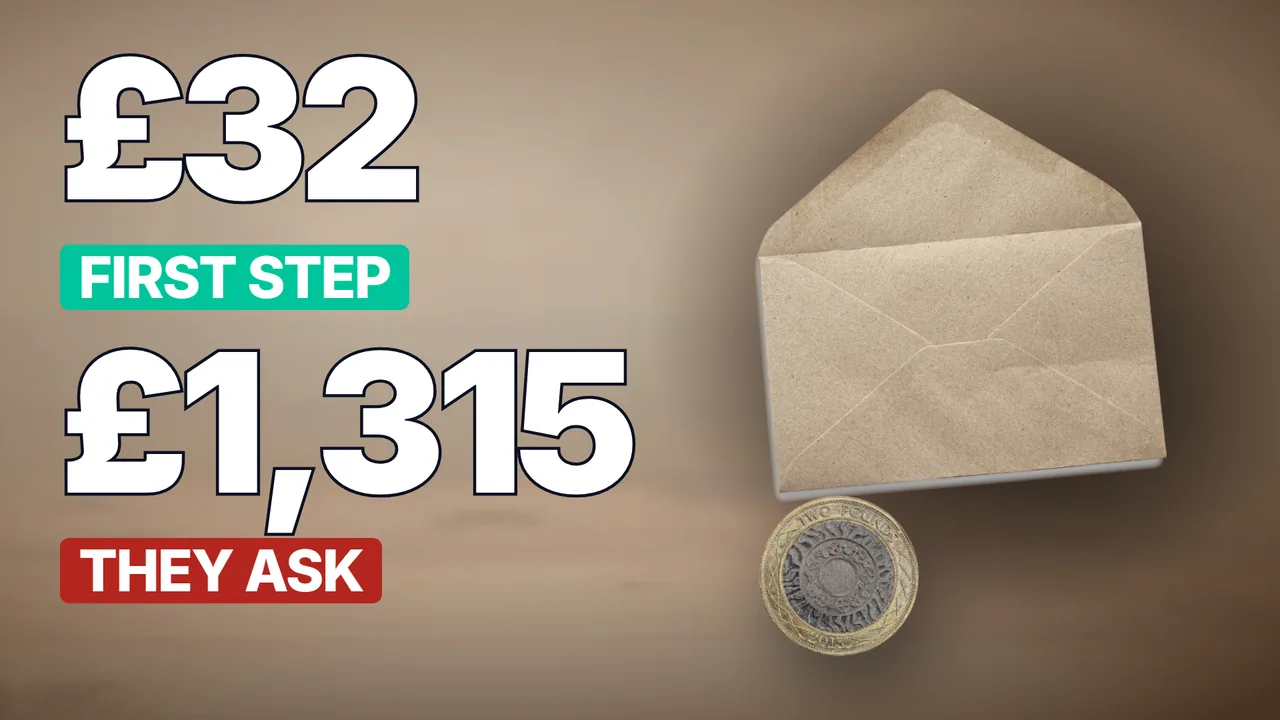
Getting a month ahead on your bills does not mean saving a month of expenses. It means getting ahead of one bill at a time, smallest first, until each one is paid from money that arrived before the month started. On the budget below — £1,280 in, £1,315 of plan — the first step costs £32, and £30 of that is already sitting in the plan. The real distance is two pounds.
Why the usual answer does not work
Search this question and you will be told to save one full month of expenses. The clearest version of it comes from WalletHub: “if you make $5,000 a month after taxes and you pay $4,000 every month… you can save one month’s worth of expenses and get a month ahead on your bills in just five months.”
That is a 20% surplus, held for five months. It is a perfectly good method for a household that has one.
Here is the household this article is about, and it is the one from the video:
| Take-home, monthly | £1,280.00 |
| What the month costs | £1,315.00 |
| Difference | −£35.00 |
There is no 20% surplus. There is no 2% surplus. Save a month of expenses on top of a month that already costs more than it earns and you are counting in years — which is why this advice gets read once and never started.
A bill is not the same as spending
The number is too big because it counts the wrong things.
A bill has a date and a fixed amount. Groceries have neither: you shop with the money as it comes in, and you always have. You cannot get “ahead” on the weekly shop in any meaningful sense — you can only buy it earlier.
So split the month before you total anything:
| Group | This household | Can you get ahead of it? |
|---|---|---|
| Bills with a date | £890.00 | Yes |
| Spending (groceries, transport) | £325.00 | No — it has no date |
| Only-this-month items | £100.00 | Not applicable |
| The month | £1,315.00 |
The target was never £1,315. It is £890 — and you never need it all at once.
The queue
Put the five dated bills in order, smallest first. That list is the whole method.
| Order | Bill | Amount |
|---|---|---|
| 1 | Water | £32.00 |
| 2 | Phone | £38.00 |
| 3 | Energy | £95.00 |
| 4 | Council Tax | £105.00 |
| 5 | Rent | £620.00 |
You are never asked for £890. You are asked for the top line.
Why smallest first, not largest
Largest first sounds braver, because the rent is the bill that matters most. But put a year of scraps — say £8 a month, which is what people in this position actually report saving — against the rent and you are £96 up a £620 hill, with nothing finished.
Put the same £96 against the water bill and it is done three times over. A finished bill leaves the queue and never comes back; a part-funded one comes back every month.
What “crossing over” actually looks like
This is the part most articles skip, so here it is concretely.
Right now the water envelope holds £32 and the water bill is £32. That is level, not ahead. The day the bill leaves, the envelope is empty again and next month starts exactly where this one did.
A month ahead is the same row holding £64 — two bills’ worth. The bill goes out, the row does not empty: it drops back to £32, which is next month’s, already there before next month starts.
One number, on one row. That is the whole move, and every other article is asking you to make it for every row at once.
Where the £32 comes from
Not from extra income, and not from a second job. From a month that costs less than your plan — and most households have one.
In this household it is August: the school-lunch envelope is budgeted at £30 in term time and is not needed in the holidays. There is no birthday that month either, so for once the plan and the pay match. Add £2 off the groceries and the first crossing is paid for.
| School holidays free up | £30.00 |
| Off the groceries | £2.00 |
| The first crossing | £32.00 |
Two pounds. That is the distance between this budget and being a month ahead on its first bill — and it is why “save £1,315” and “save £32” are answers to the same question with completely different outcomes.
Your cheaper month might be a subscription that ended, a term with no school trips, or the month the car insurance is not due. It does not have to be big. It has to be spent on purpose instead of quietly.
Then the next one
The queue moves up. The next line is the phone at £38 — bigger than the water bill, and still a fraction of the month. That is the shape of the whole thing: every step is the smallest step left.
One line off a five-line list, and it cost one month of school holidays.
Two limits, said plainly
In a month where the plan already costs more than the money that arrived, you get ahead of nothing. That month is about choosing which envelope carries the gap, not about building a buffer — that is a different method, and it has its own guide.
If you are behind on rent or council tax, do not build a buffer. Ring StepChange or Citizens Advice. Both are free and independent, and being behind on those two is not a budgeting problem.
How long does it take?
Nobody can answer that, because it is your months and your bills. The honest answers you find — “one month, six months, or a year” — are true and useless.
What you can answer is the order:
- Which of your bills is smallest?
- Which month coming up costs less than your plan?
- Which line came off the list — because it does not come back.
A date you cannot predict is not a plan. A queue you can start this month is.
Doing it on paper, or in an app
Write your dated bills down, smallest at the top. That list is the method, and it works on paper exactly as it works in software.
I built Zeroed for budgets like this one, because envelope balances carry forward: when the water row reads £64.00 against a £32.00 bill, the app is showing you that you are a month ahead on that line, in one number, without a spreadsheet. One payment, no subscription, works offline, no bank connection. You can also do the whole thing with a notebook and five envelopes — the order is what matters, not the tool.
If you want to check the arithmetic on your own month first, the savings goal calculator will tell you how many months one bill takes to get ahead of at the amount you can spare.
This is education about a budgeting method, not financial advice.
FAQ
Is this the same as an emergency fund? No. An emergency fund is for things you did not plan. Being a month ahead is for things you did plan — the bills you already know the date and the amount of.
Do I need to be a month ahead on everything? No, and on a tight budget you probably will not be for years. Each bill you finish is finished on its own; the benefit does not wait for the last one.
What if my income is irregular? The queue still works — the cheaper months just arrive less predictably. Fund the top line whenever a month comes in under plan.
Should I use a savings account or leave it in the envelope? Whichever you will not spend. The point is that the money for next month’s bill is already allocated before next month starts.