A friend at dinner says Dev must be saving loads. He says £41,000. Under the table his current account says £212, with six days to payday. Both numbers are true, and that is the problem.
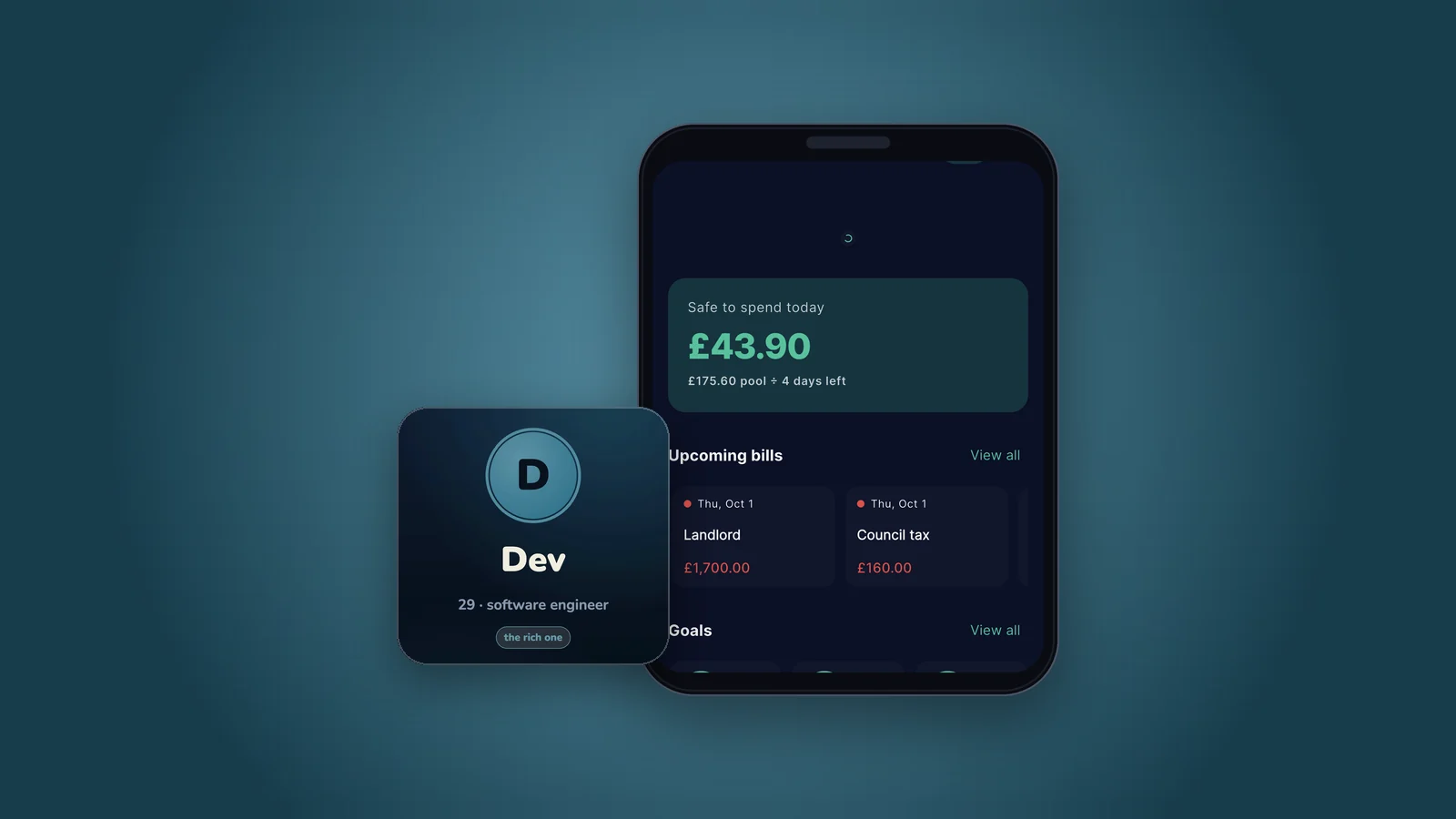
Dev, twenty-nine, software engineer. The households in these Shorts are illustrations built from typical UK figures, not real people, and every number below is worked on the household’s sheet.
What happened
Among his friends, Dev is the one who is doing well. He works as a software engineer, and over dinner someone remarks that he must be saving a fortune. He tells them he is worth about £41,000, which is true. At the same moment, under the table, he is checking his current account, and it shows £212. That is also true. Only one of those figures, though, is any use when the bill for dinner arrives, and twice this year his bank has charged him for going overdrawn.
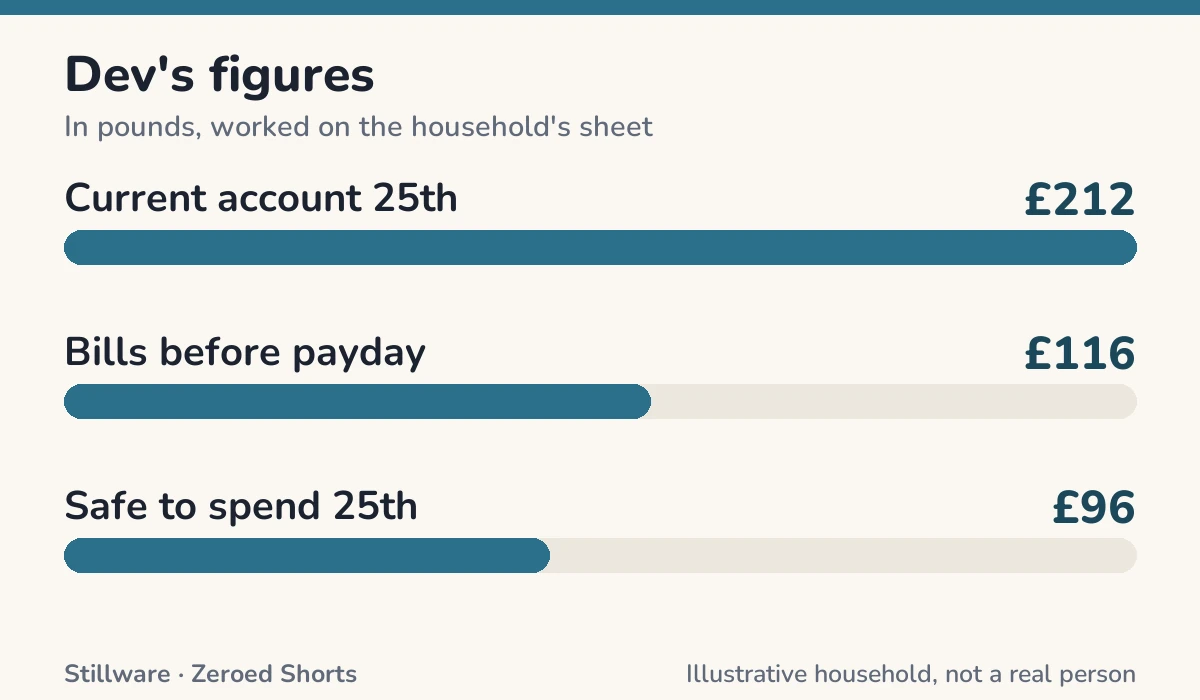
The two numbers describe completely different things. The £41,000 is held in company shares. It is real wealth, but it lives on paper, rising one week and falling the next, and none of it can be spent on an ordinary Tuesday. The £212 is what sits in his account late in the month, six days before payday. And it is not all his to spend, because £116 of bills are still due to leave before the next salary lands. Take those away and the honest figure for the rest of the week is £96.
That gap explains the overdraft charges. Both came in months when a bill went out a day earlier than expected and caught him short, and each one cost him £40. It is an odd position for the person everyone at the table considers rich. The trouble was that Dev had been answering the wrong question. Asking whether he is saving is not the same as asking whether he is fine this week, and a very good answer to the first had been concealing a poor answer to the second.
So he changed which number he looks at, and when. The second question, how much is safe to spend today once the bills already on their way are accounted for, now sits on his phone’s home screen, where he sees it before he spends rather than afterwards. The shares still matter, but he checks them only once a month, on a fixed day, instead of letting their value colour how he feels about a Tuesday lunch.
When the subject comes up at dinner now, he gives two answers rather than one. He is worth more than he used to be, and he has £96 to last him until Friday. Both are accurate, and together they tell the full story. For anyone in a similar spot, the useful figure is the same one Dev landed on: what can safely be spent today after the bills already coming, kept somewhere it will be seen before the card comes out. Since he started doing that, there has not been another charge.
The working
Every figure the Short says, and where it comes from on the household’s sheet.
| The Short says | Figures | Derivation |
|---|---|---|
| forty-one thousand / two hundred and twelve | rsu_holdings = 41,000; current_account_25th = 212 | on the sheet |
| six thousand one hundred | takehome_now = 6,100 | on the sheet |
| forty-one thousand is what his shares are worth today | rsu_holdings = 41,000 | on the sheet |
| two hundred and twelve / one hundred and sixteen | current_account_25th = 212; bills_before_payday = 116 | on the sheet |
| ninety-six pounds | current_account_25th - bills_before_payday | on the sheet |
| ninety-six pounds until Friday | safe_to_spend_25th = 96 | safe_to_spend_25th = current_account_25th - bills_before_payday |
The turn
Are you saving” and “are you fine this week” are different questions; a good answer to the first hid two overdraft charges from a man worth forty-one thousand.
The Short
Monday
- Your number is what is safe to spend today, after the bills already coming.
- Put it where you see it before you spend.
In Zeroed
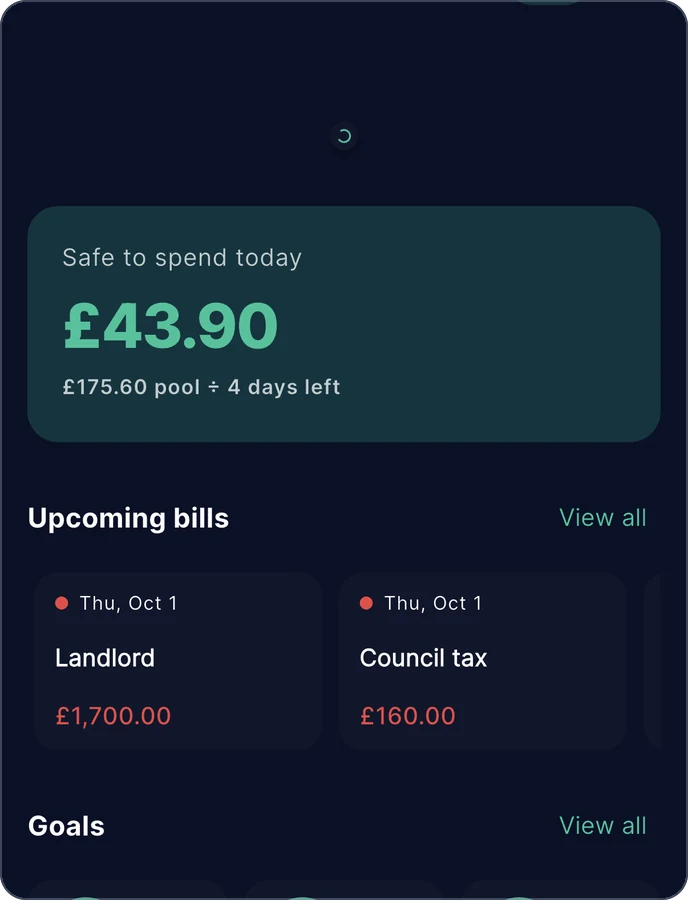
Dev’s Today screen shows what is safe to spend today. The two bills before payday sit right beneath it. No charge since he put it there.
Zeroed: Offline Budget Planner is the app in the Short — envelope budgeting you buy once. It works offline, with no bank login, no subscription and no data harvesting; the first thirty-four days are free, no card needed. Try Zeroed.