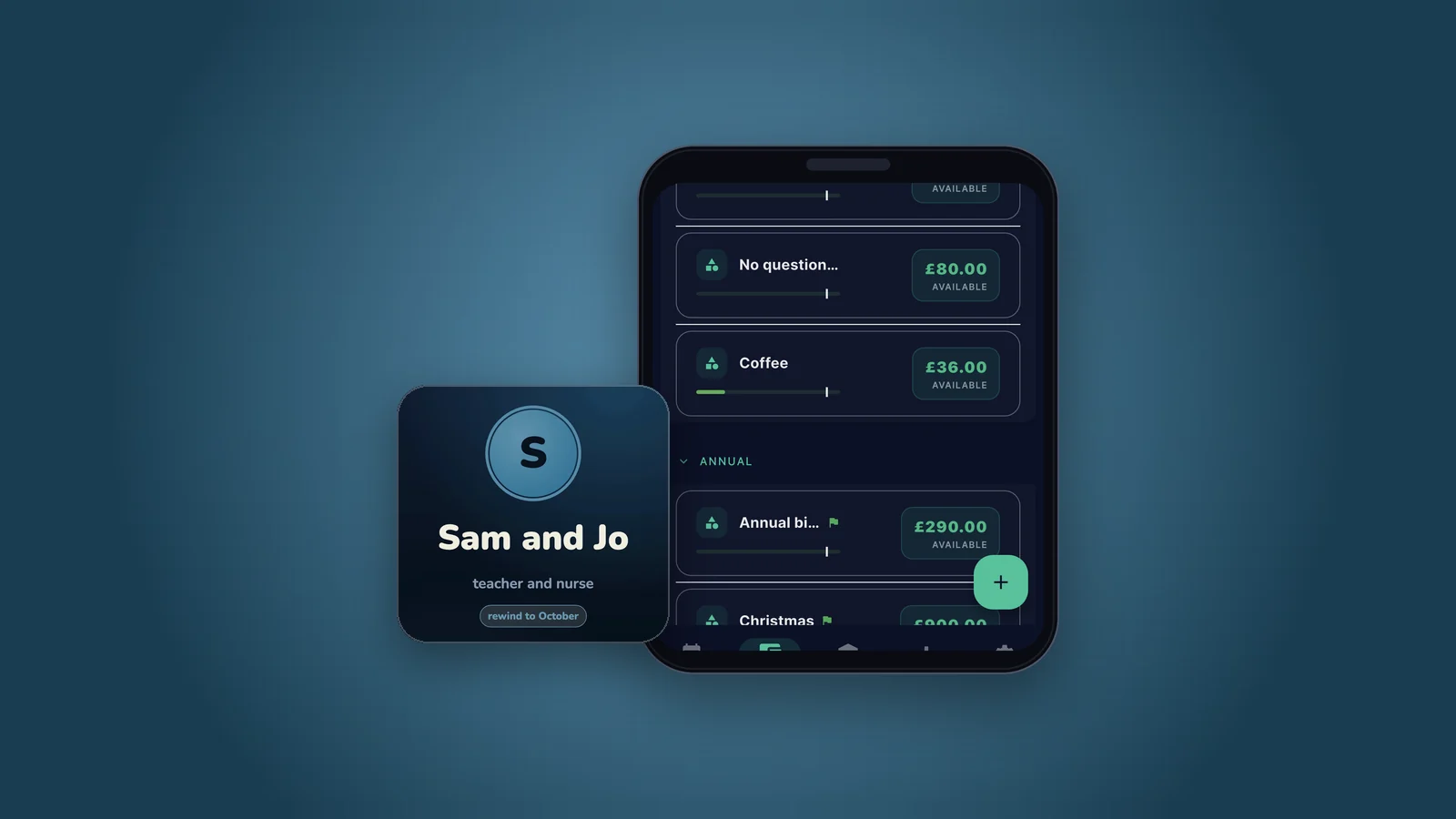
Sam and Jo’s credit card hits zero on the third of April and stays there for eight weeks. Then June, the holiday, and the year starts again. The salary is fine. The bills arrive in lumps, and the lumps add up to £290 a month.
Sam and Jo, teacher and nurse. The households in these Shorts are illustrations built from typical UK figures, not real people, and every number below is worked on the household’s sheet.
What happened
On the third of April, Sam and Jo finally see their credit card balance reach zero. It is a good day, and it does not last. The card will stay clear for about eight weeks before the cycle begins again, as it has every year. Sam is a teacher and Jo a nurse, and together they bring home £4,700 a month while spending around £4,400, which by most measures is a household in reasonable shape.
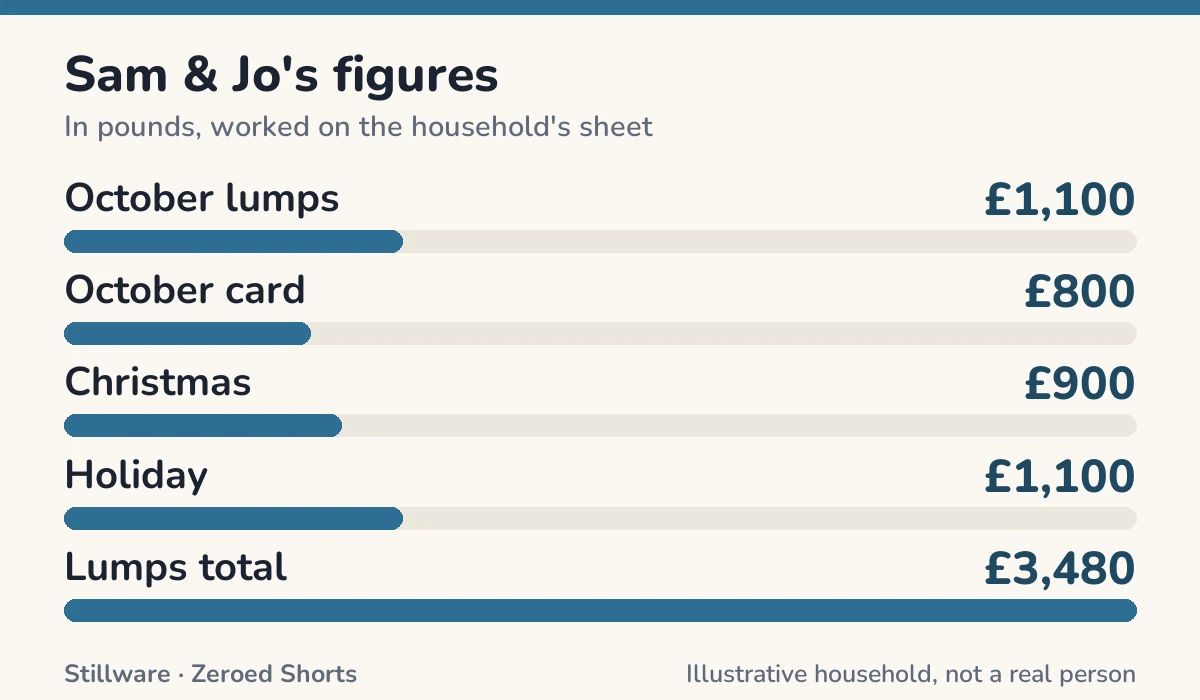
To see why the card keeps filling up, it helps to go back to October. That is when the car insurance falls due at £680, along with the service and MOT at £420. Together that is £1,100 in a single month, against the £300 or so they normally have left over. The remaining £800 goes on the card, because the card is, in effect, the only plan they have for months like this. Then December brings Christmas at £900. The balance had been partly paid down by then, but Christmas sends it straight back up to £1,100. January, February and March are spent chipping away at it, £300 a month, until April arrives and it touches zero once more. In June the holiday comes along, another £1,100, and the whole loop starts over.
It would be natural to conclude that Sam and Jo have a money problem, that they spend too much or earn too little. Neither is really true. Their salaries cover their lives comfortably. What they have is a calendar problem. The income arrives in steady monthly amounts, while a handful of important bills arrive in lumps at awkward moments, and the card has been standing in the gap between the two.
Once they added the lumps together, the answer became clear. Car insurance, the MOT, Christmas, the summer holiday and birthdays, which account for another £380, come to £3,480 over a year. Spread evenly across the months, that is £290. It is actually less than the £300 a month they were already sending to the credit card to pay off those very bills, only now the money would be put aside roughly six months earlier, before each lump arrived, and with no interest added on top.
So on payday, £290 now goes into a single envelope set aside for annual bills. Nothing else about their spending had to change. When October came round again, the insurance and the MOT were paid from money already waiting for them, and this time the card stayed at zero. The same sum works for any household with lumpy bills: add up the year’s big one-off costs, divide by the months in a year, and move that amount every payday.
The working
Every figure the Short says, and where it comes from on the household’s sheet.
| The Short says | Figures | Derivation |
|---|---|---|
| four thousand seven hundred / four thousand four hundred | takehome = 4,700; spend = 4,400 | takehome = sam + jo; spend = rent + bills + car_running + groceries + commute + other_fixed + variable |
| six hundred and eighty / four hundred and twenty | car_insurance = 680; mot_service = 420 | on the sheet |
| eleven hundred / three hundred spare | car_insurance + mot_service; takehome - spend | on the sheet |
| eight hundred goes on the card | october_lumps - spare | on the sheet |
| nine hundred | christmas = 900 | on the sheet |
| five hundred / eleven hundred | october_card - spare; 500 + christmas - spare | on the sheet |
| three hundred a month off it; April: zero | spare = 300; 1100 - 3 * 300 = 200; then 0 in early April | spare = takehome - spend |
| eleven hundred | holiday = 1,100 | on the sheet |
| three thousand four hundred and eighty | car_insurance + mot_service + christmas + holiday + birthdays | on the sheet |
| two hundred and ninety | lumps_total / 12 | on the sheet |
| less than the three hundred | lumps_monthly < spare | on the sheet |
The turn
Sam and Jo do not have a money problem; they have a calendar problem — the salary is fine, the bills arrive in lumps.
The Short
Monday
- The year’s lumps divided by twelve, moved into one envelope on payday.
In Zeroed
Sam and Jo’s Annual bills envelope asks for two hundred and ninety on payday. This October the card stayed at zero.
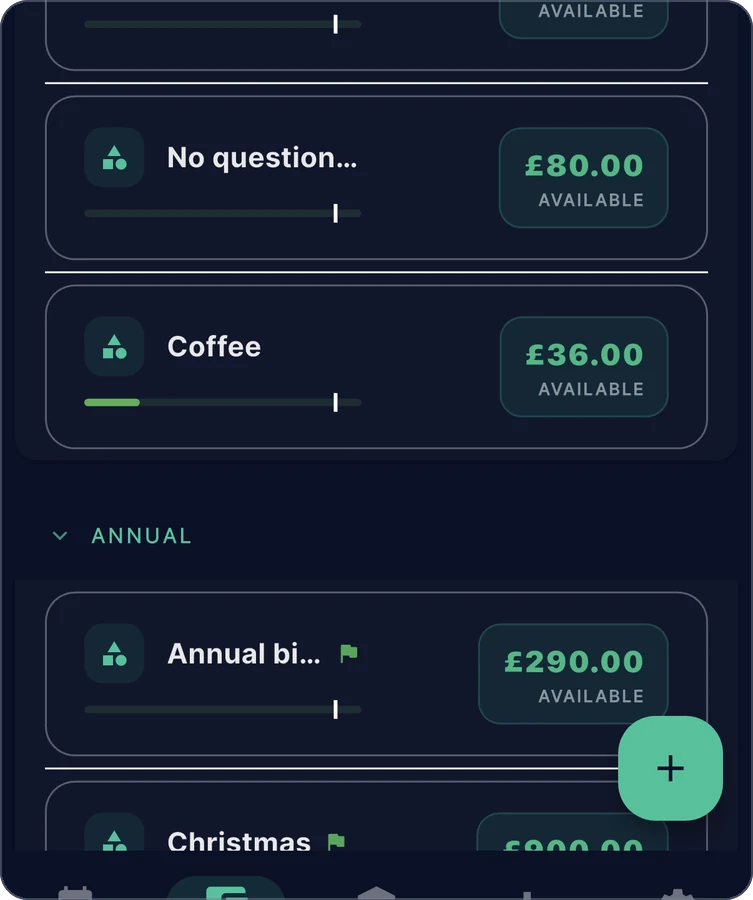
Zeroed: Offline Budget Planner is the app in the Short — envelope budgeting you buy once. It works offline, with no bank login, no subscription and no data harvesting; the first thirty-four days are free, no card needed. Try Zeroed.