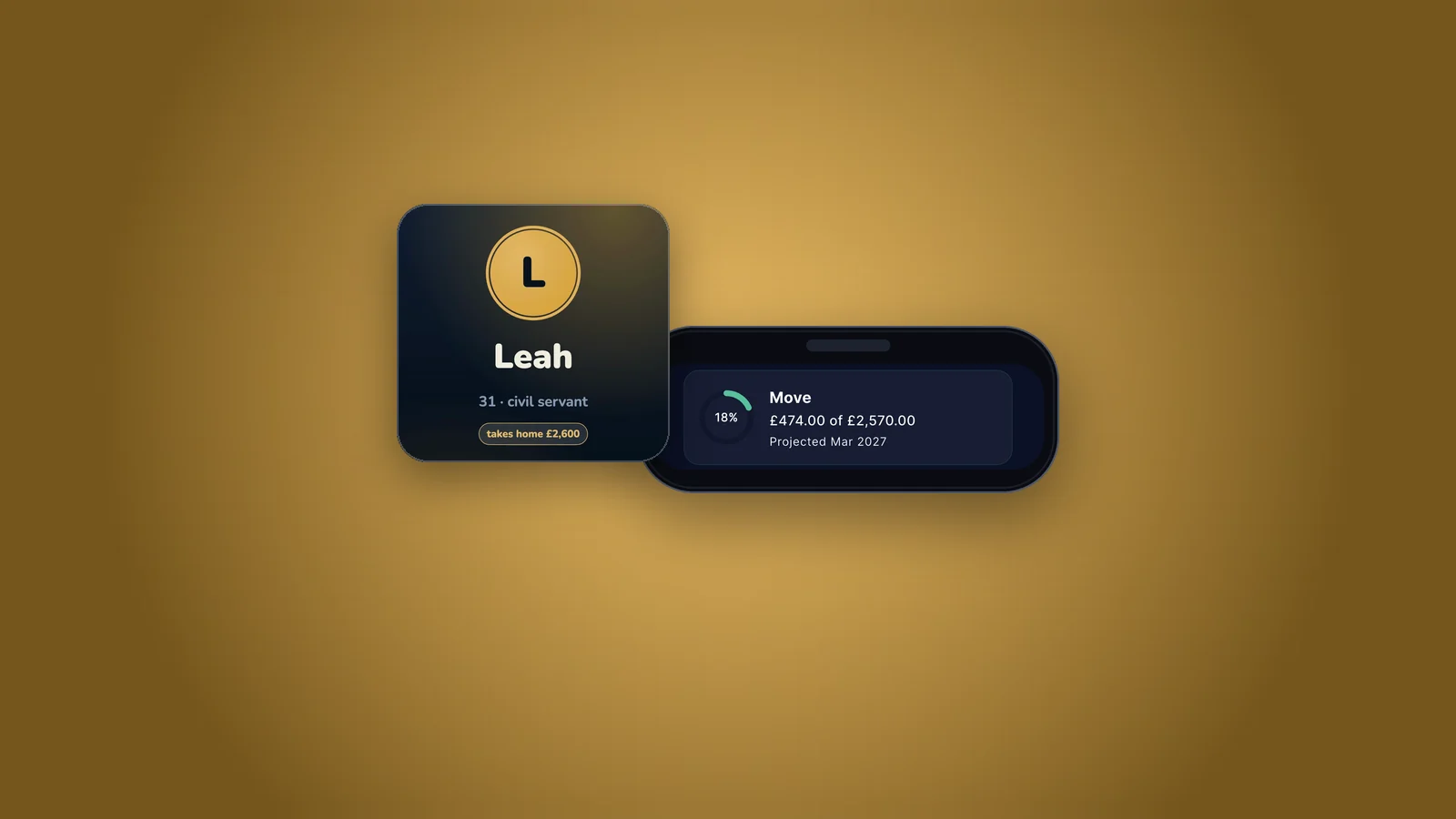
Leah asked whether she could afford £950 a month. She can. The month she moves costs £2,570: deposit, first month in advance, a van, and the things a room does not need. Nearly three months of rent, in one week.
Leah, thirty-one, a civil servant. The households in these Shorts are illustrations built from typical UK figures, not real people, and every number below is worked on the household’s sheet.
What happened
Leah is thirty-one, works as a civil servant and takes home £2,600 a month. She rents a room for £780, and a flat came up that was hers if she wanted it. The rent on the flat was £950 a month, so the question she asked herself was the obvious one: could she afford £950? The step up was £170 a month, and when she looked at her budget she could see room for it. So she said yes to the monthly number.
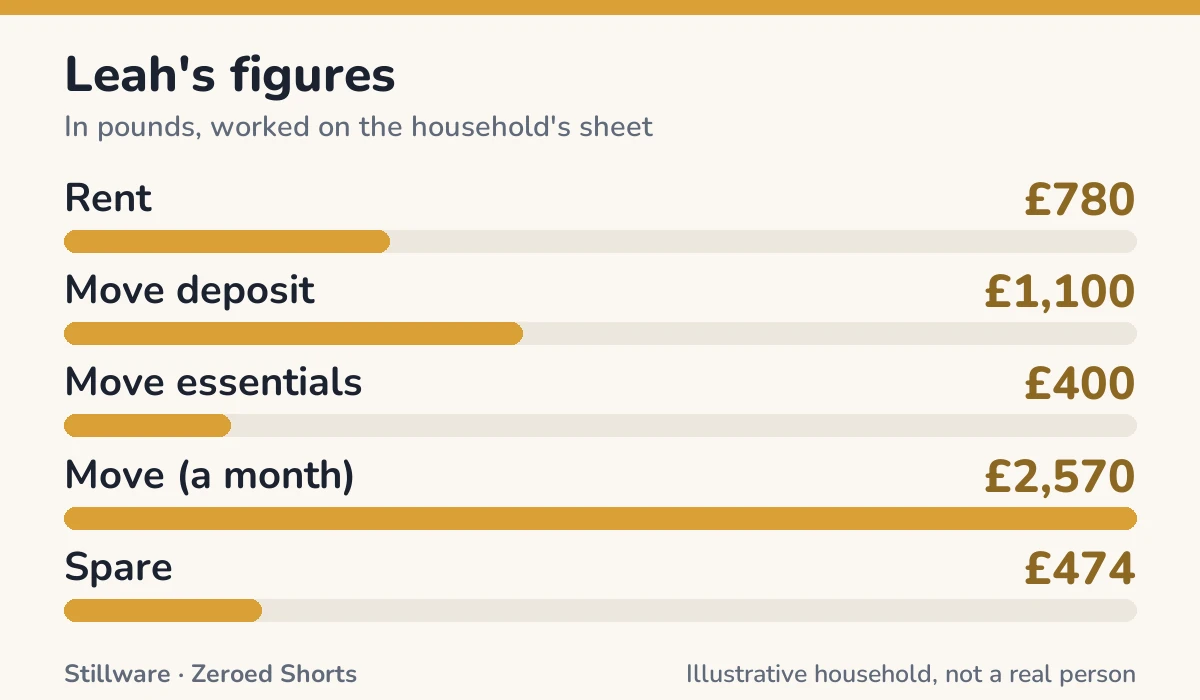
What she had not priced was the month of the move itself. The deposit on the flat was £1,100. The first month’s rent, paid in advance, was another £950. A van and a friend’s petrol came to £120. Then there were the things a room does not need and a flat does, the small pile of household basics that a shared house quietly supplies, which added up to £400. Put together, that was £2,570, and all of it fell due in the same week, before a single box had been unpacked.
That was the turn. The rent was never the hard part. The moving month was close to three months of rent, landing at once, and it had been hiding behind a monthly figure that looked comfortable. Asking whether £950 a month was affordable answered the wrong question. The right question was different: when did she want to move, and what did she need to have in hand on that day? The answer was £2,570, less whatever her old deposit returned when she left the room.
With that number on one line, the timing worked itself out. Leah has £474 spare each month. Divided into the moving bill, that is six months of saving. So rather than scraping the money together in a single week and hoping, she started setting it aside now, in its own pot with a goal and its first deposit already in, and pushed the flat back to next spring.
The change was small but it reordered the decision. Before signing for anywhere, the moving month goes on one line, along with the month she can actually pay it. Once that is settled, the rent question tends to answer itself, because the monthly figure was always the easy one. By spring the move will be saved for, not borrowed against, and the first weeks in the new flat will start with the bills paid rather than a hole to climb out of.
The working
Every figure the Short says, and where it comes from on the household’s sheet.
| The Short says | Figures | Derivation |
|---|---|---|
| nine hundred and fifty a month | move_rent = 950 | on the sheet |
| two thousand six hundred | takehome = 2,600 | on the sheet |
| seven hundred and eighty | rent = 780 | on the sheet |
| nine hundred and fifty / one hundred and seventy more | move_rent = 950; move_rent - rent | on the sheet |
| eleven hundred / nine hundred and fifty | move_deposit = 1,100; move_rent = 950 | on the sheet |
| one hundred and twenty / four hundred | move_van = 120; move_essentials = 400 | on the sheet |
| two thousand five hundred and seventy | move_deposit + move_rent + move_van + move_essentials | on the sheet |
| four hundred and seventy-four spare / six months | spare = 474; ceil(move_month / spare) | spare = takehome - committed |
The turn
Can I afford the rent” is the wrong question; the moving month is nearly three months of rent, due before a box is unpacked.
The Short
Monday
- The moving month on one line, and the month you can pay it.
- Then the rent question answers itself.
In Zeroed
Leah’s Move envelope has its goal and its first money in. So by spring the moving month is saved, not scraped together in one week.

Zeroed: Offline Budget Planner is the app in the Short — envelope budgeting you buy once. It works offline, with no bank login, no subscription and no data harvesting; the first thirty-four days are free, no card needed. Try Zeroed.