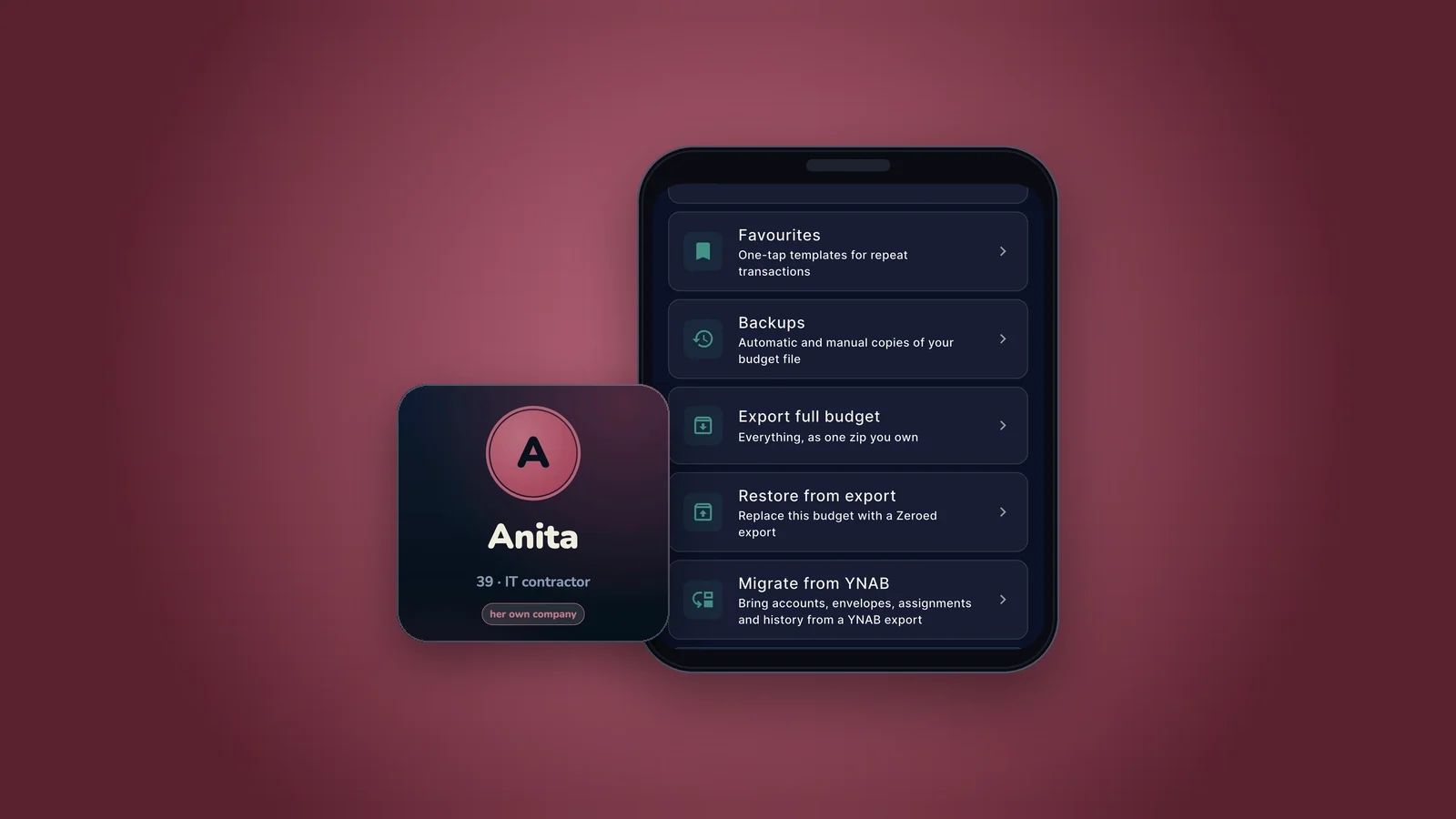
A budgeting app, £9.99 a month, on Anita’s statement for six years. Over ten years that is £1,199, and it needed her bank login to work — for her personal account and the company’s. It did not need the login for the charts. No product is named; the question applies to all of them.
Anita, thirty-nine, an IT contractor with her own company. The households in these Shorts are illustrations built from typical UK figures, not real people, and every number below is worked on the household’s sheet.
What happened
Anita runs her own company as an IT contractor, and for six years the same small line has appeared on her bank statement every month: a budgeting app at £9.99. Nothing about it seemed worth questioning. The app did its job well enough, and the charts it produced were genuinely pleasant to look at. It had simply become part of the furniture, one more quiet debit among many.
What eventually caught her attention was not the price but the access. To work at all, the app needed her bank login, and not only for her personal account but for the company’s as well. For someone who handles business money, that is a lot to hand over, and the obvious question followed. Why would a tool that draws charts need to sit inside two bank accounts?
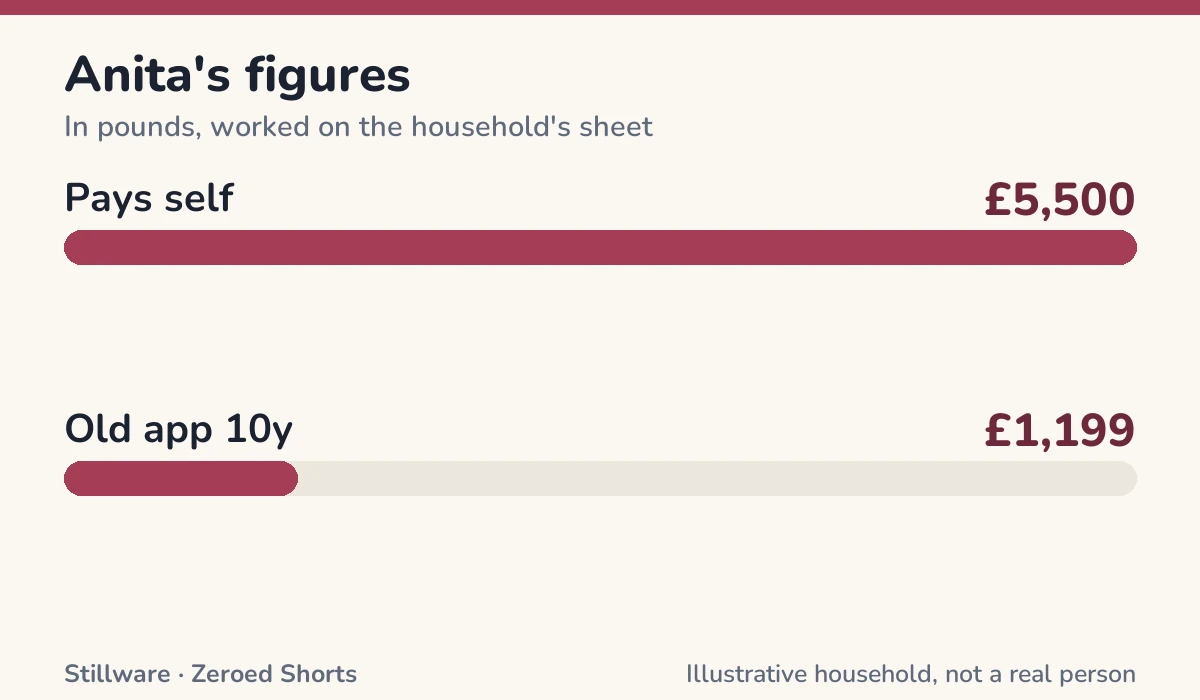
She started with the cost. The subscription had no end date; it would run for as long as she kept budgeting. Taking 10 years as a fair estimate, £9.99 a month adds up to £1,199. That is a considerable sum for pictures of her own spending. Then came the more uncomfortable realisation. The app did not need the login to draw anything. It needed the login because a live connection to her bank made leaving awkward. The connection was the thing keeping her there, and she was being billed every month for it.
That reframed the whole arrangement. A money app that insists on being wired into your bank depends on you rather more than you depend on it. Which left one simple test for any such tool: will it work if all it is given is a statement? A statement is just a file. Anita can download it from her bank herself, and nobody else ever gets inside her account. If an app can make sense of that file, it never needed her login in the first place.
Her Monday was brief and satisfying. She cancelled the subscription, downloaded last month’s statement from her bank, and kept the £9.99 that would otherwise have gone out every month. The same sum can be done by anyone: find the money-app lines on your own statement, then multiply them by the number of years you expect to keep budgeting. The answer is usually larger than the monthly figure makes it look, and it says a great deal about whether the tool is working for you or the other way round.
The working
Every figure the Short says, and where it comes from on the household’s sheet.
| The Short says | Figures | Derivation |
|---|---|---|
| nine ninety-nine / six years | old_app_monthly = 9.99; old_app_years = 6 | on the sheet |
| five and a half thousand a month | pays_self = 5,500 | on the sheet |
| needed her bank login to work | premise | on the sheet |
| one thousand one hundred and ninety-nine | round(old_app_monthly * 120) | on the sheet |
The turn
The app did not need the bank login to draw the charts; it needed the login so she could not leave.
The Short
Monday
- The money-app lines on your statement, times the years you will budget, and the one question: does it work from nothing but a statement?.
In Zeroed
Zeroed is built the other way round for Anita. She pays once. It reads the statement she downloads, works with the internet off, and exports everything as a file she owns.
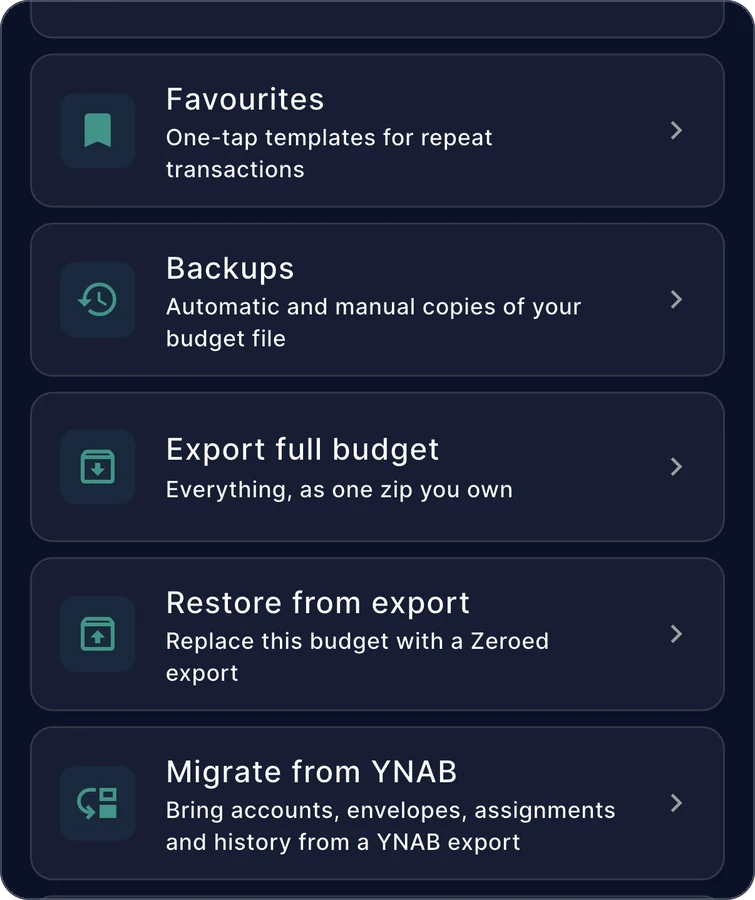
Zeroed: Offline Budget Planner is the app in the Short — envelope budgeting you buy once. It works offline, with no bank login, no subscription and no data harvesting; the first thirty-four days are free, no card needed. Try Zeroed.