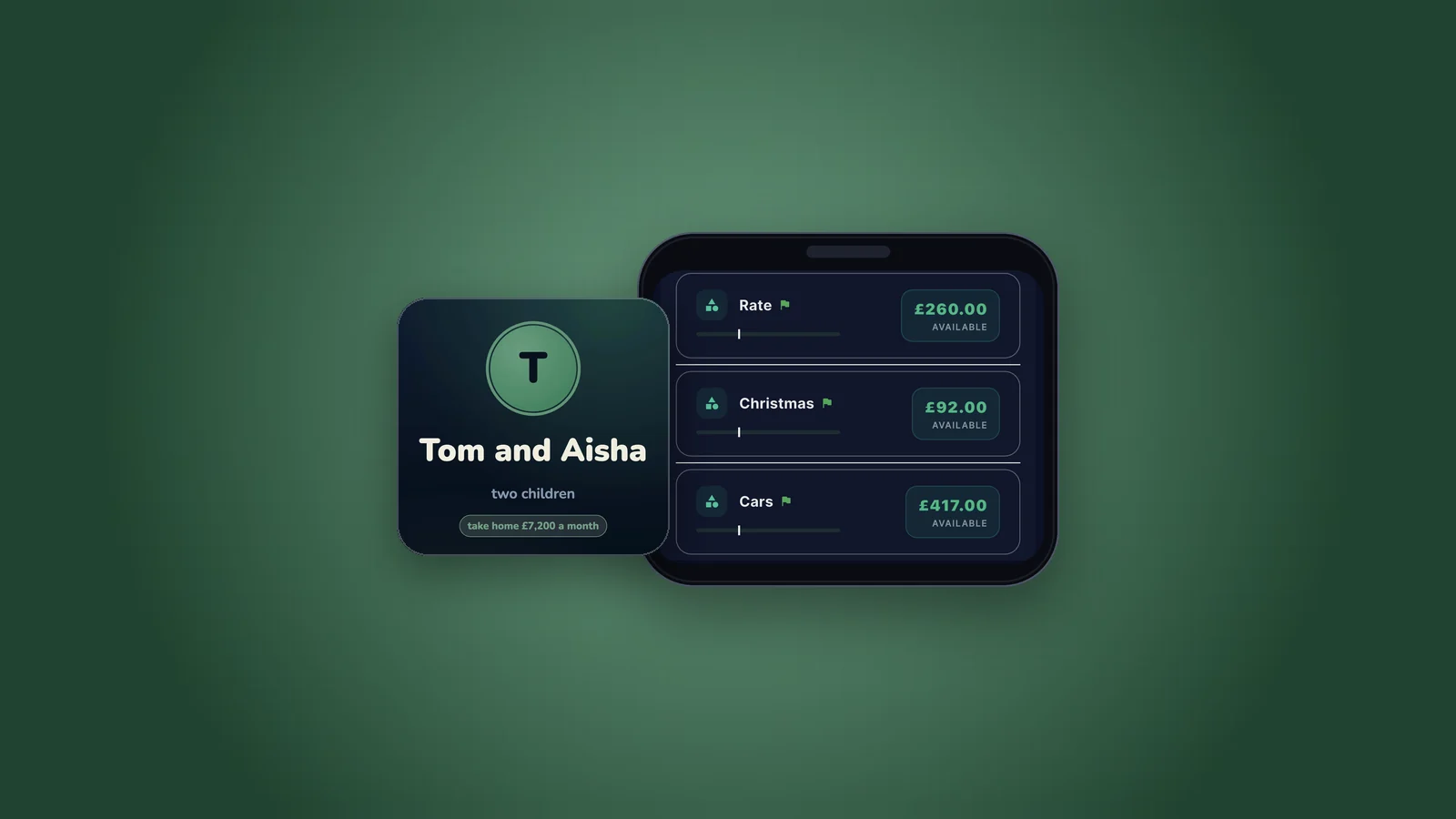
Asked at dinner what the cars cost, Tom says £389 a month, because that is the only car number with a direct debit. Finance, insurance, service and MOT, fuel, and the tyre that always goes: £9,668 a year. £806 a month.
Tom and Aisha, two children. The households in these Shorts are illustrations built from typical UK figures, not real people, and every number below is worked on the household’s sheet.
What happened
At dinner, someone asks Tom what the cars cost. He says £389 a month. Aisha laughs, because she knows the real number is £806. Tom and Aisha have two children and take home £7,200 a month between them, and the gap between those two answers is the whole story.
The £389 is the finance. It is the only car cost with a direct debit, so it is the only one anyone remembers. It arrives on the same day every month, looks the same every month, and is easy to quote. The others are harder to see, because they come once or twice a year and never on a schedule anyone keeps in their head.
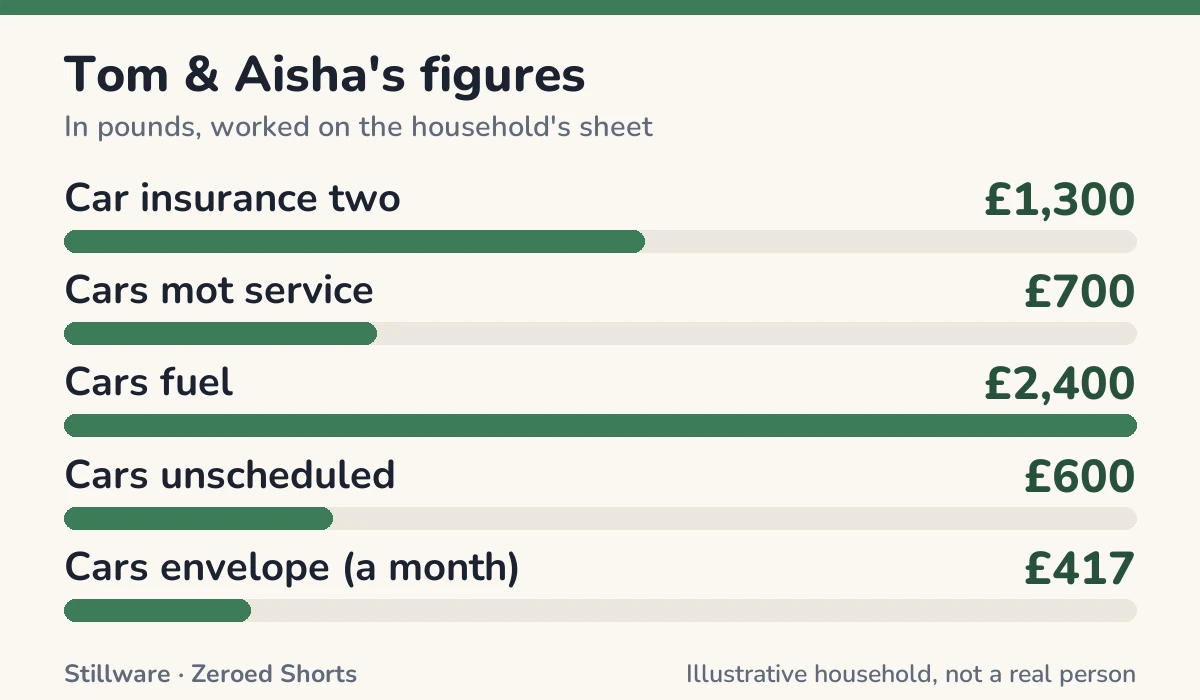
Laid out across a full year, the picture changes. The finance comes to £4,668. Insurance for two cars is £1,300. Servicing and MOTs are £700. Fuel is £2,400. Then there is the cost that is never scheduled but happens almost every year: tyres, a battery, a windscreen. Most years that is about £600. Added together, the cars cost £9,668 a year. Divided by twelve, that is £806 a month, more than twice the number Tom gave.
That is the turn. A car is not one bill. It is four scheduled bills and one unscheduled one, and only the first of them has a date anybody notices. The other four arrive as bad weeks instead. There is insurance week, MOT week, and the week the tyre went. Each one feels unexpected, and each one is, in truth, an annual event that could have been seen coming from a long way off.
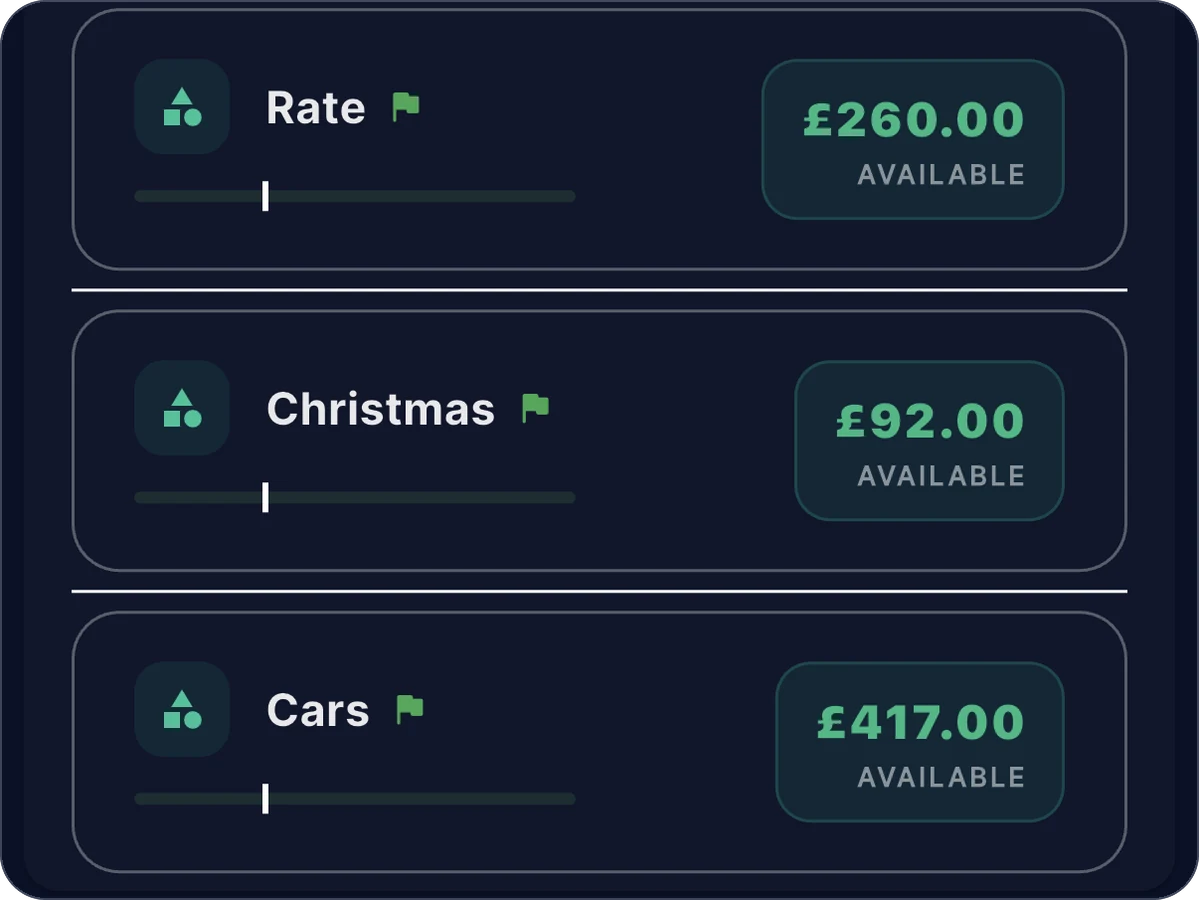
So the answer at dinner changed. The true number comes first, and then the second half: the other four bills are now one envelope. It takes £417 a month, on top of the finance. With that in place, insurance week costs nothing, because the money is already there. MOT week costs nothing. When a tyre goes, it is a transfer from one pot to another rather than a scramble.
The method is open to anyone with a car. Take every car bill from the last twelve months, put them on one line, and divide by twelve. That is what the car costs, and that is the number worth saying out loud next time somebody asks. Tom and Aisha’s car envelope now takes £417 every month, so the bad weeks have become ordinary ones.
The working
Every figure the Short says, and where it comes from on the household’s sheet.
| The Short says | Figures | Derivation |
|---|---|---|
| three hundred and eighty-nine / eight hundred and six | car_finance = 389; round(cars_year / 12) | on the sheet |
| seven thousand two hundred | takehome = 7,200 | takehome = tom + aisha |
| three hundred and eighty-nine is the finance | car_finance = 389 | on the sheet |
| four thousand six hundred and sixty-eight / thirteen hundred | car_finance * 12; car_insurance_two = 1,300 | on the sheet |
| seven hundred / two thousand four hundred | cars_mot_service = 700; cars_fuel = 2,400 | on the sheet |
| six hundred, most years | cars_unscheduled = 600 | on the sheet |
| nine thousand six hundred and sixty-eight / eight hundred and six | sum of the five; cars_year / 12 | on the sheet |
| four hundred and seventeen a month, on top of the finance | cars_monthly - car_finance | on the sheet |
The turn
A car is not one bill; it is four scheduled bills and one unscheduled one, and only the first has a date you notice.
The Short
The story is told in 3 Shorts:
- “What Do the Cars Cost?” Tom Says £389. (1/3)
- Insurance Week. MOT Week. The Week the Tyre Went. (2/3)
- One Envelope, £417 a Month, No Bad Weeks (3/3)
Monday
- Every car bill from the last twelve months on one line, divided by twelve.
- Say that number next time.
In Zeroed
Tom and Aisha’s Cars envelope takes four hundred and seventeen a month, on top of the finance. So insurance week and MOT week now cost nothing.
Zeroed: Offline Budget Planner is the app in the Short — envelope budgeting you buy once. It works offline, with no bank login, no subscription and no data harvesting; the first thirty-four days are free, no card needed. Try Zeroed.